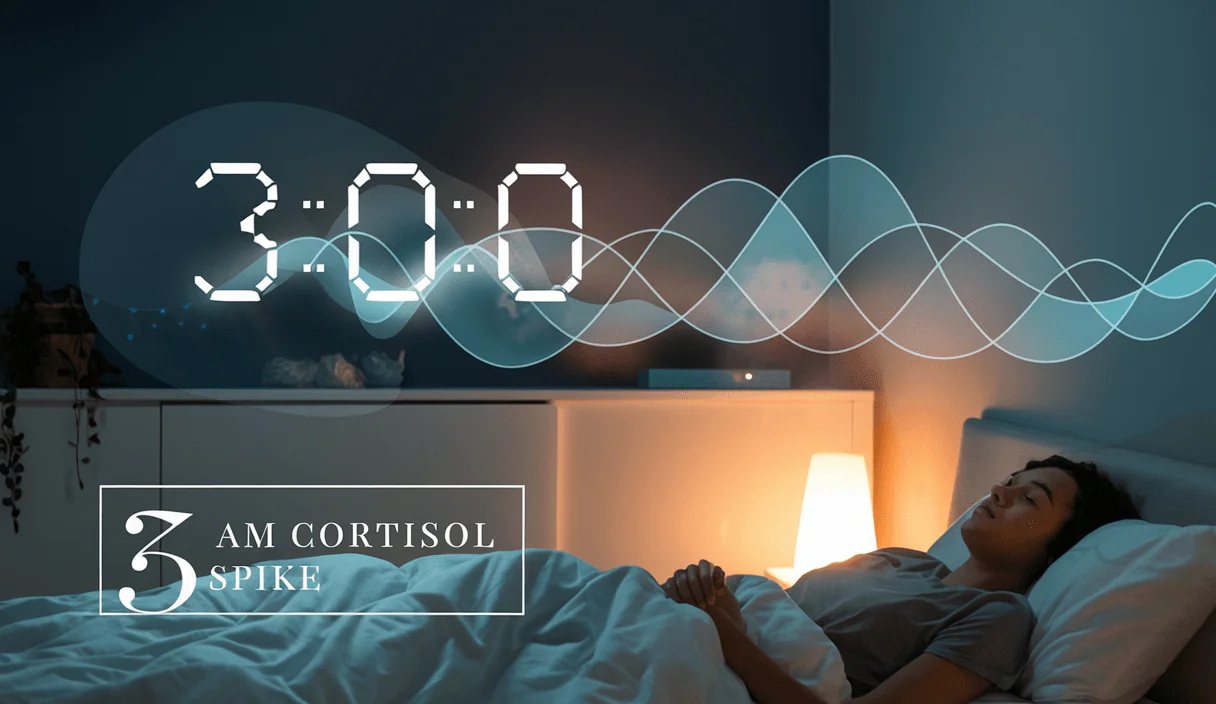

3 AM Cortisol Spike: Why You Wake at 3 AM
Waking at 3 AM is common—and often tied to a 3 AM cortisol spike. If you’ve found yourself awake and alert in the dark, you’re not alone. This post explains why that early-morning rise happens, how it affects sleep quality, and practical steps you can take to reduce nighttime awakenings and restore better rest.

Understanding the 3 AM cortisol spike
The body runs on a 24-hour internal clock called the circadian rhythm. Cortisol—often called the “stress hormone”—follows a daily pattern too. Typically, cortisol is low during the early part of the night and begins to rise around 2–3 a.m. to prepare your body for waking. That early rise can cause a 3 AM cortisol spike in some people, triggering wakefulness.
What is cortisol doing while you sleep?
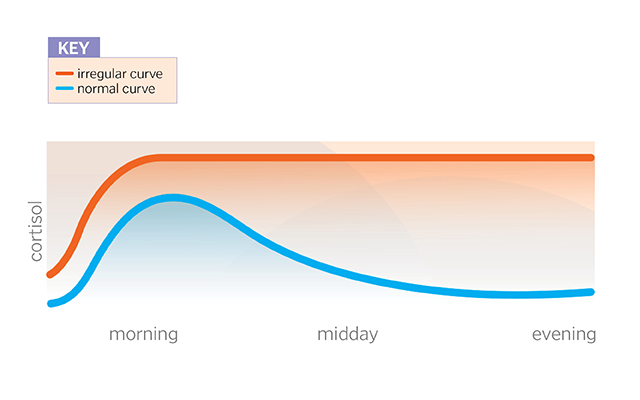
Cortisol supports many functions: maintaining blood sugar levels, regulating immune responses, and helping you wake up. The normal pattern is:
- Lowest levels late evening to early night
- Begin rising around 2–3 a.m.
- Peak shortly after waking (the Cortisol Awakening Response)
When that morning rise happens too early or too sharply, you might wake in the night. This is often what people mean when they describe a 3 AM cortisol spike.
Common reasons for an early cortisol rise
Not all 3 a.m. awakenings are driven by cortisol, but several factors make a spike more likely:
- Chronic stress or anxiety: Ongoing worry can raise baseline cortisol, so the early-night rise feels larger.
- PTSD or trauma-related conditions: People with PTSD often have altered cortisol patterns. The UK PTSD charity notes that for those with elevated stress, a cortisol rise at 2–3 a.m. can trigger awakenings and distress (ptsduk.org).
- Poor sleep schedule: Shift work or irregular bedtime shifts your circadian rhythm and cortisol timing.
- Blood sugar dips: Low glucose overnight can raise cortisol to bring sugar back up.
- Medication or stimulants: Drugs that affect the nervous system can change cortisol timing.
What the research and trackers say
Wearable sleep trackers and sleep science sites describe the same pattern: cortisol normally starts rising between 2 and 3 a.m., and for some people that rise creates a spike that wakes them (Oura Research). Others point out that under typical conditions cortisol gradually increases until the morning; when stress or irregular schedules interfere, that rise can become disruptive (Rise Science).

How a 3 AM cortisol spike affects sleep
When cortisol rises suddenly at night it can cause:
- Awakenings: You might sit up, feel alert, or have racing thoughts.
- Light, non-restorative sleep: Even if you fall back asleep, sleep quality suffers.
- Difficulty returning to sleep: That surge prepares your body to wake, making it harder to drift off again.
For some people the effect is occasional and short-lived. For others—especially those with chronic stress or PTSD—the pattern repeats and becomes a major sleep disruptor. Resources on PTSD and cortisol explain how elevated stress levels can amplify the 2–3 a.m. cortisol rise and trigger strong reactions (ptsduk.org).
Signs your nighttime awakening may be cortisol-related
- Waking around the same time (often 2–4 a.m.) most nights
- Feeling wired or anxious on waking
- Heart rate or breathing feels faster during awakenings
- Difficulty getting back to sleep despite feeling tired
Testing and medical perspective
If you suspect abnormal cortisol patterns, a healthcare provider can help. Tests include:
- Salivary cortisol samples (often collected at specific times)
- Blood cortisol tests
- Clinical assessment for stress disorders, sleep apnea, or endocrine issues
Some online articles and clinician resources note that under normal conditions cortisol begins its rise around 2–3 a.m. and continues until waking; if you have ongoing problems, seek professional advice to rule out medical causes (ovrcome.io).
Practical, evidence-backed ways to reduce 3 AM awakenings
You can’t always stop cortisol from following its schedule, but you can reduce spikes and make them less disruptive. Try this step-by-step plan:
Nighttime routine to calm cortisol
- Wind down early: Start a calm pre-sleep routine 60–90 minutes before bed—read, take a warm shower, or practice gentle stretching.
- Dim lights: Lowering light exposure signals your brain to release melatonin and soothe cortisol.
- Avoid caffeine and heavy meals late: Stimulants and big dinners can raise stress hormones.
- Limit screen time: Blue light suppresses melatonin and can shift your circadian rhythm.
Stress and mindset tools
- Breathing exercises: Slow exhalations calm the nervous system and reduce cortisol.
- Mindfulness or journaling: Spend 5–10 minutes offloading worries before bed.
- Therapy for trauma or anxiety: If PTSD or chronic anxiety is a factor, targeted therapy can change cortisol patterns over time. See resources about PTSD-related sleep disruption (ptsduk.org).
Diet and blood sugar control
Stable blood sugar overnight can reduce cortisol responses:
- Include a small nightly snack with protein and healthy fat if you tend to wake hungry.
- Avoid high-sugar foods before bed.
Sleep timing and light exposure
- Consistent schedule: Go to bed and wake at similar times each day to anchor your cortisol rhythm.
- Morning light: Getting bright light in the morning helps set the circadian clock and reduce misplaced early rises.
Immediate tips if you wake at 3 AM
If you wake in the night and suspect a 3 AM cortisol spike, try these calm, low-stimulation strategies:
- Keep lights dim; avoid checking your phone.
- Practice box breathing: inhale 4, hold 4, exhale 6, hold 2—repeat a few times.
- Use progressive muscle relaxation to ease tension.
- Get up only if you feel you will stay awake—do something quiet like reading in dim light until you feel sleepy again.
When a single night becomes a problem
If awakenings happen several times a week and affect daytime function, it’s time to consult a clinician. They can rule out causes such as sleep apnea, hormone imbalances, or mood disorders. Several sources note that while a mild rise between 2–3 a.m. is normal, repeated, disruptive spikes deserve evaluation (ouraring.com, risescience.com).
Simple 7-day plan to test what helps
Try this focused trial over one week to see which changes help reduce night awakenings:
- Night 1–2: Keep a regular bedtime and wake time.
- Night 3–4: Add a 60-minute wind-down with dim lights and no screens.
- Night 5–6: Practice a bedtime breathing exercise or short meditation.
- Night 7: Get 10–15 minutes of bright morning light and note changes.
How many times should I expect to see the phrase?
Throughout this post we’ve used the term 3 AM cortisol spike to describe the specific early-morning rise that can wake people. If you find this happening often, consider the steps above and talk with a provider.
Further reading and resources
For more detail about cortisol and sleep patterns, check these helpful pages:
- Sleep and Cortisol in PTSD — how elevated stress affects the 2–3 a.m. rise.
- Why Do I Wake Up at 3 AM? — wearable insights and practical tips from Oura.
- Cortisol and Sleep — a breakdown of cortisol timing and sleep stages.
- Why Do I Wake Up at 3 AM? — overview of cortisol’s overnight rhythm and when to seek help.
- Do you wake up at 3am? (The Fit Partnership) — practical strategies for returning to sleep.
Watch: Quick explainer
Watch: Understanding early-morning cortisol and sleep
Summary: Take control of 3 AM wake-ups
In short, a 3 AM cortisol spike is often part of your body’s natural rhythm—but when stress, irregular schedules, or medical issues amplify that rise, it can disrupt sleep. Use consistent sleep timing, calming night routines, and stress tools to reduce spike-driven awakenings. If problems persist, talk to a healthcare professional for testing and tailored care.
Ready to feel rested again? Try the 7-day test, adopt one new bedtime habit this week, and track how you sleep. Small changes add up fast.
If you want more guides on sleep, circadian health, and calming routines, explore our other posts at zenpulsehub.com.
Why do I always wake up at 3 AM?
Waking at 3 AM can happen because cortisol starts to rise around 2–3 a.m. This early rise helps prepare the body to wake. If stress, PTSD, blood sugar dips, or sleep disruption alter your rhythm, that rise can wake you. See resources like Oura and the PTSD sleep guide for more context (ouraring.com, ptsduk.org).
Can I stop the 3 AM cortisol spike?
You can often reduce its impact. Try consistent bedtimes, a calming wind-down, limiting late caffeine, and stress-reduction techniques like breathing or mindfulness. If wake-ups persist, consult a clinician to check hormones or sleep disorders.
Is waking at 3 AM a sign of a serious disorder?
Occasional awakenings are normal. Frequent, disruptive awakenings that affect daytime function should be evaluated—possible causes include sleep apnea, mood disorders, PTSD, or endocrine problems. A medical review and targeted testing can help.
What immediate steps can I take when I wake up at 3 AM?
Keep the lights dim, avoid screens, practice slow breathing, and use progressive muscle relaxation. Only get up if you can’t fall back asleep—do something quiet and calming until you feel sleepy again.