

Breathing Techniques to Calm Anxiety
Breathing Techniques to Calm Anxiety can help you lower stress fast, steady your nervous system, and bring focus back to the present moment. Whether you’re facing a sudden panic attack or steady daily nerves, simple breath work gives you a reliable tool you can use anywhere.
Why breathing helps (fast science)
Breath is the quickest way to change how your body feels. When you breathe slowly and deeply, you activate the parasympathetic nervous system — the part that tells your body it is safe. This reduces heart rate, lowers blood pressure, and eases the muscle tension that comes with anxiety. A recent review in PubMed shows breathing interventions can increase parasympathetic tone and counterbalance the sympathetic “fight-or-flight” response.(source)
Breathing Techniques to Calm Anxiety: Quick guide
Below are practical, easy-to-learn breathing techniques you can try now. Each exercise includes steps, typical timing, and when to use it. Practice a few each day so they become natural when you need them.
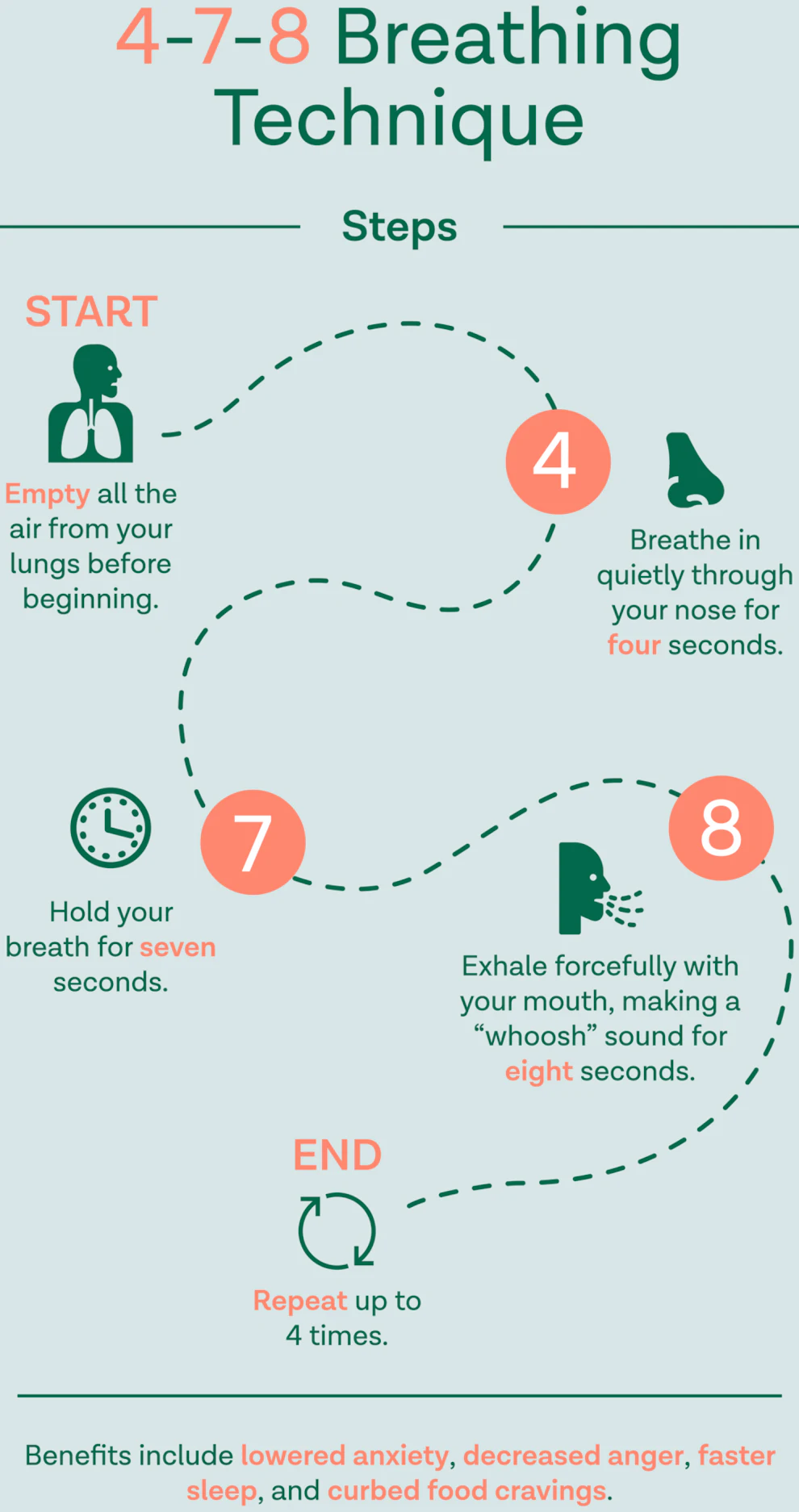
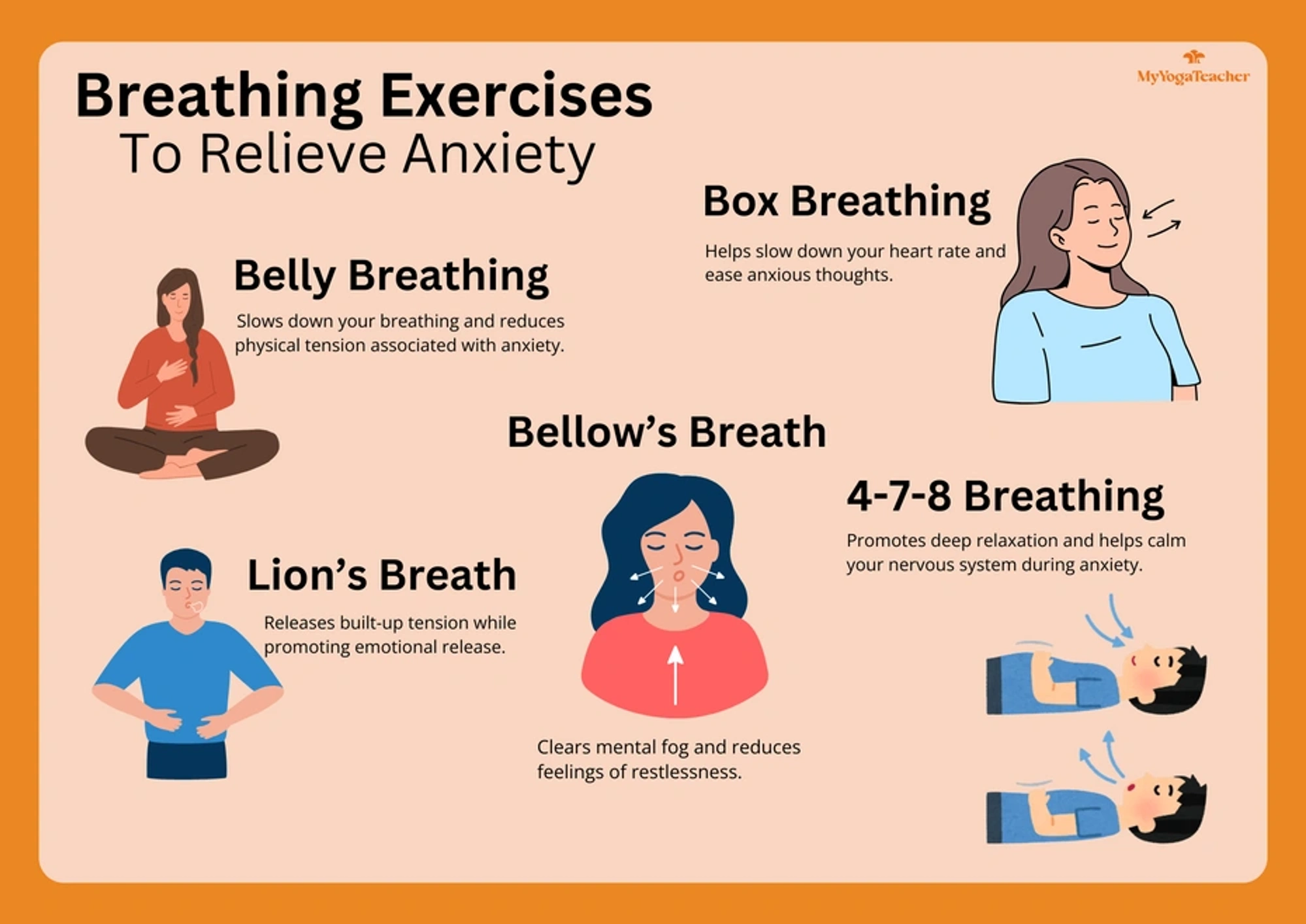
1. 4-7-8 Breathing (Relax in 1 minute)
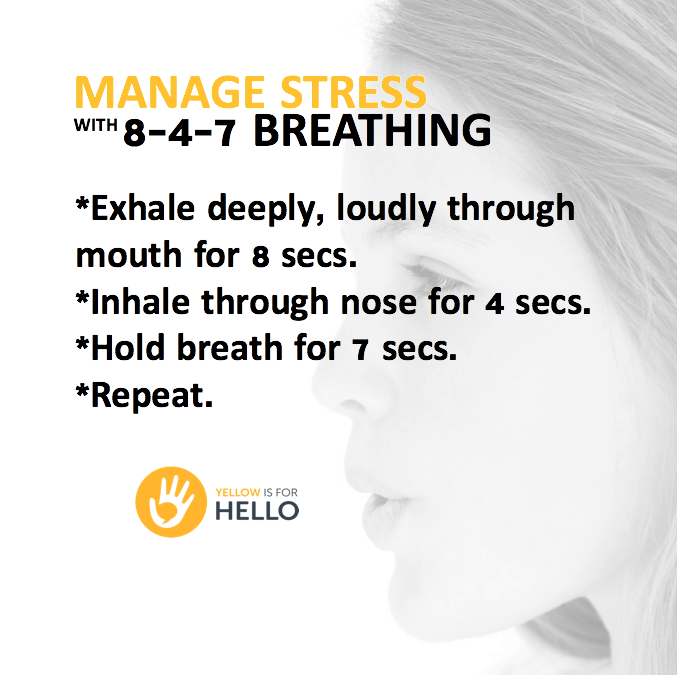
How to: Sit tall or lie down. Breathe in quietly through your nose for 4 seconds. Hold the breath for 7 seconds. Exhale completely through your mouth for 8 seconds. Repeat 3–4 cycles.
When to use: Great for sudden anxiety, before sleep, or when you need quick downshifting.
2. Box Breathing (Simple focus)
How to: Inhale through your nose for 4 counts. Hold for 4. Exhale through your nose for 4. Hold empty for 4. Repeat 4–6 times.
When to use: Use before presentations, exams, or stressful calls to steady nerves and sharpen attention.
3. Diaphragmatic (Belly) Breathing
How to: Sit or lie comfortably. Place one hand on your chest and the other on your belly. Inhale through your nose so the belly rises more than the chest. Exhale slowly. Aim for 6–10 breaths per minute.
When to use: Best for daily practice to reduce baseline anxiety and improve lung efficiency. The NHS recommends letting the breath flow deep into your belly without forcing it.(NHS)
4. Resonant (Coherent) Breathing
How to: Breathe at a steady pace of about five to six breaths per minute — e.g., inhale for 5–6 seconds, exhale for 5–6 seconds. No holding. Keep the breath smooth and even.
When to use: Effective for lowering heart rate and easing ongoing anxiety. Healthline recommends resonant breathing as a calming option with clear step-by-step guidance.(Healthline)
5. Alternate Nostril Breathing (Nadi Shodhana)
How to: Use your thumb to close the right nostril and inhale slowly through the left. Close left and exhale through the right. Inhale right, close right, exhale left. Continue for 6–10 rounds.
When to use: Helpful when you want to balance energy and restore calm — often used in yoga and meditation classes. The Priory Group lists this among nine effective breathing exercises for anxiety.(Priory)
6. 4-2-6 (Slow down racing thoughts)
How to: Inhale for 4 seconds, hold for 2 seconds, exhale for 6 seconds. Repeat 6–8 times. This pattern lengthens the exhale which helps reduce anxiety.
When to use: Use when thoughts are racing — it helps shift your nervous system toward calm. Calm’s breathing guide includes helpful timing variations like this one.(Calm)
How to choose the right technique
Start simple. Try one or two techniques and practice them daily for a week. Notice how each affects your body and mood. Some people prefer the structure of box breathing; others like the immediate ease of 4-7-8. If a technique feels uncomfortable — slow down or stop. With consistent practice, breath work becomes more effective.
Tips for better results
- Practice daily: 5–10 minutes a day builds skill and lowers baseline anxiety.
- Stay comfortable: Sit or lie in a relaxed position with good posture.
- Use a timer or app: Guided timers help keep counts steady until you internalize them.
- Combine with grounding: Pair breath with senses — name 3 things you see, 2 things you can touch.
- Be patient: Benefits grow over weeks of regular practice.
When to seek more support
Breathing techniques are powerful but not always enough. If anxiety is frequent, severe, or limits daily life, reach out to a mental health professional. Breathing exercises work best as part of a broader plan that may include therapy, lifestyle changes, and medical care. For more structured breathing resources and step-by-step guides, check NHS breathing exercises for stress and the comprehensive Healthline guide linked above.
Guided practice: Short routine (5 minutes)
Try this quick sequence when you need a reset:
- Minute 1: Diaphragmatic breathing, 6 deep breaths.
- Minute 2–3: Box breathing for 6 cycles.
- Minute 4: 4-7-8 breathing for 3 cycles.
- Minute 5: Resonant breathing, steady 5–6 breaths per minute to finish.
Resources and further reading
If you want reliable guides, these pages are helpful:
- NHS breathing exercises for stress — clear instructions for diaphragmatic breathing and more.
- Calm: Breathing exercises for anxiety — timing variations like the 4-2-6 technique and guided tips.
- Healthline breathing exercises — step-by-step guide including resonant breathing.
- Priory Group — nine effective breathing exercises, including alternate nostril breathing.
- PubMed Central review — evidence on how breathing affects autonomic balance.
Video demo: practice along
Follow a guided demo to learn pace and rhythm. Use the video below to practice box breathing and other techniques.
Quick safety notes
Most people can safely try these breathing exercises. However, if you feel lightheaded, dizzy, or faint, stop and breathe normally. People with certain respiratory or cardiac conditions should check with a clinician before practicing vigorous breath holds.
Practice makes calm: The more you practice breathing techniques, the faster they will work when anxiety hits. Over time, your nervous system learns to relax more easily — and you regain a sense of control.
Want more practical guides? Explore our other stress tools and routines at ZenPulseHub.com.
Frequently Asked Questions
How long until I notice benefits from breathing exercises?
Some people feel calmer after a single 3–5 minute practice. For lasting change, aim for daily practice over several weeks. Consistency builds stronger nervous system regulation.
Which breathing technique is best for panic attacks?
4-7-8 and box breathing are often effective during panic: they slow the breath and give your body clear, steady patterns to follow. Practice these regularly so they become automatic during high-anxiety moments.
Can breathing exercises replace therapy or medication?
Breath work is a powerful self-help tool but is not a replacement for professional treatment when anxiety is severe or persistent. Use breathing as part of a broader plan that may include therapy and medical care.
How often should I practice to see improvement?
Five to ten minutes daily is a realistic, effective goal. Even short, frequent sessions help your body learn to shift into a calmer state faster.