

Vitamins to Lower Cortisol Level: Top Picks
Vitamins to lower cortisol level can be a helpful part of a plan to manage stress. If you feel overwhelmed, tired, or notice stubborn belly fat, a few targeted vitamins and supplements may help support your body’s stress response. This guide explains the best options, safe doses, and how to combine them with lifestyle changes for real results.

Why care about cortisol?
Cortisol is a key stress hormone that helps your body respond to challenges. In short bursts it’s useful. But when levels stay high, it can harm sleep, mood, metabolism, and weight. That’s why many people look for vitamins and supplements that support balanced cortisol.
Vitamins to lower cortisol level: how they help
Some vitamins and nutrients help the body cope with stress by supporting adrenal function, repairing oxidative damage, or calming the nervous system. Below we cover the most evidence-backed options and practical tips for using them. You’ll see the keyword “Vitamins to lower cortisol level” throughout this guide at natural points to keep focus clear.

Top vitamins and supplements that lower cortisol
Below are the most useful vitamins and supplements supported by research and clinical reports. Use them thoughtfully and pair with healthy habits for the best results.
1. Magnesium
Why it helps: Magnesium plays a role in hundreds of reactions in the body, including nervous system balance and stress response. Studies link magnesium deficiency with higher perceived stress and elevated cortisol.
Typical dose: 200–400 mg daily (magnesium glycinate or citrate are well tolerated).
Notes: Start low if you get loose stools. Check interactions with certain diuretics and antibiotics.
2. Vitamin C
Why it helps: Vitamin C is an antioxidant that supports the adrenal glands, which produce cortisol. Research shows vitamin C can blunt cortisol spikes during acute stress.
Typical dose: 500–1,000 mg daily for those under stress; adjust based on diet and tolerance.
Notes: Water-soluble — excess is excreted, but very high doses may cause digestive upset.
3. B vitamins (especially B5 and B6)
Why it helps: B vitamins support energy metabolism and adrenal function. Pantothenic acid (B5) and pyridoxine (B6) are frequently highlighted for stress resilience.
Typical dose: Use a B-complex that provides 100%–300% of daily values, or follow label guidance.
4. Ashwagandha (adaptogenic herb)
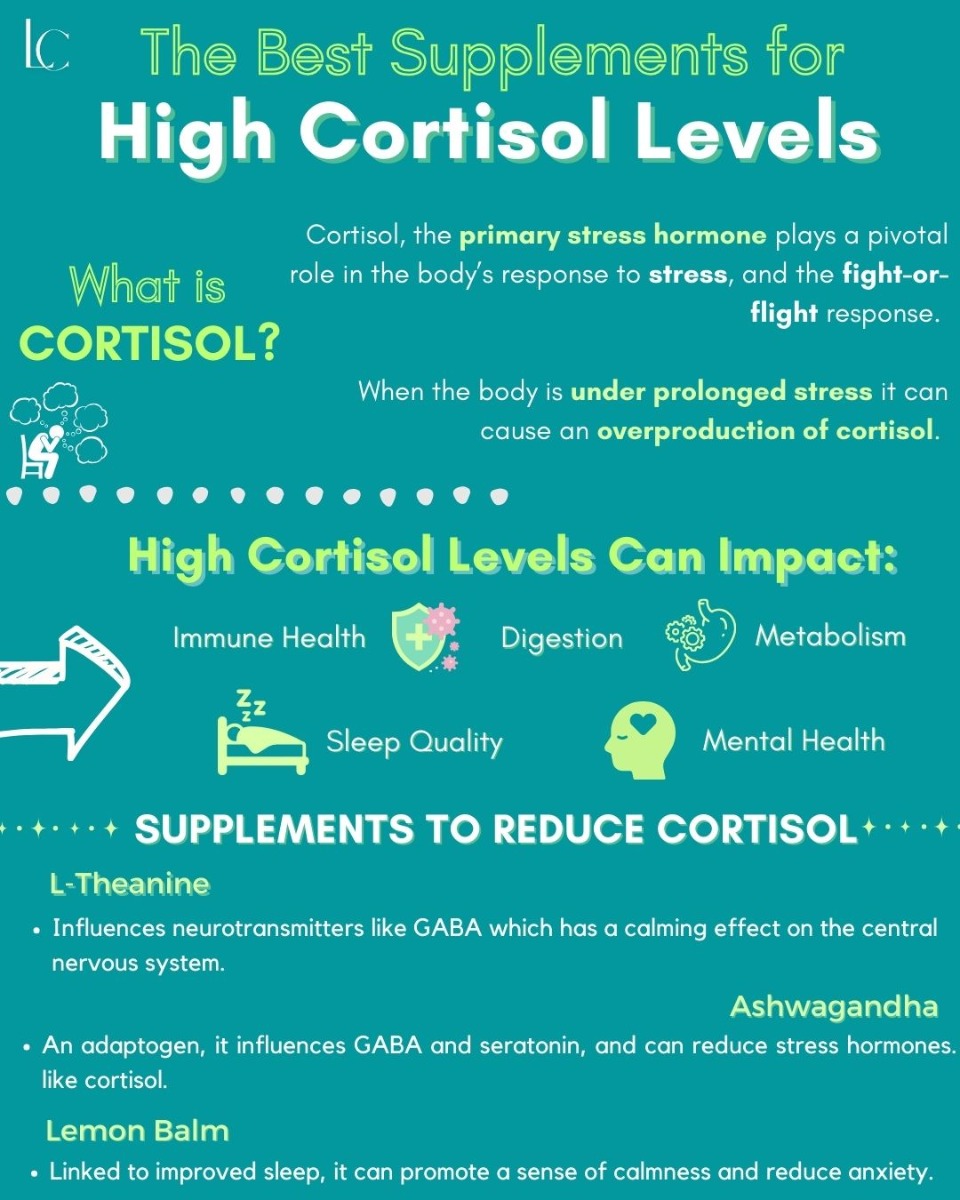
Why it helps: Although not a vitamin, ashwagandha is one of the best-studied supplements for lowering cortisol. Clinical trials show it can reduce cortisol and improve symptoms of stress and anxiety.
Typical dose: 300–600 mg daily of a standardized extract (e.g., KSM-66 or Sensoril).
Evidence & further reading: For a list of evidence-backed supplements that lower cortisol, see this summary on Verywell Health: Verywell Health.
5. Omega-3 fatty acids
Why it helps: Omega-3s (EPA and DHA) reduce inflammation and can blunt the stress response. Studies show improved mood and lower cortisol in people taking fish oil.
Typical dose: 1,000–3,000 mg combined EPA+DHA per day from supplement or oily fish.
Notes: Choose a high-quality, purified fish oil or algae-based DHA for vegans.
6. L-theanine
Why it helps: L-theanine, an amino acid from green tea, promotes relaxation without drowsiness. Studies show it can reduce cortisol and anxiety in stressful situations.
Typical dose: 100–200 mg when needed; some people take 100 mg twice daily.
7. Phosphatidylserine
Why it helps: This phospholipid has been shown to blunt cortisol responses to intense exercise and acute stress.
Typical dose: 100 mg taken up to three times daily; common total dose 300 mg/day.
Extra reading: For more supplement combinations (including phosphatidylserine and magnolia bark), see this practical guide: JoinMidi.
Other helpful herbs and nutrients
- Rhodiola rosea: an adaptogen that can reduce fatigue and moderate cortisol in some people.
- Ginseng: may support resilience; evidence mixed for cortisol specifically.
- Magnolia bark & holy basil: calming herbs used historically for stress relief. Holy basil is available as a supplement for women in several formulations (see product ideas on Amazon).

How to choose and combine supplements
Combining supplements can be effective, but keep it simple and safe. A daily approach might include a quality multivitamin with B vitamins, magnesium at night, omega-3s with breakfast, and ashwagandha or L-theanine as needed for acute stress.
Tips:
- Start with diet and sleep improvements before adding many supplements.
- Introduce one new supplement at a time and track how you feel.
- Follow label doses and consult your clinician if you take medications.
Timing and practical use
When you take supplements matters. For example, magnesium is often taken at night to support sleep. Vitamin C and B vitamins are better in the morning for energy. Adaptogens like ashwagandha can be taken once or twice daily depending on the formulation.
Safety, interactions, and who should be cautious
Supplements are generally safe when used properly, but there are important cautions:
- If you take blood thinners, certain supplements like omega-3s can increase bleeding risk.
- Those on thyroid medication, stimulants, or antidepressants should consult their prescriber before starting adaptogens or high-dose vitamins.
- Pregnant or breastfeeding people should check with their healthcare provider before use.
For an evidence-based review of supplements that can reduce cortisol, check resources like Healthline and GoodRx which review clinical studies and practical guidance: Healthline and GoodRx.

Lifestyle changes that lower cortisol
Vitamins work best alongside healthy daily habits. Consider these science-backed steps:
- Improve sleep: Aim for regular bedtimes and 7–9 hours of quality sleep.
- Move regularly: Moderate exercise lowers cortisol long-term; avoid chronic overtraining.
- Practice relaxation: Breathwork, meditation, and short breaks reduce spikes in cortisol. See Holland & Barrett’s overview of the cortisol-stress link for practical tips: Holland & Barrett.
- Eat regularly: Balanced meals with protein, fiber, and healthy fats stabilize blood sugar and stress hormones.
Practical supplement stacks
Here are two sample stacks depending on the go-to goal:
Daily maintenance stack
- Multivitamin with B-complex
- Magnesium glycinate 200–300 mg at night
- Omega-3 1,000 mg EPA+DHA with breakfast
Higher stress stack (short-term)
- Ashwagandha 300 mg morning and evening
- L-theanine 100 mg as needed during stressful periods
- Phosphatidylserine 100 mg pre-workout or before expected high-stress events
Quick video: What to know about supplements and cortisol
Evidence and trustworthy resources
Research and expert reviews highlight specific vitamins and supplements for cortisol support. For concise, research-backed lists, visit:
- Verywell Health: a practical list of supplements that lower cortisol, including magnesium and ashwagandha — Verywell Health.
- Healthline: guidance on lifestyle and supplements to lower cortisol — Healthline.
- GoodRx: evidence-backed options and notes on use — GoodRx.
- JoinMidi: practical stack ideas including phosphatidylserine and magnolia bark — JoinMidi.
Common questions about vitamins and cortisol
People often ask which supplement works fastest, or whether vitamins alone are enough. Short answer: supplements can help, but sustainable results come from combining them with sleep, movement, and stress management.
Summary: Smart steps to lower cortisol
Here’s a practical roadmap to use right away:
- Focus on sleep, diet, and daily movement.
- Start a basic supplement routine: multivitamin or B-complex, magnesium at night, and omega-3s.
- Add targeted options like ashwagandha, L-theanine, or phosphatidylserine for more intense stress periods.
- Track mood, sleep, and energy for 4–8 weeks after starting changes.
Vitamins to lower cortisol level are a helpful tool — but not a magic cure. Use them thoughtfully, pair them with healthy habits, and check with a healthcare provider if you have medical conditions or take medications.
Final thought
If your goal is calmer days and better sleep, small consistent changes will matter most. Supplements can speed the process and make stress easier to manage.
Ready to dive deeper? Explore more guides and practical plans at zenpulsehub.com to build a personalized cortisol-lowering routine.
Which vitamins lower cortisol fastest?
There’s no instant fix, but vitamin C and L-theanine can reduce acute cortisol spikes quickly. Adaptogens like ashwagandha often take 2–8 weeks to show measurable effects.
Can a multivitamin lower cortisol?
Multivitamins help correct nutrient gaps (especially B vitamins), which supports overall stress resilience. For stronger cortisol effects you may add magnesium, omega-3s, or adaptogens.
Are there risks to taking cortisol-lowering supplements?
Most supplements are safe when used as directed. However, they can interact with prescription drugs or be risky in pregnancy. Always check with a healthcare provider if you take medications or have health conditions.
How long until I notice benefits?
Some benefits like improved sleep from magnesium may appear in days. Adaptogens and omega-3s may take several weeks. Track changes over at least 4–8 weeks to judge effectiveness.