
Mindful Breathing Techniques: Simple Practices
Mindful breathing techniques are easy, portable tools you can use anytime to reduce stress, sharpen focus, and calm the nervous system. In the next sections you’ll find clear steps, short routines, and tips for making breathing practice part of a daily routine.
Why practice mindful breathing techniques?
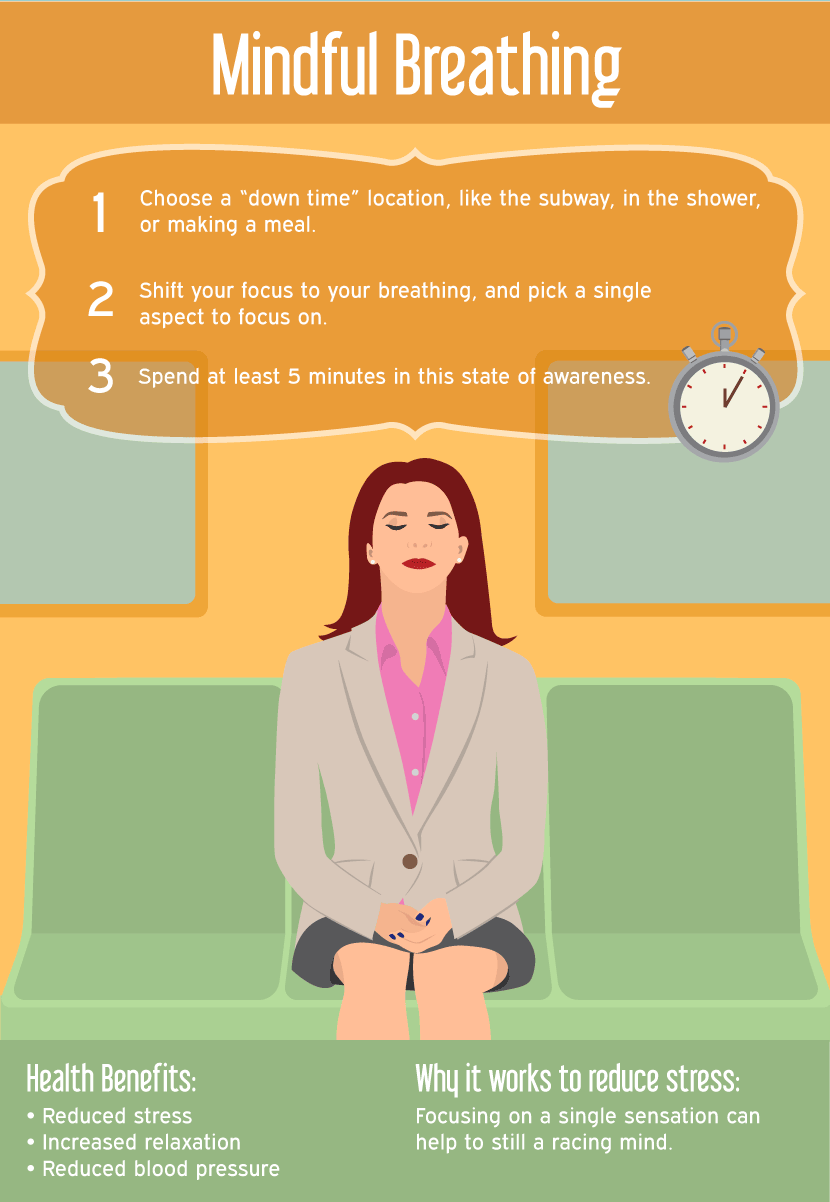
Breathing is something you do automatically. When you bring attention to it, that simple shift can change your body’s stress response and your state of mind. **Mindful breathing techniques** help you anchor to the present moment, slow a racing mind, and activate the body’s relaxation response.
Benefits at a glance
- Quick stress relief: Breathing deeply slows the heart rate and lowers blood pressure.
- Better focus: Attention on the breath reduces distraction and improves concentration.
- Improved sleep: Simple breathing routines help you wind down at night.
- Accessible anywhere: No equipment needed — just your breath.
How mindful breathing techniques work
At a practical level, breathing connects the conscious mind with the autonomic nervous system. Slow, steady breaths stimulate the vagus nerve and promote a sense of calm. When you practice breathing with attention, you also practice noticing without reacting — a core skill of mindfulness.
Science snapshot
Research links breathing practice to reduced cortisol (the stress hormone), improved heart-rate variability, and better emotional regulation. For easy summaries and tips that back up breathing practices, see Real Simple’s guide on mindful breathing and the NHS breathing exercises page for stress relief:
Real Simple: Mindful breathing techniques — a practical overview of ways breathing influences mood and calm.
NHS: Breathing exercises for stress — clear instructions for breathing that goes into the belly comfortably.
5 simple mindful breathing techniques to try now
Below are short practices you can use anywhere. Each one takes 1–10 minutes and can be adapted to your needs. Try them and notice what changes in your body and mind.
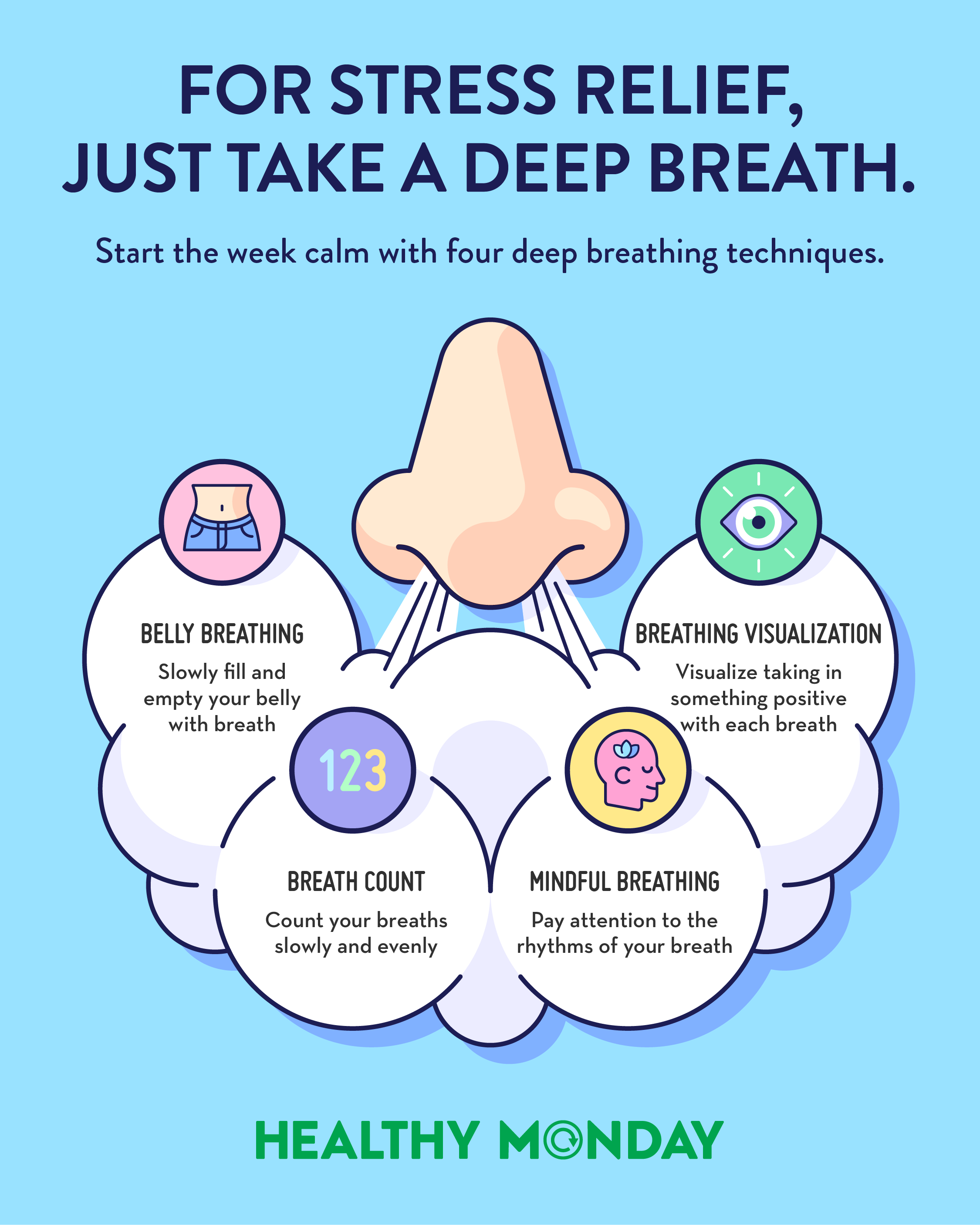
1. Diaphragmatic breathing (Belly breathing)
Great for beginners. Focuses on breathing into the belly rather than the chest.
- Sit or lie comfortably with one hand on your chest and one on your belly.
- Breathe in through your nose for 3–4 seconds and feel your belly rise under your hand.
- Exhale gently through your mouth for 4–6 seconds and feel your belly fall.
- Repeat for 5–10 cycles. Keep the chest still — the movement should be in the belly.
2. Box breathing (Square breathing)
Used by athletes and first responders to regain calm and focus quickly.
- Inhale through your nose for a count of 4.
- Hold the breath for 4 seconds.
- Exhale through your mouth for 4 seconds.
- Hold empty for 4 seconds. Repeat 4–6 cycles.
Tip: If 4 feels too long, start with 3 and increase as comfortable.
3. 4-7-8 breathing
A calming pattern often recommended for sleep and anxiety. The mouth exhale can feel grounding for some people.
- Inhale quietly through the nose for 4 seconds.
- Hold for 7 seconds.
- Exhale fully through the mouth for 8 seconds.
- Repeat 4 cycles to start; increase gradually.
4. Mindful counting breath
A simple attention training method: count each exhale to stay present.
- Sit comfortably and close your eyes if you like.
- Inhale naturally, exhale and mentally say “one.”
- On the next exhale say “two.” Continue up to five, then return to one.
- If your mind wanders, gently return to the breath and counting.

5. 5-4-3-2-1 grounding with breathing
This sensory grounding method pairs breathing with awareness of the five senses. It’s useful when anxiety spikes.
- Look around and name 5 things you can see. Breathe in and out slowly between each item.
- Name 4 things you can feel (texture, temperature). Breathe between each.
- Name 3 things you can hear. Breathe slowly after each sound.
- Name 2 things you can smell. If none, identify two you like to imagine; breathe.
- Name 1 thing you can taste. Focus on your breath and the mouth sensations.
UCLA’s Simms/Mann Center describes similar sensory grounding exercises used in support groups to find your center.
UCLA: Body, well-being & mindfulness breathwork
Mindful breathing techniques for kids
Children can learn simple breathing habits that help with big emotions. Use playful cues like “smell the flower, blow out the candle” and keep practices under five minutes.
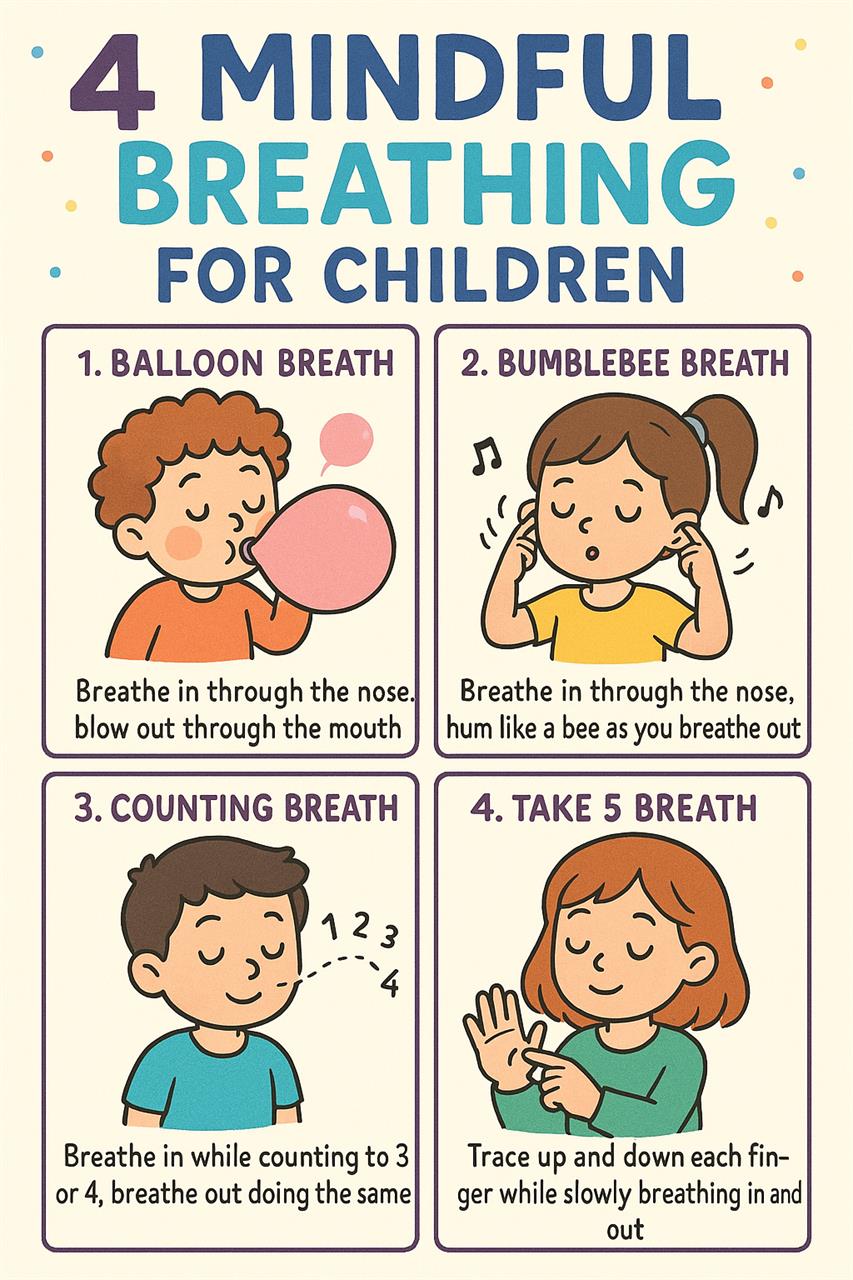
Keep instructions short, use visuals, and praise effort. For more child-friendly breathing ideas, look for infographics and short guided practices from child therapists.
Tips to make mindful breathing a habit
- Start small: 1–2 minutes daily is enough to build momentum.
- Anchor to routines: Breathe for one minute after brushing teeth or before a meeting.
- Use reminders: Phone alarms, sticky notes, or a breathing app can help.
- Be kind to yourself: It’s normal for the mind to wander. Gently return to the breath.
Common mistakes and how to avoid them
Some people expect instant transformation. Breathing helps, but consistency matters.
- Forcing breath: Don’t strain. Breathe as deep as comfortable.
- Judging your experience: Notice without criticism.
- Skipping posture: A comfortable upright posture helps the diaphragm move freely.
Guided supports and further reading
If you prefer guided sessions, Headspace offers structured breathing exercises (for example: inhale 4, hold 4, exhale 4, hold 4). The Mayo Clinic provides straightforward mindfulness exercises and guidance on focusing on breath sensations when thoughts appear. See their practical tips here:
Mayo Clinic: Mindfulness exercises

Quick practice: 2-minute mindful breathing
Use this short routine when you need a reset.
- Sit comfortably and relax your shoulders.
- Close your eyes (optional). Take a natural breath in and out.
- On each inhale, silently say “in.” On each exhale, say “out.”
- Count 10 breaths. If the mind wanders, return to step 2 without judgment.
This practice reinforces attention and is a core example of how mindful breathing techniques train your mind to return to calm.
Video guide
Try a short guided breathing session below. Follow the instructor’s cues and match your breath to the pace.
When to see a professional
Breathing exercises are helpful for everyday stress, but they are not a substitute for professional care in serious cases. If you experience panic attacks, persistent insomnia, or ongoing anxiety or depression, consult a licensed therapist or your primary care provider.
Resources and links
- Real Simple — Practical summary of mindful breathing benefits and techniques.
- NHS — Clear, accessible breathing exercises for stress relief.
- Headspace — Guided breathing patterns like the 4-4-4-4 box breath.
- Mayo Clinic — Mindfulness exercises and tips to focus on the breath.
- UCLA Simms/Mann Center — Sensory grounding practices and mindful breathwork used in support groups.
Final thoughts
Mindful breathing techniques are small, reliable tools you can use throughout the day. They take little time, require no equipment, and build a stronger connection between your body and your mind. Practice regularly, be patient, and notice how even short sessions can shift your energy and focus.
Ready to try a simple habit? Pick one technique from this post and do it daily for a week. Notice any changes in stress, sleep, or focus.
Explore more calming guides and short practices at zenpulsehub.com to support your mindful living journey.
What are mindful breathing techniques and how long should I practice?
Mindful breathing techniques are focused breathing practices that calm the nervous system and anchor attention. Start with 1–5 minutes daily and increase as you feel comfortable. Even two minutes can help.
Can breathing exercises help with anxiety?
Yes. Slow, controlled breathing stimulates the relaxation response and can reduce acute anxiety. If anxiety is persistent or severe, combine breathing with therapy or medical advice.
Is it better to breathe through the nose or mouth?
Generally, breathing through the nose is recommended because it filters and warms air. Some techniques use a mouth exhale for a grounding effect (for example, 4-7-8 breathing). Follow the instructions that feel most comfortable.
How do I teach mindful breathing to children?
Use simple cues, short routines, and playful imagery like “smell the flower, blow the candle.” Practice with them in relaxed moments so it feels safe and familiar.