

Mindset journaling: Daily Practices for Growth
Mindset journaling is a simple, powerful habit that helps you notice thought patterns, shift unhelpful beliefs, and build resilience. In this guide you’ll find practical steps, prompts, and real-world tips to start a mindset journal and keep it up — even on busy days.
Use this post as a roadmap: learn why mindset journaling works, pick a format that fits your life, try 50+ prompts, and watch how small daily entries change your thinking over time.
What is mindset journaling and why it matters
Mindset journaling is more than recording events. It’s the practice of writing to examine your inner voice, challenge limiting beliefs, and reinforce growth-oriented thoughts. When you write regularly, you create a space to reflect, plan, and reframe — making change more likely.
Benefits at a glance
- Clarity: Writing organizes your thoughts and reveals repeating patterns.
- Emotional regulation: Journaling helps process feelings instead of suppressing them.
- Behavior change: Noticing thoughts makes it easier to test new habits.
- Confidence: Tracking progress builds evidence you can use to grow.

How mindset journaling works (short and practical)
At its core, mindset journaling uses writing to move thoughts from a foggy place inside your head onto the page, where they become easier to examine and change. The act of writing slows your thinking, engages memory, and creates a record you can review.
Three simple mechanisms
- Awareness: You spot automatic reactions and beliefs.
- Reframing: You rewrite a limiting thought into a helpful one.
- Reinforcement: Repeating new ideas in writing helps them stick.
People who use journals to shift mindset often report clearer decision-making and less reactivity. For example, a helpful write-up on using journaling to change mindset shows how daily entries can create healthier thinking patterns over time: When I use my journal to take a close look at how I feel on a specific day or in that current moment, I can also use it to write my way to a healthier mindset.
How to start a mindset journaling habit
Start small. A short daily ritual beats an occasional marathon session. Here’s a simple starter routine you can try for 30 days.
5-minute morning routine
- Write the date and one sentence about how you feel.
- Note one thing you want to learn or do today.
- Choose a short affirmation or intention and write it once.
10-minute evening routine
- Quickly list what went well (3 items).
- Write one lesson from a challenge.
- Plan a tiny next step for tomorrow.
Consistency beats length. If 5–10 minutes feels doable, you’re more likely to form a lasting habit. If you want structure, printable templates and ready prompts can help — many creators offer pages designed for mindset work (see example resources below).

Formats: Find one that fits your life
There’s no single right way to keep a mindset journal. Try different formats and keep what works. Below are quick ideas.
Common formats
- Bullet journal: Fast, modular, and ideal for short entries.
- Prompt-based notebook: Use a prompt each day to guide reflection.
- Digital notes: Apps like Notes, Day One, or Google Docs for searchable entries.
- Voice memo: Speak your reflections and transcribe the key lines later.
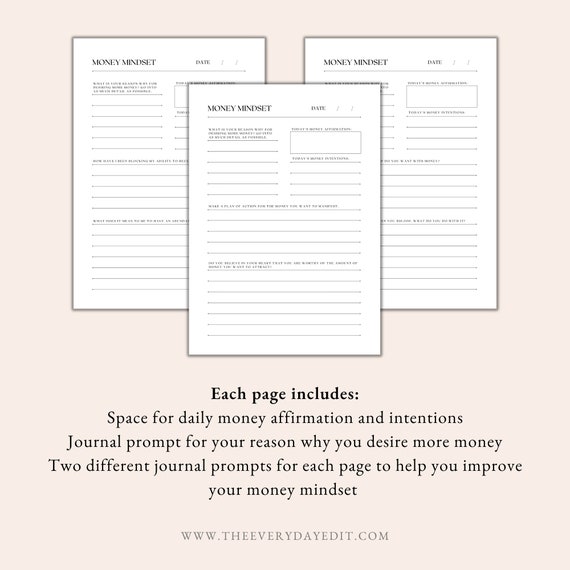
If you want a visual layout, there are printable pages for money mindset, daily checklists, and self-love prompts that combine structure with creativity. For example, many creators sell themed journaling pages and printable sets that help you focus on a specific area, like finances: Money Mindset Journaling Pages Printable.
Prompts to jump-start your mindset journaling
Prompts give focus and prevent blank-page paralysis. Use them as daily starters or pick one when you need clarity.
Quick prompts (2–5 minutes)
- What’s one positive thing I noticed today?
- What belief held me back today?
- What’s one tiny step I can take tomorrow?
Deeper prompts (10+ minutes)
- Which worry repeats most often? Where might it come from?
- Describe a past success. What traits did you use?
- Write a letter to your future self one year from now.
If you want more ideas, there are long lists of growth-focused prompts available — some lists include 50+ prompts specifically designed to build a growth mindset and shift perspective. See curated prompt lists like 55 Journal Prompts for a Growth Mindset for inspiration.
Overcoming common journaling roadblocks
Stalling is normal. Here are simple fixes for the most common problems.
“I don’t have time.”
Try a 3-minute entry. Use bullets. Consistency wins over length.
“I don’t know what to write.”
Pick a prompt or copy a short gratitude list: three things you’re thankful for today.
“I don’t want others to read this.”
Keep a password-protected file or a private notebook. Honesty matters more than polish.
Real-life examples and resources
Many writers and coaches use journaling to change thinking. Personal essays and community threads show how daily writing nudges growth. For a personal account of journaling to change mindset, check this piece: How I Use My Journal to Change My Mindset.
Online communities also share wins and tips. For example, discussion threads and personal stories on forums like Reddit highlight how journaling improves communication and self-awareness over time: r/AskMenOver30 thread.
To learn the basics of a mindset journal, you might like this overview that describes why a mindset journal becomes a safe space for working through thoughts: What is a Mindset Journal? The post explains that a mindset journal is “more than a notebook” — it’s a place to manage thoughts and show up as your best self.

Specialized journals: money, self-love, and more
Journals that target one area — for example, money mindset or self-love — can speed progress because they focus your attention on a single set of beliefs. If finances stress you, a money mindset journal helps make hidden beliefs about money visible. If you struggle with self-worth, a self-love journal offers prompts that build kindness toward yourself.
Many books and guided journals combine prompts with short lessons. One example is a journaling book that blends self-love prompts with daily exercises to cultivate compassion and inner strength: Mindset Medicine: A Journaling Power Self-Love Book.

Video walkthrough: a short guided approach
Sometimes watching a short guide helps you get started. Here’s a quick video that outlines simple journaling steps and prompts to try right away.
Advanced tips to deepen your practice
Once you have the habit, use these strategies to deepen your progress.
- Review weekly: Read your entries every 7 days to spot patterns.
- Track triggers: Note what situations prompt negative thoughts and design a short coping plan.
- Experiment: Test a new thought for a week. Write results.
- Celebrate: Record wins to build confidence—big and small.
For ongoing inspiration and fresh prompts, browse prompt lists from journaling coaches and bloggers — many post weekly prompts tied to growth goals. For example, creative teachers share themed prompts that shift perspective and guide future planning: Mindset Journaling Prompts.
How many times should you write? (practical guidelines)
If you’re new, aim for 3–5 times per week. If you want faster change, write daily. The key is regular, honest entries that focus on learning rather than perfection.
Common results people notice
After a month of steady journaling, readers often report:
- Clearer priorities and less mental clutter.
- Faster recovery from setbacks.
- Better communication, because writing helps organize thoughts before speaking (a point echoed in forum discussions about improved communication through journaling).
Resources and next steps
Want a guided start? Try a printable template, a prompt list, or a short journaling course. If you prefer articles, here are helpful reads:
- How I Use My Journal to Change My Mindset — personal account of writing to shift thinking.
- What is a Mindset Journal? — a friendly primer on what a mindset journal can be.
- How to Journal for Self-Growth — techniques for growth and emotional processing.
- Mindset Journaling Prompts — fresh prompts to reflect on your goals.
Quick plan you can start today
- Choose a notebook or app.
- Pick a 5-minute morning prompt and a 10-minute evening prompt.
- Write for 7 days and review your entries on day 8.
Stick to curiosity. Ask, “What can I learn?” rather than, “What’s wrong?” That switch makes your journal a tool for growth.
How long should each journaling session be?
Start with 3–10 minutes. Short, consistent sessions beat rare long ones. The goal is regular reflection, not long essays.
Can journaling really change my mindset?
Yes. Writing increases awareness of patterns and gives you a place to rehearse new beliefs. Many people report clearer thinking and reduced reactivity after a few weeks.
What if I don’t like what I write?
That’s normal. Use the journal as feedback, not an identity statement. Reframe negative entries into curious questions and action steps.
Where can I find more prompts?
Look for curated lists and printable pages from journaling blogs and creators (see the prompt collections linked above). You can also revisit past entries for new prompts.
Final note: Mindset journaling works when you treat it as practice rather than a performance. Be kind, be consistent, and track small wins.
Ready to begin? Try the 7-day plan above, and explore more guides and tools at zenpulsehub.com to deepen your practice.