Stretches to Correct Posture: 8 Easy Moves
Good posture starts with simple daily habits and targeted mobility work. In this guide you’ll learn practical stretches to correct posture that reduce slouching, relieve neck and upper-back tension, and help you stand taller without pain. These moves are easy to do at home or at your desk — no fancy equipment needed.
Why posture matters (and how stretches help)
Poor posture is more than a cosmetic issue. It can lead to neck pain, rounded shoulders, lower back strain, and fatigue. Regular, gentle stretching improves flexibility and reminds the body how to hold itself. Combined with strength work, these stretches make posture changes lasting.

How to use these stretches
Do each stretch slowly and breathe deeply. Aim for 20–60 seconds per stretch and repeat 2–3 times. You should feel a gentle pull — not sharp pain. If something hurts, stop and try a milder variation or consult a health professional.
Daily routine: Quick set of stretches to correct posture
Use this short routine when you have 10–15 minutes. It targets the chest, neck, upper back, and hips — common trouble spots for posture.
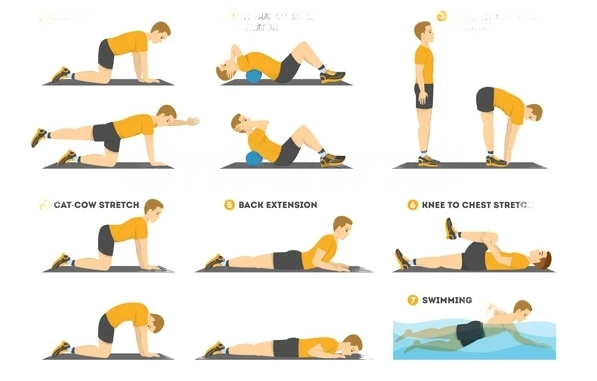
- Thoracic extension over a chair — opens the upper back and chest.
- Doorway chest stretch — stretches tight pectoral muscles that pull shoulders forward.
- Chin tucks — realigns the neck and counters forward head posture.
- Scapular squeezes — trains the shoulder blades to sit back.
- Levator/upper trap stretch — eases neck tension from phone and desk work.
- Hip flexor stretch — helps low-back alignment by lengthening tight hips.
- Child’s pose with shoulder stretch — long, gentle stretch for the back and shoulders.
- Standing hamstring stretch — supports pelvic position and lumbar posture.
Detailed instructions for each stretch
1. Thoracic extension over a chair
Sit with a firm chair behind you. Place the middle of your upper back on the top of the chair and gently lean back over it, supporting your head with your hands if needed. Breathe and let the chest open. Repeat 8–12 reps.
2. Doorway chest stretch
Stand in a doorway and place your forearms on either side of the frame with elbows at shoulder height. Step one foot forward until you feel a stretch across your chest. Keep the neck neutral and hold 20–40 seconds.
3. Chin tucks
Sit or stand tall. Gently draw your chin straight back (as if making a double chin). Keep eyes level. Hold 5 seconds, repeat 10 times. This strengthens deep neck flexors and reduces forward head posture.
4. Scapular squeezes
Sit or stand. Squeeze your shoulder blades together and down as if placing them into your back pockets. Hold 3–5 seconds, repeat 10–15 times. This strengthens the upper back muscles that keep shoulders from rolling forward.
5. Upper trapezius / levator stretch
Seated or standing, tilt your head to the right and gently pull with your right hand to increase the stretch on the left side of your neck. Hold 20–30 seconds and switch sides. Relax the shoulders.
6. Hip flexor stretch (kneeling lunge)
Kneel on one knee and step the other foot forward into a lunge. Tuck your pelvis slightly and press hips forward to feel a stretch through the front of the kneeling hip. Hold 30 seconds per side. Lengthening hip flexors can help reduce an exaggerated lower-back curve.
7. Child’s pose with shoulder reach
From hands and knees, sit back toward your heels with arms extended. Walk hands to one side, then the other, to open the shoulders. Hold for 30–60 seconds, breathe deeply.
8. Standing hamstring stretch
Place one heel on a low surface. Keep a slight bend in the knee and hinge at the hips until you feel a stretch behind the thigh. Hold 20–40 seconds each side. This keeps the pelvis balanced for better posture.
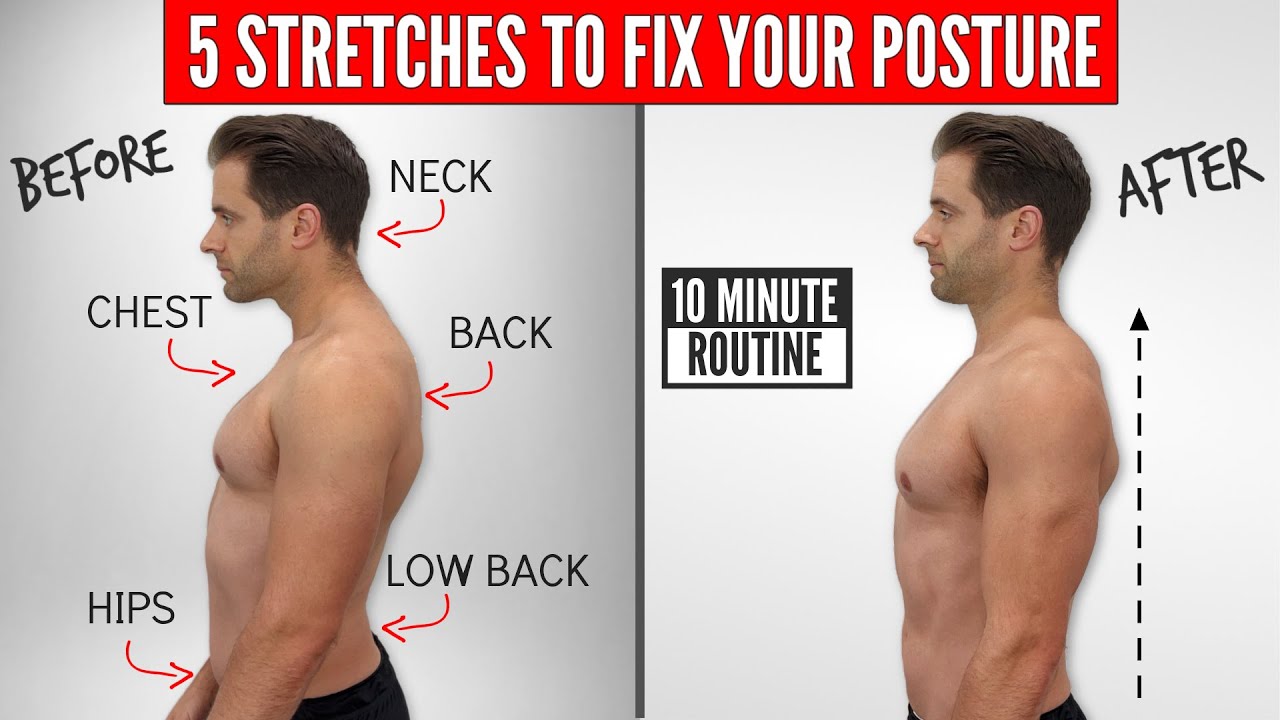
Video guide: Follow a 10-minute routine
Need a guided session? Follow this short video that walks through a quick posture routine you can do any day.
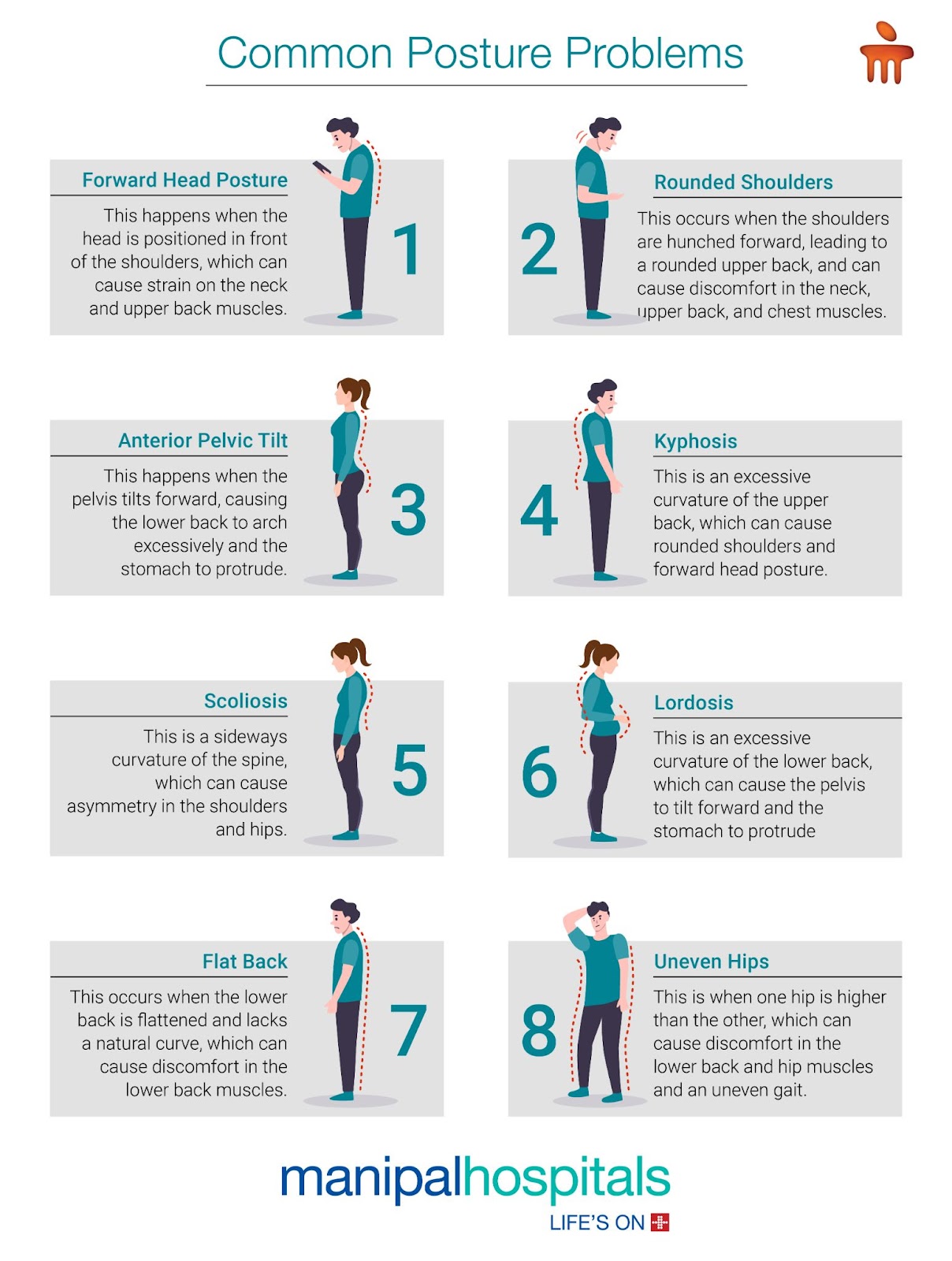
Common posture problems and targeted stretches
Many people share similar posture patterns. Here are quick fixes based on common issues.
- Forward head/rounded shoulders: Chin tucks, doorway chest stretch, scapular squeezes.
- Upper-crossed syndrome (tight chest, weak upper back): Thoracic extension, scapular squeezes, doorway stretch.
- Lower back arching / anterior pelvic tilt: Hip flexor stretch, hamstring stretch, core activation work.
Posture tips for the desk
Sitting all day makes posture worse. Combine stretches with ergonomic changes and small habits.
- Raise your screen so the top of the monitor is at eye level.
- Sit back in your chair with a small lumbar support; avoid slouching forward.
- Set a timer to stand and move every 30–45 minutes.
- Use chin tucks and scapular squeezes between tasks to reset your neck and shoulders.
For more workplace posture tips, check the quick guide from UCSB Student Health for easy, timed desk stretches: studenthealth.sa.ucsb.edu posture guide.
When to add strength work
Stretches improve mobility, but strength helps the body *keep* good posture. Consider adding exercises like planks, rows, and reverse flyes to build the muscles that hold your shoulders and spine in place. Resources like Healthline offer sample strength moves and progressions. Healthline notes that exercises such as high planks can improve core and back strength — both important for posture.
Trusted resources
If you want more depth, reputable sources include:
- Healthline — step-by-step posture exercises and strength tips.
- Cleveland Clinic — clinical guidance on shoulder blade and posture training.
- Harvard Health — research-based discussion on posture and aging.
- Reddit thread — community tips and exercise names like “neck ramping” for forward head posture.
How often should you do these stretches?
For most people, a daily short routine is best. If you’re dealing with a lot of tightness, perform the targeted stretches 2–3 times per day. Over time you’ll notice fewer aches and better posture when standing and walking.
Sample week plan
Here’s an easy schedule to follow as you build a habit.
- Days 1–7: Daily 10–15 minute mobility session (the quick routine above).
- Weeks 2–4: Add 2 strength sessions weekly (rows, planks, band pull-aparts).
- Ongoing: Short desk resets every 30–45 minutes; morning or evening stretch session.

Safety notes and when to see a professional
If you have a history of spine injury, persistent pain, or neurological symptoms like numbness or weakness, consult a physical therapist or physician before starting a new routine. The Cleveland Clinic guide on posture exercises has useful clinical recommendations and safe progressions: Cleveland Clinic posture exercises.
Monitoring progress
Track changes with simple checks:
- Take a weekly full-length photo from the side — notice alignment of ear, shoulder, hip, and ankle.
- Record pain and stiffness on a scale of 0–10 before and after the routine.
- Notice endurance: can you sit or stand longer without slouching?
Putting it all together
Use these gentle stretches to correct posture daily and pair them with strengthening moves and ergonomic changes. Consistency is the key — small steps every day make a big difference in how you feel and move.
Frequently Asked Questions
How soon will I see improvements in my posture?
Small gains in flexibility and reduced tension can appear in a few days. Noticeable posture changes usually take 4–8 weeks of consistent daily work and some strength training to be more permanent.
Can stretching alone fix poor posture?
Stretching improves mobility, but strengthening the upper back and core is equally important to maintain posture. Combine stretches with exercises like planks, rows, and scapular work for best results.
Are these stretches safe for people with back pain?
Many of these stretches are safe for general back stiffness, but if you have a diagnosed spinal condition or acute pain, get a professional assessment first. Use gentler variations and avoid any movement that increases sharp pain.
Where can I find more posture routines?
Trusted sources like Healthline (posture exercises) and Harvard Health offer step-by-step guides and strength progressions. The UCSB posture PDF has quick desk-friendly moves you can do with a timer.
Final tips
Be consistent, start small, and listen to your body. With daily practice of these stretches and a few strength moves, you’ll soon notice better alignment, less pain, and more comfortable movement. Use the routines above and the linked resources to create a plan that fits your schedule.
Ready to stand taller? Explore more posture and mobility guides at zenpulsehub.com and build a lasting habit for better posture and less pain.