

what causes b12 deficiency: Causes & Fixes
What causes b12 deficiency is a question many people ask when they feel tired, tingly, or just not themselves. In this guide you’ll get clear, practical answers: the common causes, how it affects your body, tests to check your levels, and evidence-based ways to treat and prevent deficiency. This article explains the topic in plain language and helps you take next steps.
Quick overview: Why B12 matters
Vitamin B12 (cobalamin) is essential for making red blood cells, keeping your nervous system healthy, and supporting DNA production. Without enough B12, your body struggles to make healthy blood and maintain nerve function. That’s why even a mild shortage can cause symptoms like fatigue, memory problems, and numbness.
what causes b12 deficiency: Main causes
Understanding what causes b12 deficiency helps you spot risk factors and get timely treatment. The most common causes include:
- Pernicious anemia: An autoimmune condition where your stomach stops making intrinsic factor — a protein needed to absorb B12. This is a leading cause in many adults.
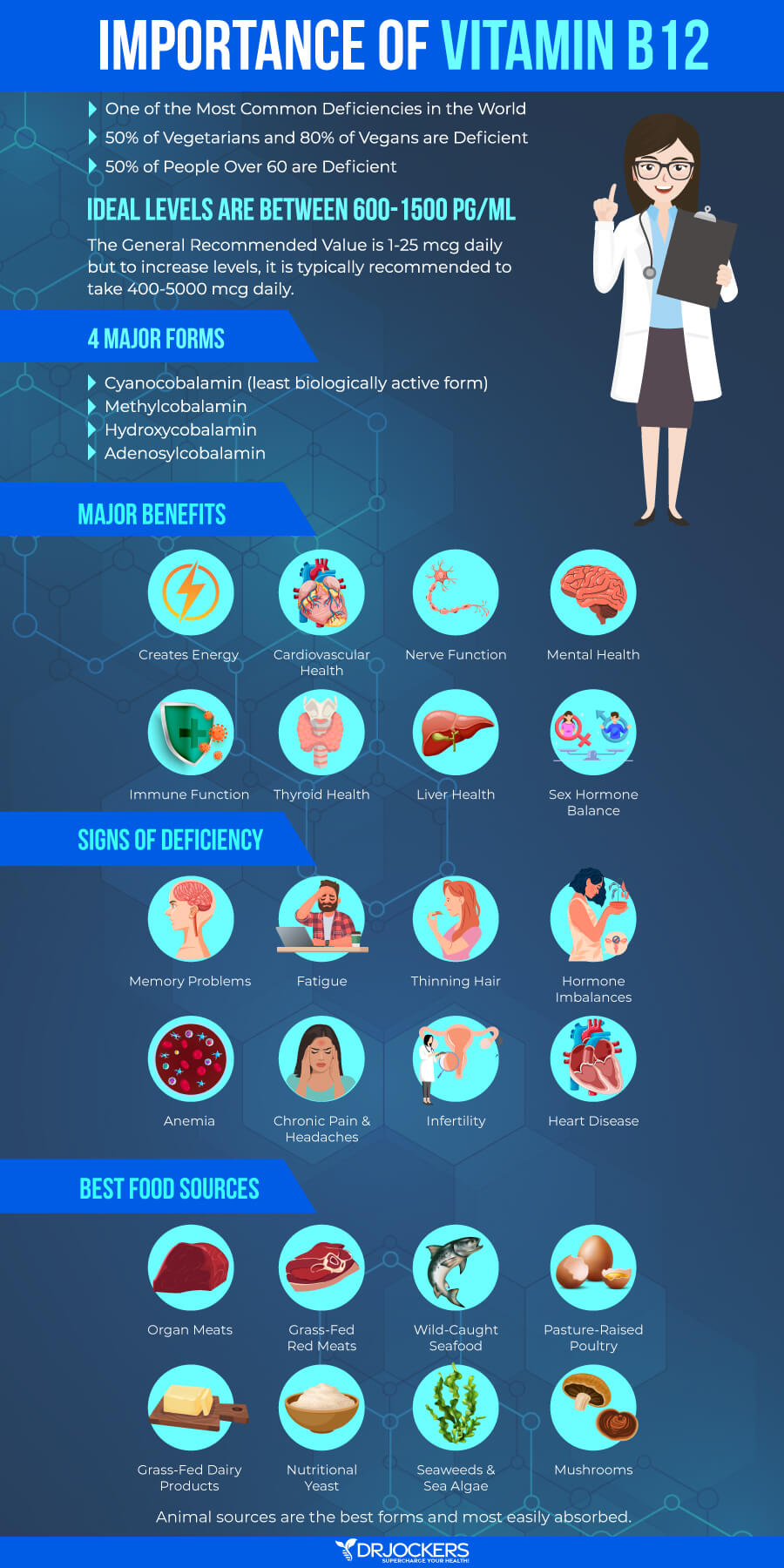
- Low dietary intake: People who follow strict vegan or vegetarian diets may not get enough B12 from food because it’s mainly found in animal products.
- Stomach conditions: Chronic gastritis, gastric bypass surgery, or long-term use of acid-reducing medicines can reduce B12 absorption.
- Intestinal disorders: Conditions like celiac disease, Crohn’s disease, or bacterial overgrowth can interfere with absorption in the small intestine.
- Medications: Certain drugs (metformin, proton pump inhibitors, some anticonvulsants) can reduce B12 levels over time.
- Age: Older adults often absorb B12 less efficiently and are at higher risk.
Evidence and trusted sources
Trusted health pages describe these causes clearly. For example, the Cleveland Clinic explains diet and absorption issues as primary causes, and the NHS lists pernicious anemia, stomach and intestinal conditions, medicines, and other functional issues as common reasons for deficiency. If you want a medically focused overview, the Cleveland Clinic page is a good place to start.
:max_bytes(150000):strip_icc()/vitamin-b12-deficiency-2488570_final-f6046c0de6114c14a488433ca2b19142.jpg)
Who is most at risk?
Some people are more likely to develop a deficiency. Risk groups include:
- Vegetarians and especially vegans who don’t use fortified foods or supplements.
- Older adults (reduced stomach acid and absorption).
- People with gastrointestinal disorders (celiac, Crohn’s, bacterial overgrowth).
- Those who had gastric surgery or bariatric procedures.
- People on long-term metformin or proton pump inhibitor therapy.
Symptoms to watch for
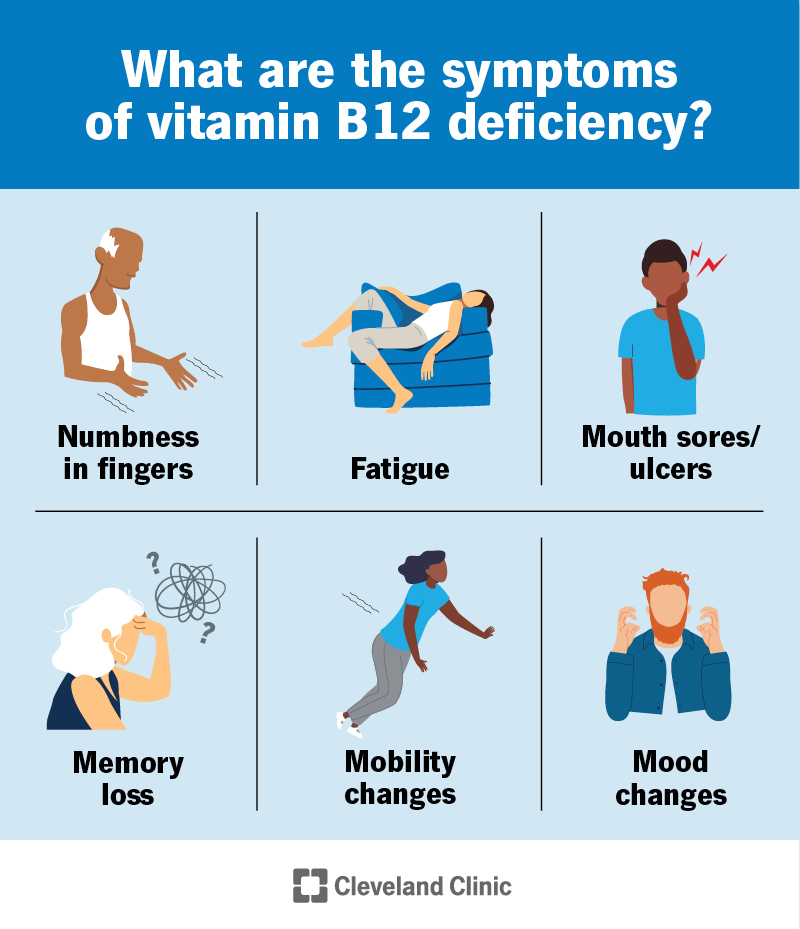
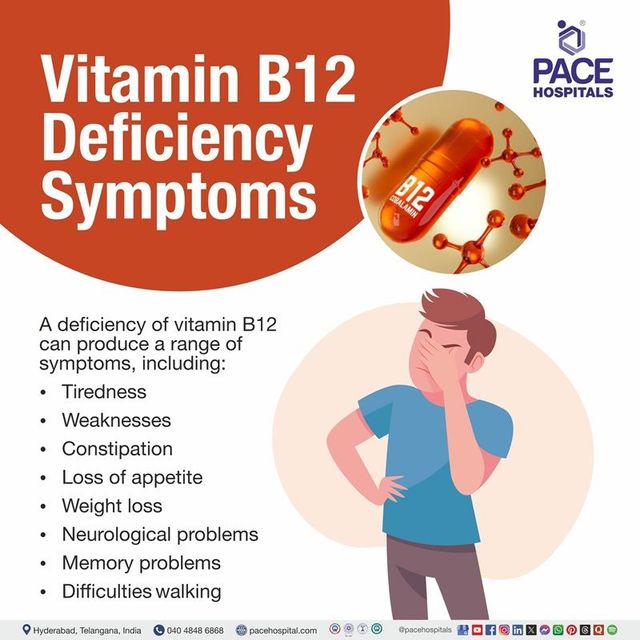
Symptoms vary by severity and how long the deficiency has been present. Early signs are often subtle and may be overlooked:
- Fatigue and weakness — often the first sign.
- Pale or jaundiced skin due to abnormal red blood cell production.
- Neurological signs: tingling or numbness in hands and feet, balance problems, and difficulty walking.
- Cognitive issues: memory problems, difficulty concentrating, and mood changes.
- Glossitis and mouth ulcers: soreness or a smooth, red tongue.
If neurological symptoms appear, prompt treatment is important because nerve damage can become permanent if left untreated.
How doctors diagnose B12 deficiency
Diagnosis starts with symptoms and a blood test. Common tests include:
- Serum B12 level — the basic screening test (but results can be misleading in some cases).
- Complete blood count (CBC) — checks for anemia and abnormal red blood cells.
- Methylmalonic acid (MMA) and homocysteine levels — often used to detect early or functional deficiency.
- Intrinsic factor antibodies and parietal cell antibodies — used to diagnose pernicious anemia.
- Tests for underlying causes like celiac serology or tests for bacterial overgrowth as needed.
National resources describe these steps in detail. For more details about symptoms and testing, see the National Heart, Lung, and Blood Institute and the NHS guidance.
Treatment options
Treatment depends on cause and severity. The main goals are to restore normal B12 levels and treat any underlying condition.
Common treatments
- Oral supplements: High-dose oral B12 tablets or sublingual forms can work well for many people, including vegetarians and older adults.
- Intramuscular injections: Used when absorption is severely impaired (for example, pernicious anemia or after certain surgeries). Injections rapidly restore levels and ease symptoms.
- Dietary changes: Increase B12-rich foods like meat, fish, dairy, and fortified cereals. Vegans should use fortified foods or take supplements.
- Treating underlying issues: Address stomach or intestinal disease, change medications if they’re contributing, or treat bacterial overgrowth.
The WebMD page summarizes how diet and medical treatments are used to correct B12 deficiency.
:max_bytes(150000):strip_icc()/vitamin-b12-and-multiple-sclerosis-2440634_FINAL-bb9eab4db013493f85f9b708c5c1a3c4.png)
Prevention: simple steps you can take
Preventing deficiency is often straightforward:
- Include B12-rich foods in your diet: fish, meat, eggs, dairy, and fortified plant foods.
- If you’re vegan, take a reliable B12 supplement or use fortified foods daily.
- Discuss long-term medications (like metformin or PPIs) with your doctor and check levels if you’re on them.
- Older adults should be screened periodically because absorption declines with age.
For practical tips on signs, treatment, and prevention, the Mayo Clinic offers clear patient-focused advice.
When to see a doctor
See a healthcare provider if you have persistent fatigue, numbness/tingling, mood changes, or unexplained anemia. Early testing and treatment prevent long-term nerve damage. If you suspect a deficiency, a simple blood test ordered by your doctor can confirm it.
How long does recovery take?
Many people feel better within days to weeks after treatment begins, especially for energy and mood. Neurological symptoms can improve more slowly and may take months. Severe or long-standing nerve damage can be only partially reversible, reinforcing the value of early diagnosis.
Practical tips for different lifestyles
For vegetarians and vegans
Plan for B12 sources. Use fortified plant milks, cereals, nutritional yeast with B12, or a daily supplement. Regular blood checks can confirm you’re maintaining healthy levels.
For older adults
Ask your doctor about B12 screening, especially if you have anemia, cognitive symptoms, or take acid-reducing medicines.
For people on long-term medications (metformin or PPIs)
Discuss monitoring with your clinician. Sometimes changing dose/timing or adding a supplement is necessary.
Research notes and special topics
Research continues into links between B12 and conditions like cognitive decline, multiple sclerosis symptoms, and cancer-related anemia. While low B12 is associated with some of these conditions, it’s important to follow clinical advice tailored to your situation. For up-to-date overviews, refer to trusted medical resources like the Cleveland Clinic and NIH pages linked above.
Embedded video: How B12 works and what causes deficiency
Watch this short explainer for a visual overview:
Summary: key takeaways
- what causes b12 deificiency include poor diet, absorption problems from stomach or intestinal conditions, pernicious anemia, certain medications, and age-related changes.
- Symptoms range from fatigue to neurological signs; early testing is important.
- Diagnosis uses blood tests like serum B12, MMA, and CBC; treatment includes supplements, injections, and addressing underlying causes.
- Prevention is easy for most people with diet changes, fortified foods, or supplements.
Frequently asked questions
Can a vegan get enough B12 without supplements?
Yes, but it requires consistent use of fortified foods or a reliable supplement. Natural plant foods generally do not provide enough B12, so fortified options or pills are the safest route.
Are B12 injections better than pills?
Injections are preferred when absorption is impaired (for example, pernicious anemia or after gastric surgery). For many people with normal absorption, high-dose oral supplements work well.
How often should I test my B12 levels?
If you’re at risk (older age, certain medications, digestive disease, or vegan diet), check levels annually or as your doctor recommends. If you’re being treated for deficiency, follow-up testing ensures levels return to and stay in the healthy range.
Can low B12 cause permanent nerve damage?
Prolonged, untreated deficiency can lead to permanent nerve damage. That’s why early diagnosis and treatment matter—symptoms improve much better when treatment starts early.
Further reading and resources
For deeper medical details and guidance, these trusted sources are helpful:
- Cleveland Clinic — Vitamin B12 deficiency (overview of causes and treatment).
- NHS — Causes of vitamin B12 deficiency (clear breakdown of pernicious anemia, diet, stomach and intestinal conditions, and medicines).
- NHLBI — Vitamin B12–deficiency anemia (symptoms and tests explained).
- WebMD — Symptoms and causes (practical guidance on diet and supplements).
- Mayo Clinic — Symptoms and causes (patient-focused advice on testing and treatment).
Takeaway: If you suspect low B12, don’t ignore persistent fatigue, numbness, or memory problems. Get tested and discuss treatment options. With timely care, most people recover well.
Interested in learning more about nutrition and health? Explore more practical guides at zenpulsehub.com to stay informed and healthy.