

What Deficiency Causes Hair Loss: Key Nutrients
What deficiency causes hair loss is one of the most common questions people ask when they notice thinning or shedding. Nutrient gaps can weaken hair structure, shorten the growth phase, and trigger shedding — but not every case of hair loss is nutritional. This guide explains the most important deficiencies linked to hair loss, how to test for them, food and supplement solutions, and practical prevention tips.

Which deficiencies most often cause hair loss?
Several nutrient deficiencies are repeatedly linked to hair loss in research and clinical practice. The most well-supported are iron deficiency and vitamin D, but others (biotin, zinc, folate, vitamins A, E and C) also play roles. Below we break each one down with symptoms, tests, food sources, and safe supplement tips.

Top nutrient causes and what to look for
1. Iron (and iron-deficiency anemia)
Why it matters: Iron is critical for oxygen delivery to cells, including hair follicle cells. Low iron reduces hair growth and can cause telogen effluvium — widespread shedding.
Signs: Fatigue, pale skin, brittle nails, heavy periods in people who menstruate. Hair becomes thin, especially across the scalp.
Testing: Ferritin (storage iron) and a full blood count. Ferritin under 30–50 ng/mL is often associated with hair loss; thresholds vary by lab.
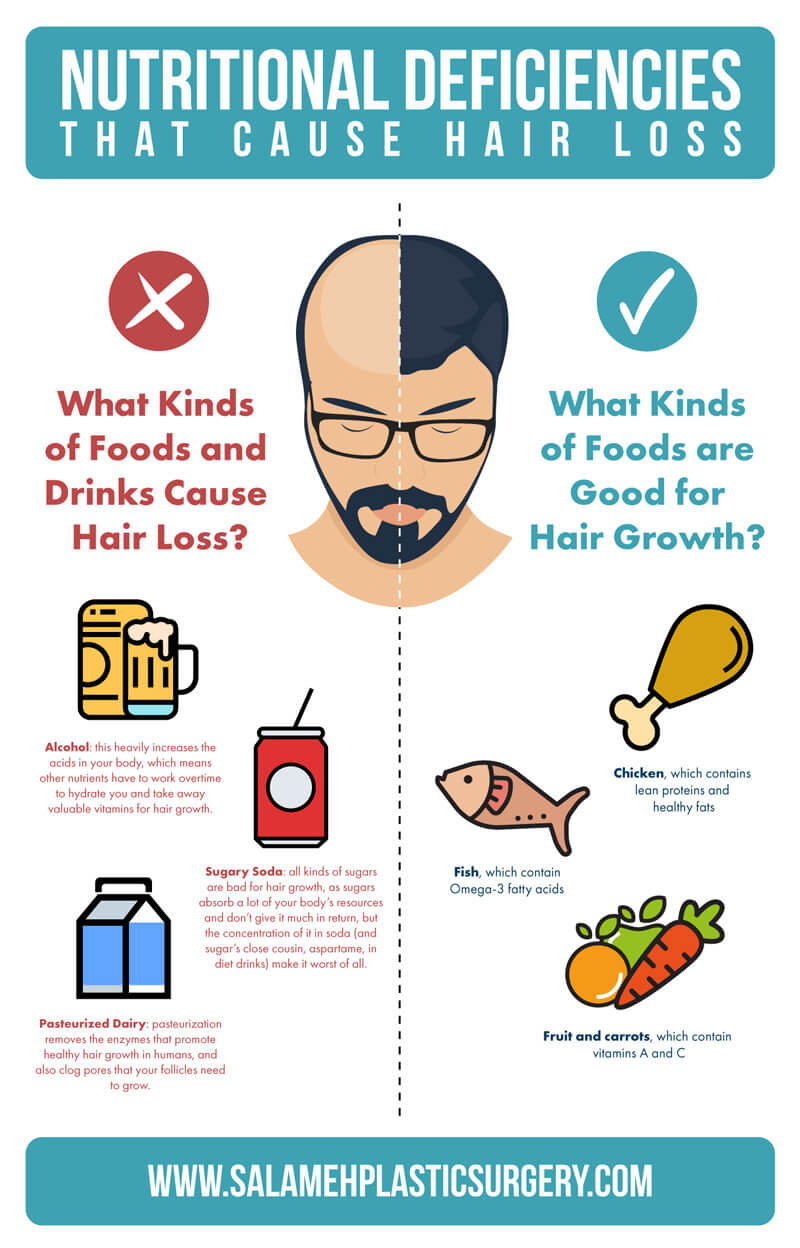
Sources: Red meat, poultry, fish, lentils, spinach, fortified cereals. Vitamin C helps absorb plant (non-heme) iron.
Iron deficiency is one of the most well-researched nutrient causes of hair loss — read a focused review here: Iron and hair loss (PMC).
2. Vitamin D
Why it matters: Vitamin D influences hair follicle cycling and immune response. Low vitamin D is linked with certain hair loss conditions like alopecia areata and general hair thinning.
Signs: Bone pain, fatigue, mood changes; often no clear symptoms until levels are low.
Testing: 25(OH)D blood test.
Sources: Sun exposure, fatty fish, fortified dairy or plant milk, egg yolks. Supplements are commonly used when levels are low.
For a review of vitamin D’s role in hair health, see this article: Vitamin D and hair disorders (PMC).
3. Biotin (Vitamin B7)
Why it matters: Biotin is involved in keratin production, the protein that makes up hair. True biotin deficiency is rare, but when present it can cause thinning and brittle hair.
Signs: Hair thinning, brittle nails, and sometimes skin rash.
Sources: Eggs (yolks), nuts, seeds, salmon, avocado, and whole grains.
Note: Supplementing biotin when you don’t have a deficiency usually isn’t helpful and can interfere with some lab tests. Test first if possible.
4. Zinc
Why it matters: Zinc supports hair tissue growth and repair and keeps oil glands working properly around hair follicles.
Signs: Hair loss, slow wound healing, frequent infections.
Sources: Oysters (very high), red meat, poultry, beans, nuts, whole grains. Excess zinc can cause copper deficiency, so avoid long-term high doses without monitoring.
5. Folate (Folic acid) and B12
Why it matters: These B vitamins support red blood cell production and DNA synthesis — important for growing hair follicles.
Signs: Fatigue, pale skin, tingling (B12), or mouth sores (folate). Low levels may indirectly affect hair through anemia.
Sources: Leafy greens, legumes, fortified grains, eggs, meat (B12), and dairy.
6. Vitamins A, C and E
Why they matter: Vitamin A supports cell growth; vitamin C helps iron absorption and acts as an antioxidant; vitamin E protects cells from oxidative damage. Both deficiency and excess of vitamin A can affect hair, so balance matters.
Sources: Vitamin A — sweet potatoes, carrots, liver (avoid excess); Vitamin C — citrus, peppers, strawberries; Vitamin E — nuts, seeds, spinach.
Harvard Health highlights Vitamin C’s role in iron absorption when dealing with hair loss and iron deficiency: Vitamins, minerals and hair loss (Harvard Health).
How common are these deficiencies as causes?
Not all hair loss is caused by nutrition. Conditions like androgenetic alopecia (pattern hair loss) and autoimmune alopecia have different triggers. However, studies show that correcting low nutrient levels often helps people with diffuse shedding (telogen effluvium) or mixed causes. A general review of hair loss types and nutritional links is available here: Androgenetic alopecia and telogen effluvium review.
How to figure out if nutrition is the issue
- Track the pattern: Diffuse shedding across the scalp often suggests telogen effluvium, which can be triggered by nutritional deficits. Thinning at the crown or temples often indicates genetic pattern hair loss.
- Get basic blood tests: Ask your clinician for ferritin, CBC, 25(OH)D, thyroid tests, zinc, folate, B12 if you suspect deficiency.
- Review diet and life events: Rapid weight loss, restrictive diets, pregnancy, surgery, and illness can all cause deficiency-related hair loss.
- Consult a dermatologist or trichologist: They can examine your scalp and recommend targeted testing and treatments.

Practical diet and supplement strategies
Before starting supplements, it’s best to confirm deficiency with lab testing. Here’s a simple, safe approach:
Food-first plan
- Iron: Add lean red meat twice weekly or plant-based iron (lentils, tofu) daily, with vitamin C-rich foods to boost absorption.
- Vitamin D: Spend short daily time in the sun when possible and include fatty fish or fortified foods.
- Zinc and biotin: Include nuts, seeds, eggs, and whole grains.
- B vitamins: Eat leafy greens, beans, and animal sources for B12.
When to consider supplements
If testing shows deficiency, supplementing under medical guidance is sensible. Examples:
- Low ferritin: iron supplements (ferrous sulfate or ferrous gluconate) with vitamin C — only under supervision to avoid excess iron.
- Low vitamin D: vitamin D3 drops or capsules until levels normalize.
- Confirmed zinc deficiency: short courses of zinc with monitoring to avoid copper imbalance.
WellMed lists common vitamin deficiencies linked to hair loss and can help you prioritize testing: 7 vitamin deficiencies that cause hair loss (WellMed).

Common myths and cautions
Myth: High-dose supplements always help hair. Fact: Excess of some nutrients (like vitamin A or iron) can cause hair loss or other health issues.
Caution: Biotin supplements can interfere with lab tests (including thyroid and troponin), producing false results. Tell your clinician if you’re taking high-dose biotin.
Tip: Use supplements only when tests show deficiency or a clinician recommends them. A balanced diet often prevents most deficiencies.
When to see a doctor or dermatologist
- If you notice sudden, heavy shedding (more than a handful per day) or bald patches.
- If hair loss is accompanied by other symptoms — fatigue, rapid weight change, scalp inflammation, or signs of systemic illness.
- If dietary changes and initial supplements don’t help after 3–6 months.
How quickly does hair recover after fixing a deficiency?
Hair grows slowly — roughly 1 to 1.5 cm per month. Once the deficiency is corrected, you may see reduced shedding within 6–12 weeks and noticeable regrowth in 3–6 months. Full improvement can take up to a year depending on the condition and severity.
Other causes of hair loss to consider
It’s important to remember that what deficiency causes hair loss is only part of the picture. Other common causes include:
- Genetic pattern hair loss (androgenetic alopecia)
- Autoimmune alopecia areata
- Thyroid disease
- Medications and chemotherapy
- Stress, poor sleep, and hormonal changes
Summary: What deficiency causes hair loss — quick checklist
Use this quick checklist to determine whether nutrition might be part of the issue:
- Do you have a restrictive diet, recent crash diet, or heavy menstrual bleeding? Consider testing iron and ferritin.
- Do you get little sun or have risk factors for low vitamin D? Test 25(OH)D.
- Are you experiencing overall poor nutrition, vegan or vegetarian without planning? Check B12, folate, iron, and zinc.
- If hair loss is sudden or patchy, see a dermatologist for targeted evaluation.
Video: Quick explainer
Evidence and further reading
For clinicians and curious readers, here are some helpful sources:
- WellMed summary of 7 vitamin deficiencies that cause hair loss: WellMed article.
- PMC review on vitamin D and hair disorders: PMC article.
- PMC review highlighting iron deficiency as a common nutritional cause: Iron and hair loss (PMC).
- Harvard Health discussion on vitamins, minerals and hair loss, including vitamin C’s role in iron absorption: Harvard Health.
- National Council on Aging piece noting vitamin A’s role in cell growth and hair: NCOA: Vitamin deficiencies and hair loss.
Final takeaways
If you’re wondering what deficiency causes hair loss, start with iron and vitamin D testing and review your diet. Most nutrition-related hair loss improves when deficiencies are corrected, but recovery takes time. Work with a clinician to test before supplementing, and keep a food-first mindset whenever possible.
Want more reliable guides? Explore other hair, skin, and health articles at zenpulsehub.com to build a long-term plan for healthy hair.
FAQ
Which single deficiency most commonly causes hair loss?
Iron deficiency (low ferritin) is the most commonly identified nutrient deficiency linked to hair loss. It’s frequently checked first when people present with diffuse thinning.
Can taking biotin help with hair loss?
Biotin can help if you have a true biotin deficiency, which is rare. High-dose biotin without a confirmed deficiency usually won’t help and may interfere with lab tests. Test before supplementing.
How long until hair grows back after correcting a deficiency?
Expect to see reduced shedding within 6–12 weeks and noticeable regrowth in 3–6 months. Full recovery can take up to a year depending on the cause and severity.
Should I take a multivitamin for hair loss?
A balanced multivitamin can cover basic needs, but targeted supplementation based on lab-confirmed deficiencies is more effective. Avoid megadoses unless recommended by a clinician.