Benefits of Morning Yoga for Focus
Benefits of Morning Yoga for Focus are more than a wellness trend — they’re a practical way to sharpen attention, reduce morning stress, and start days with clear intention. In this post you’ll learn how simple stretches, breathwork, and a short practice can boost concentration, mood, and productivity.
Why morning matters: small routine, big changes
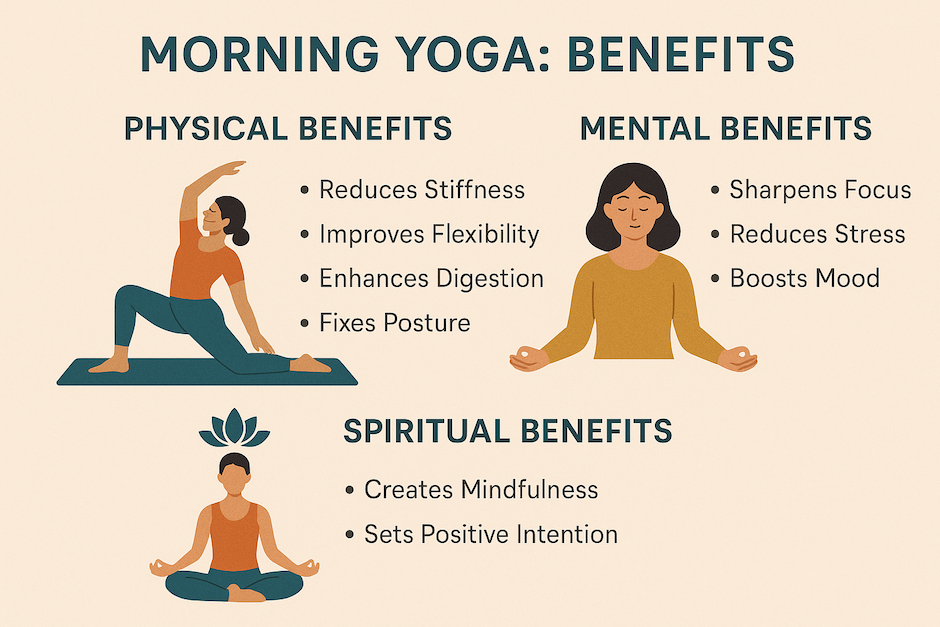
How you begin the day shapes mental clarity. A short yoga practice helps shift the brain from autopilot to present-moment awareness. The benefits of morning yoga for focus include improved attention, calmer reactions to stress, and an energized yet grounded start — all without a cup of coffee.
Benefits of Morning Yoga for Focus: What the Science Says
Researchers have repeatedly linked yoga with better concentration and reduced anxiety. A study indexed on PubMed found yoga practice supports healthier behavior patterns and may improve attention and mood in community samples. For a helpful overview of morning-specific studies and practical benefits, Virtuagym has a clear summary of how morning yoga supports concentration and lowers stress (Virtuagym).
Other research and articles — including coverage by Prevention and Harvard Health — highlight that yoga combines movement, breath, and mindfulness to improve cognitive function and emotional regulation (Prevention; Harvard Health).
Key physiological effects
- Improved blood flow: gentle stretches increase circulation, delivering oxygen to the brain.
- Breath regulation: controlled breathing calms the nervous system and sharpens attention.
- Reduced cortisol: regular practice helps lower stress hormones that cloud thinking.
- Mindfulness training: short meditative elements train sustained focus and reduce distraction.
How morning yoga improves focus — practical effects
The benefits of morning yoga for focus show up in day-to-day life. Here’s how:
- Sharper attention: short sequences prime the brain for complex tasks.
- Consistent energy: movement reduces mid-morning crashes.
- Faster recovery from stress: breathing tools lower reactivity to interruptions.
- Better decision-making: clarity and calm support thoughtful choices.
Real-world examples
Workers who start with a brief practice often report improved concentration during morning meetings. Students using breathwork and movement before studying find that recall and focus are easier to sustain.
Simple science-backed tools to include
Combine movement and breath to get a quick cognitive boost. Here are evidence-informed options:
- Cat-Cow — helps release spinal tension and synchronizes breath and movement.
- Downward Dog — increases circulation and wakes the whole body.
- Standing Forward Fold — calms the nervous system and reduces overstimulation.
- Gentle Twists — encourage alertness and improve digestion for steady energy.
- Breath of Three — inhale for four, hold two, exhale for four; repeat 3–5 times to settle the mind.

Quick 15-minute morning routine for focus
Try this short sequence on busy mornings. It requires no special equipment and can be done at home or in a small office corner.
- 0:00–1:30 — Seated breathwork (box breathing: inhale 4, hold 2, exhale 4).
- 1:30–4:00 — Cat-Cow flow to mobilize the spine.
- 4:00–6:30 — Downward Dog to energize the body.
- 6:30–8:00 — Standing Forward Fold to calm the nervous system.
- 8:00–10:00 — Low lunge with chest opener to release hip tension.
- 10:00–12:00 — Gentle twist on both sides to promote digestion and alertness.
- 12:00–14:30 — Seated mindful breathing to sharpen focus.
- 14:30–15:00 — Short intention-setting: choose 1–3 priorities for the morning.
Tip: Keep a short playlist or timer to stay consistent. Even 10–15 minutes can deliver clear benefits.
Breath and meditation: the focus multiplier
Movement wakes the body; breath trains the mind. Regular breathwork and short meditations increase sustained attention and reduce distractibility. A two- to ten-minute morning meditation can make your tasks feel less scattered and more manageable.
For examples of quick meditations that pair well with morning movement, see the guided 10-minute options shared by several wellness sites and apps. A regular morning habit that mixes yoga and short meditation amplifies the benefits of morning yoga for focus.
How to make morning yoga a habit
Habits form faster with simple cues and clear rewards. Use these habit-hacking tips:
- Start small: commit to 5–10 minutes daily for the first two weeks.
- Set a cue: place your mat where you’ll see it when you wake up.
- Pair with an anchor: practice after brushing teeth or before coffee.
- Track progress: use a calendar or app to mark days you practice.
- Be flexible: short, consistent practice beats a long session once in a while.
When to skip or adapt
If you feel dizzy, excessively tired, or injured, choose gentler poses or rest instead. Always listen to your body and adapt poses to meet your needs.
Tips for different schedules and lifestyles
Whether you’re an early riser, a busy parent, or someone who prefers to stretch right after getting out of bed, morning yoga can fit your life. Here are tailored suggestions:
- Busy professionals: aim for a targeted 10-minute sequence focused on neck, shoulders, and breath to prepare for meetings.
- Students: use a 12-minute routine before study blocks to boost recall and concentration.
- Parents: try a 7–10 minute practice while kids have breakfast or during a calm moment.
- Shift workers: orient practice around sleep patterns; focus on gentle mobility and breath if sleep-deprived.
Safety, modifications, and accessibility
Yoga is adaptable. If mobility or balance is a concern, use a chair for support and focus on seated breathwork and gentle range-of-motion exercises. For chronic conditions, check guidance from medical sources like Harvard Health (Harvard Health) or consult a healthcare professional before starting.
Evidence-based cautions
Yoga is generally safe, but if you have a history of injury or severe anxiety, modify the intensity. Some studies show yoga helps reduce anxiety symptoms, though it may be less effective than targeted therapies like CBT for long-term clinical treatment (ScienceFocus).
Practical evidence: what people notice
Many people report these practical changes after a consistent morning practice:
- Clearer priorities and faster start to work tasks.
- Less emotional reactivity when plans change.
- Improved energy distribution across the morning hours.
If you want to read more about broader mental-health benefits of a regular practice, a useful review in the American Journal of Health Behavior discusses behavior change through physical activity and mindful movement (PubMed).
Morning yoga and productivity: a balanced view
While morning yoga is not a magic bullet, it provides a low-cost, low-risk way to train attention and emotional balance. Combining movement with focused breath regularly supports cognitive performance and resilience.
Tools and resources
Looking for guided options? Try short YouTube flows or apps that offer 10–20 minute morning classes. Below is a reliable guided session to get started.
Guided morning yoga to boost focus and energy
Putting it all together
Start with a tiny habit, and build up. The real power of the benefits of morning yoga for focus comes from consistency. Even short, daily practices improve attention and emotional balance over time.
Quick checklist to begin
- Choose a 10–15 minute routine you enjoy.
- Set a visible cue (mat, sticky note, alarm label).
- Track 14 consecutive days to form a habit.
- Adjust intensity to how you feel each morning.
Want to learn more? Explore guides on breathing, short sequences for office breaks, and mindful habits to keep your focus strong all day long.
How long before I notice benefits?
Many people notice small improvements in focus and mood within 1–2 weeks of daily short practice. Larger changes in stress resilience and sustained attention often take 4–8 weeks of regular practice.
Can I practice on days I feel rushed?
Yes. Even 5–10 minutes of breathwork and a few stretches help. Focus on key poses that wake the body and calm the mind, like Cat-Cow, Downward Dog, and a short seated breathing practice.
Is morning yoga better than evening practice?
Both have benefits. Morning yoga primes focus and energy. Evening practice supports relaxation and sleep. Choose a time that you can do consistently; morning practice tends to be best for attention and productivity during the day.
Are there safety concerns?
Keep movements gentle if you have injuries or chronic conditions. Consult a healthcare professional when in doubt. Harvard Health offers general guidance on safe practice and mental health benefits (Harvard Health).
Final thought: The benefits of morning yoga for focus are practical and accessible. Start small, stay consistent, and notice how clarity and calm transform your mornings.
Ready to try a short practice? Explore more step-by-step guides and routines at zenpulsehub.com and build a focused, energized morning you love.