

Sleep Hygiene Tips for Better Sleep
Sleep hygiene tips are simple habits and bedroom tweaks that help you fall asleep faster, stay asleep, and wake up refreshed. Whether you struggle with occasional restless nights or want to optimize nightly rest, this guide breaks the science down into friendly, practical steps you can try tonight.
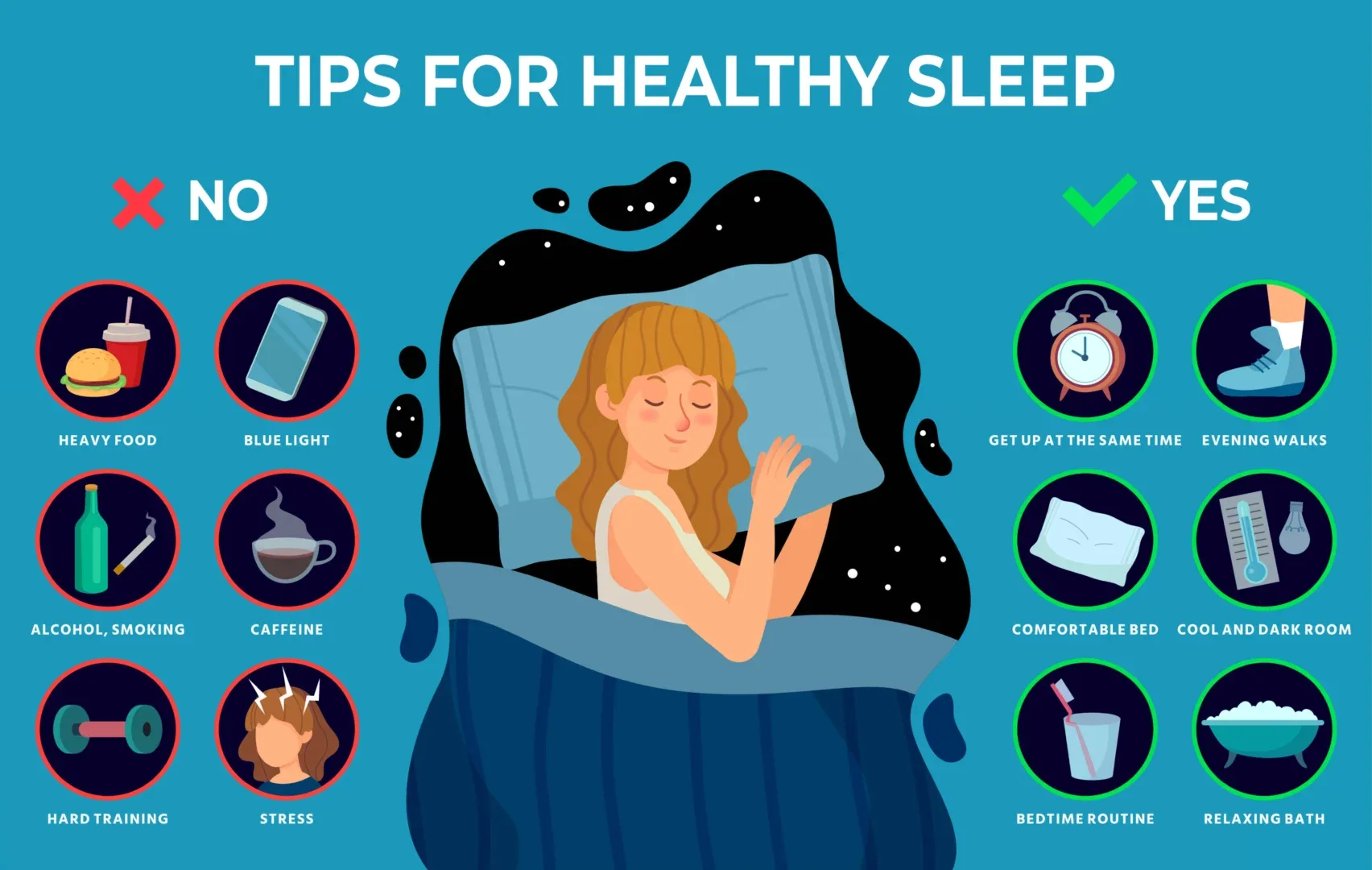
Why sleep hygiene tips matter
Good sleep isn’t a luxury — it’s a foundation for mood, focus, immunity, and long-term health. Small, consistent changes produce big benefits: better memory, fewer mid-day slumps, and improved resilience. These sleep hygiene tips focus on routines, the bedroom environment, and daily habits to help your body learn when it’s time to sleep.
How sleep works — a quick, friendly primer
Your sleep is controlled by two main systems: the circadian rhythm (your body clock) and sleep pressure (how tired you get during the day). Aligning routines with your natural rhythm and allowing sleep pressure to build will make falling and staying asleep easier.
Science-backed reasons to try good sleep hygiene
- Consistent timing strengthens your circadian rhythm and improves sleep quality.
- Dark, cool rooms support melatonin production and deeper sleep.
- Evening routines signal to your brain that it’s time to wind down.
Top sleep hygiene tips you can start tonight
Below are practical, easy-to-follow sleep hygiene tips grouped so you can pick a few to try this week.
Bedroom and environment
- Keep it cool: Aim for 60–67°F (15–19°C) if possible; lower temperatures help you fall asleep faster.
- Darkness matters: Use blackout curtains and dim lights an hour before bed to boost melatonin.
- Limit noise: White noise machines or earplugs can protect sleep from sudden sounds.
- Comfort first: Choose a mattress and pillow that support your sleep posture—small discomforts add up.
- Reserve the bed for sleep and intimacy: Avoid working or long screen sessions in bed to keep a strong mental association between bed and sleep.
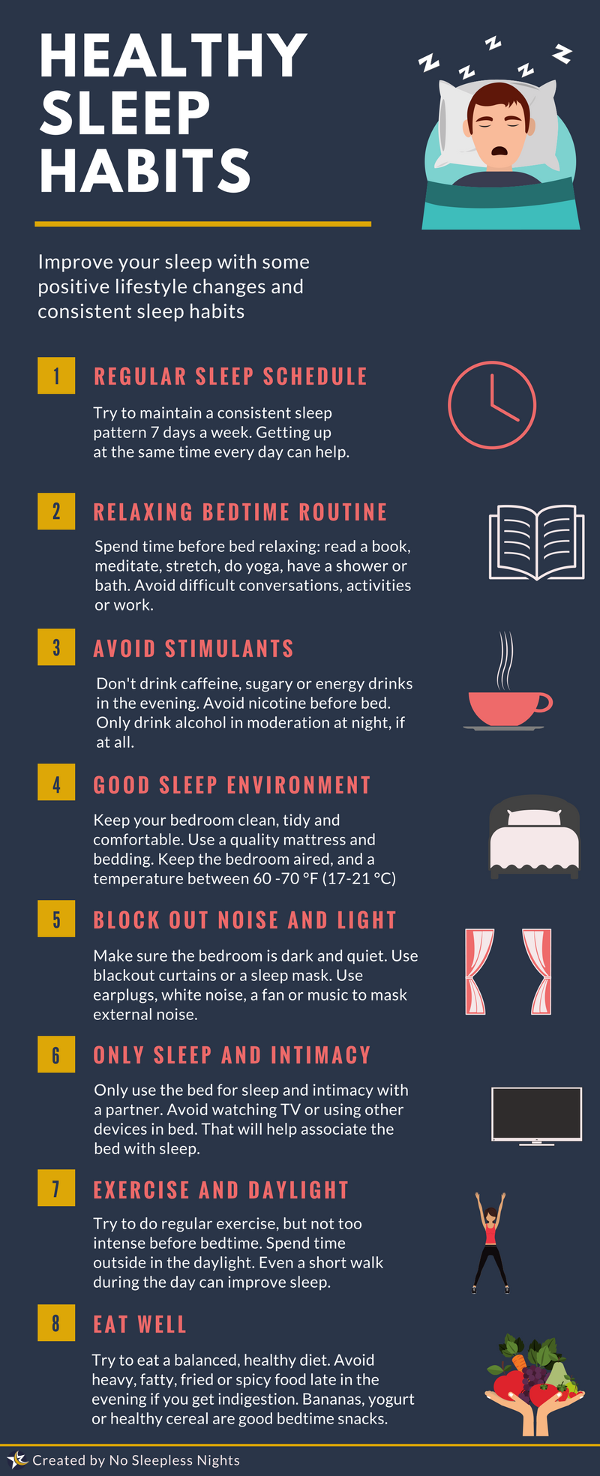
Evening routine (start 30–90 minutes before bed)
- Wind down consistently: Do the same low-energy activities each night — reading, a warm shower, light stretching, or journaling.
- Limit screens: Turn off bright screens or use blue-light filters. Preferably stop heavy device use 60 minutes before bed.
- Mindful breathing or relaxation: 5–10 minutes of deep breathing, progressive muscle relaxation, or a short guided meditation can lower arousal.
Daily habits that support sleep
- Regular schedule: Go to bed and wake up at the same time every day, even on weekends. This strengthens your circadian rhythm.
- Daylight exposure: Get natural light early in the day to set your body clock.
- Move daily: Regular exercise improves sleep quality. Try morning or early afternoon workouts; avoid very vigorous late-night sessions.
- Watch evening meals and drinks: Eat dinner at least three hours before bed and avoid heavy, spicy food late at night. Limit caffeine after midday and avoid alcohol close to bedtime.
When habits meet health
If poor sleep continues despite solid sleep habits, talk to a healthcare provider. Sometimes sleep difficulty is linked to medical issues, mood disorders, or sleep disorders that need targeted treatment.
:max_bytes(150000):strip_icc()/what-is-sleep-hygiene-5085887-FINAL-831b8421e75249f0952fbf4efb0adda7.png)
Practical rules and quick wins
Here are simple rules that are easy to remember and powerful when used consistently.
- Rule of 3 hours: Finish big meals at least 3 hours before bed to prevent digestive disruption (supported by Harvard guidance on food and substances).
- Same wake time wins: Prioritize a steady wake time — it’s the anchor that helps regularize bedtime.
- Limit naps: Keep naps short (20–30 minutes) and before mid-afternoon to avoid reducing nighttime sleep pressure.
Technology and sleep
Blue light from phones and laptops suppresses melatonin and raises alertness. Try a 60-minute buffer before bed or use blue-light filters. Also, set devices to Do Not Disturb to avoid disruptive alerts.
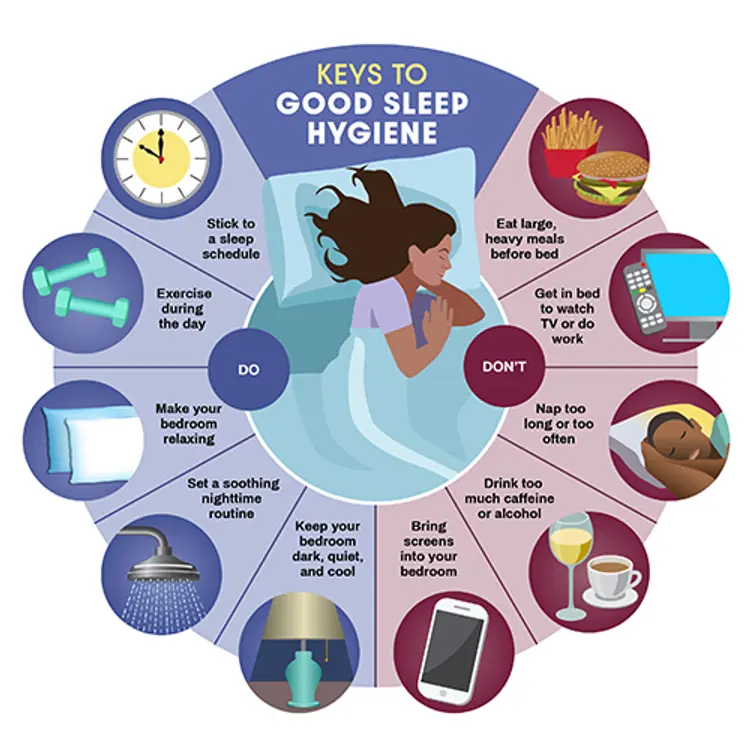
Common pitfalls and how to fix them
1. Inconsistent weekend sleep
Sleeping in every weekend can shift your rhythm and create Monday morning fatigue. Aim for small adjustments (no more than an hour later).
2. Over-relying on alcohol or sleeping pills
Alcohol can help you fall asleep but fragments later sleep. If you rely on substances for sleep, discuss safer long-term strategies with a clinician.
3. Using the bed as a workspace
If your brain links bed to activity, it’s harder to wind down. Keep work off the mattress and use a separate workspace when possible.
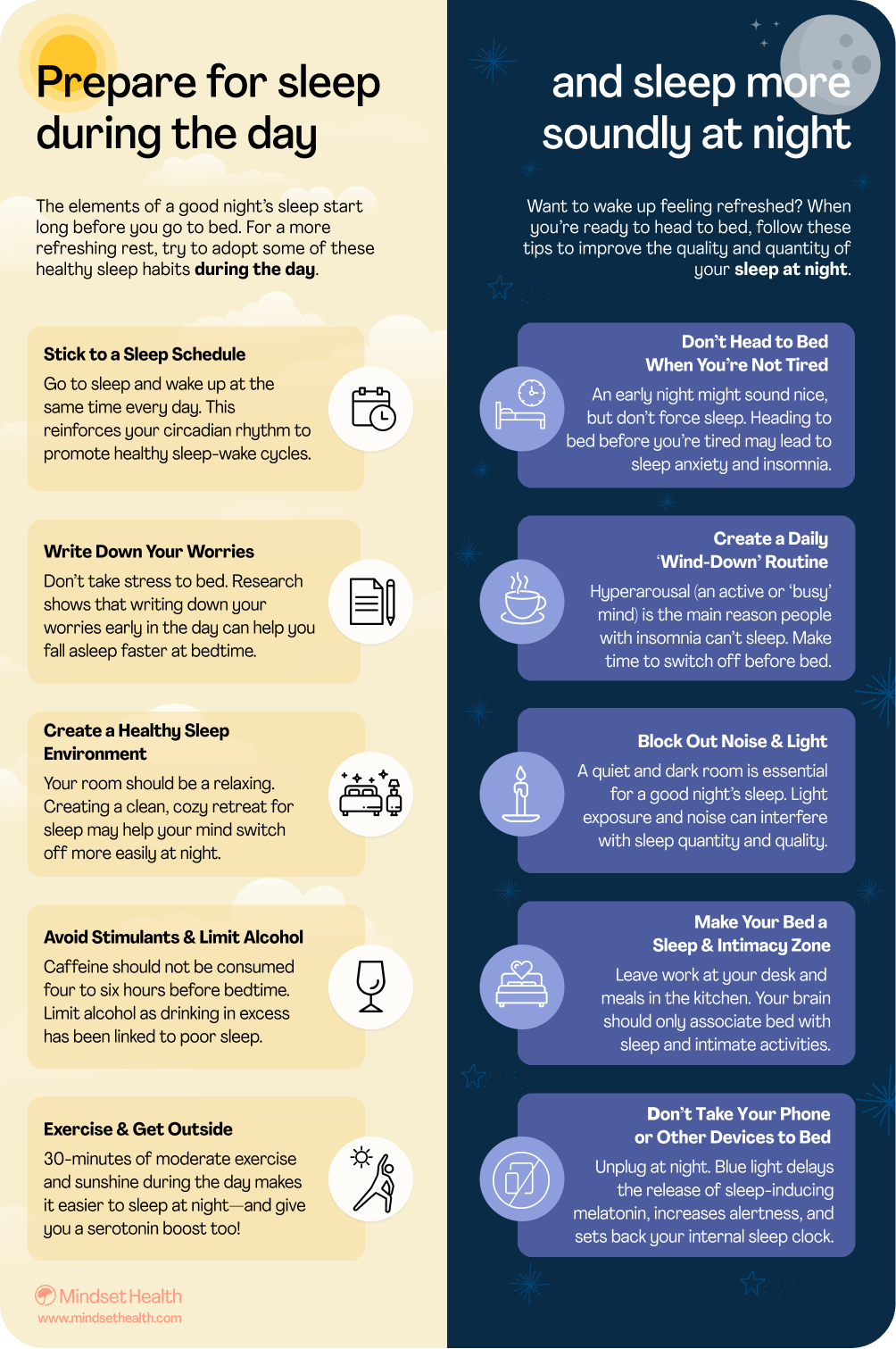
Sample 60-minute bedtime routine
- 60 min: Dim lights, switch devices to night mode, prepare tomorrow’s to-do list.
- 45 min: Light stretching and warm shower (a drop in core body temperature after a warm shower can help sleep).
- 30 min: Read a calm book or journal for 10 minutes; practice 5–10 minutes of breathing or progressive muscle relaxation.
- 15 min: Light herbal tea (non-caffeinated) and final bathroom visit.
- 0 min: Bedtime — lights out, consistent wake time set on alarm.
When to seek help
If you still struggle after 4–6 weeks of consistent sleep hygiene changes, consult a healthcare provider. Persistent trouble falling asleep, loud snoring, daytime sleepiness, or frequent awakenings could indicate sleep apnea, insomnia, or another sleep disorder.
Trusted resources and further reading
- Sleep Foundation — Practical steps: Set schedules, nightly routines, and optimize your bedroom (see their guide on how to practice good sleep hygiene).
- Harvard Health — Evidence-based notes on food and substances that interfere with sleep and simple practice tips.
- CDC — Basics on healthy sleep behaviors and maintaining a quiet, relaxing, cool bedroom.
- CCI Sleep Hygiene PDF — A practical sheet used by clinicians about sleep hygiene as part of insomnia treatment.
- Healthline — A clear list of 12 healthy sleep hygiene tips, including consistent schedules and bedtime routines.
Watch: Simple sleep hygiene routine
Below is a short video you can follow for a relaxing bedtime routine.
Checklist: 7 sleep hygiene tips to try this week
- Set your wake time and stick to it every day.
- Dim lights 60 minutes before bed and avoid screens.
- Keep bedroom cool and dark.
- Finish big meals at least 3 hours before bed.
- Exercise earlier in the day when possible.
- Limit caffeine after midday.
- Create a consistent 30–60 minute wind-down routine.
Realistic expectations
Sleep habits take time. Expect gradual improvements over a few weeks. If you log your sleep and make one small change each week, you’ll likely notice better sleep and daytime energy within a month.
Summary
These sleep hygiene tips help you build the healthy routines and bedroom environment your brain needs to sleep well. Start small: pick 2–3 tips to practice consistently, and add more as they become habits.
Frequently asked questions
How long until sleep hygiene changes work?
Most people notice small improvements in 1–2 weeks and clearer benefits by 3–4 weeks. Consistency is the key — regular bed and wake times and a steady wind-down routine make the biggest difference.
Can I nap and still follow sleep hygiene?
Yes — but keep naps short (20–30 minutes) and before mid-afternoon so they don’t reduce nighttime sleep pressure.
Is it okay to use white noise or earplugs?
Absolutely. White noise or earplugs can be very helpful if outside noise interrupts sleep. Use whatever keeps your bedroom quiet and relaxing.
When should I see a doctor about sleep problems?
If you’ve tried consistent sleep hygiene changes for about a month and still have trouble falling asleep, frequent awakenings, loud snoring, or daytime sleepiness, consult a healthcare provider to rule out sleep disorders.
Takeaway: Use these sleep hygiene tips consistently, tweak what works for you, and give your body time to adjust. For more guides on sleep, stress relief, and wellness, explore other posts at zenpulsehub.com.