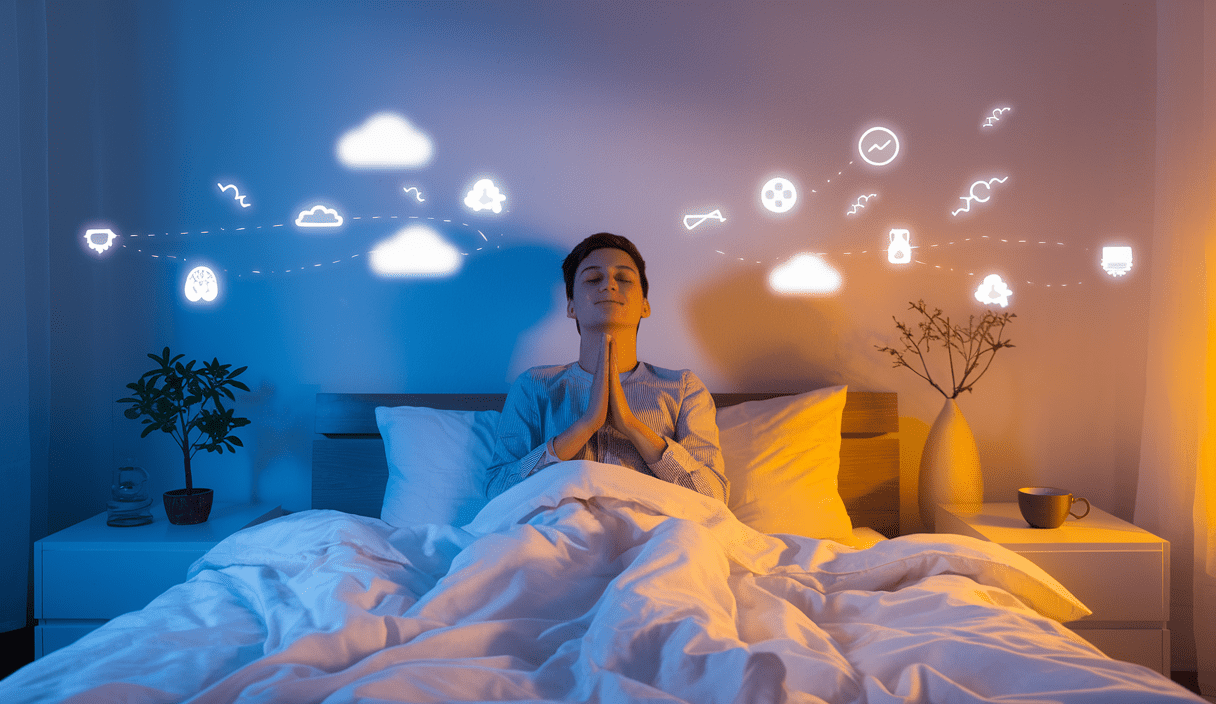

Stress & Sleep: How to Restore Rest
Stress & sleep are tightly connected: when stress rises, sleep often slips away — and poor sleep then fuels more stress. If sleepless nights have started to shape your days, this guide breaks down why that happens and gives clear, practical steps to reclaim rest tonight and build calmer nights over time.

Why stress & sleep get stuck in a cycle
When you feel stressed, your body releases cortisol and adrenaline to help you cope. Those same hormones make it harder to fall asleep and stay asleep. Over nights and weeks, this creates a loop: less sleep raises stress sensitivity, and higher stress drains sleep quality. That’s why many people describe the feeling of being “tired but wired.”
What happens in your body
Short version: stress activates the brain’s alarm system and raises arousal. Sleep, especially deep sleep and REM sleep, needs the opposite — a calm, down-regulated brain. When stress keeps the engine running, the brain can’t enter restorative sleep stages easily.
Science snapshot
Research shows this relationship changes over time and between people. A review notes the complex relationship between sleep and stress depends on time scales and personal vulnerability. Other studies find that stress exposure can increase sleep reactivity, making some people more likely to develop insomnia after stressful events (PMC article).
How stress & sleep affect your mind and body
Missing sleep doesn’t just make you groggy. Over time, poor sleep linked to ongoing stress can:
- Reduce emotional resilience and increase anxiety.
- Weaken concentration, memory, and decision-making.
- Increase inflammation, which affects long-term health.
- Make mood swings and irritability more likely.
As the American Psychological Association notes, younger adults and teens are often particularly affected: stress frequently disturbs sleep for these groups, making the cycle worse.
Practical, science-backed steps to break the cycle
Focus on small, consistent changes. Pick one or two of these to start and add more as they become habits.
1. Reset your evening routine
An evening routine signals your body it’s time to wind down. Try a 60–90 minute buffer before bed with calming activities.
- Dim lights: Lower bright lights and screens to cue melatonin naturally.
- Do something calming: Read, journal, stretch gently, or listen to low-volume music.
- Warm shower or bath: A short warm bath can help the body cool down afterward, which helps sleep onset.
2. Use breathing and short practices for immediate relief
When stress spikes at bedtime, quick practices can lower arousal fast:
- Box breathing: inhale 4, hold 4, exhale 4, hold 4 — repeat 4 times.
- 4-7-8 breathing: inhale 4, hold 7, exhale 8 — repeat 4 cycles.
- Progressive muscle relaxation: tense and release each muscle group from toes to head.
Hopkins Medicine highlights that stress hormones can linger, and these techniques help clear the trunked-up tension that keeps the brain alert (Hopkins guide).
Night-by-night plan: what to try this week
Try a simple 7-night plan to re-establish good sleep signals:
- Nights 1–2: Set a consistent bedtime and wake time. No snoozing.
- Nights 3–4: Add a 60-minute wind-down: dim lights, no screens, breathing exercises.
- Nights 5–7: Strengthen routine: light stretching, a short journal entry about one good thing each day, and keep sleep window tight.
Students and young adults often report high stress and short sleep during busy periods. One study found many students slept less than six hours on weekdays when stressed (study summary).

Behavioral strategies that work long-term
For persistent sleep problems, evidence-based behavioral strategies help more than sleeping pills in most cases. Cognitive Behavioral Therapy for Insomnia (CBT-I) addresses sleep habits and the thoughts that fuel insomnia. It can be done with a therapist or many self-help programs and apps.
One review suggests individuals with low sleep reactivity can still develop greater reactivity after stress and insomnia episodes — which is why early behavioral work pays off (PMC review).
Key CBT-I ideas to try
- Stimulus control: Use bed only for sleep and sex. If you can’t sleep within 20 minutes, get up and do a quiet activity until drowsy.
- Sleep restriction: Limit time in bed to match actual sleep time, then gradually expand as sleep efficiency improves.
- Worry time: Set a 20-minute daytime slot for worrying and problem-solving so thoughts are less likely to invade bedtime.
Foods, caffeine, alcohol, and sleep
Caffeine and alcohol both interfere with restorative sleep. Caffeine can stay active for 6–8 hours in some people; try to stop caffeine by early afternoon. Alcohol may make you fall asleep faster but fragments sleep later in the night. A light, balanced snack can help if hunger wakes you.
When stress & sleep problems need professional help
If sleep problems last more than a month despite trying the strategies above, or if you feel constantly overwhelmed, it’s time to reach out. Consider:
- Discussing symptoms with your primary care provider.
- Asking for a referral to a sleep specialist or a therapist trained in CBT-I.
- Checking for medical issues (sleep apnea, thyroid problems, medication side effects).
Many health systems provide useful guides. For example, Dartmouth Health offers practical tips on sleeping during stressful times (Dartmouth Health), and Hopkins Medicine lists stress-relief techniques you can try tonight (Hopkins).
Guided help: a short practice to try now
Below is a short guided practice to lower arousal before sleep. Use headphones and sit or lie comfortably. If it helps, repeat for 10 minutes.
Video: Guided Stress Relief for Better Sleep
Simple trackers and habits that help
Trackers can highlight patterns, but keep them simple:
- Write down sleep and wake times for two weeks.
- Note stress triggers and what calmed you that day.
- Record one positive thing each night to shift focus away from worry.
Key takeaways
- Stress & sleep form a feedback loop — reduce one to improve the other.
- Short practices (breathing, progressive relaxation) lower arousal quickly.
- Behavioral changes (consistent schedules, stimulus control, CBT-I) build lasting improvement.
- Seek professional help if insomnia persists beyond a month or interferes with daily life.
If you want to read more about how stress affects sleep in teens and younger adults, the APA brief is a short, helpful summary. For deeper research into sleep reactivity and insomnia development, see this systematic review (PMC article) and this PubMed overview (PubMed review).
Stress & sleep problems are common — and treatable. Start small, stay consistent, and remember that tiny nightly habits add up to meaningful change.
For more guides, routines, and calm-focused tips, keep exploring resources at zenpulsehub.com.
FAQ
How soon will I notice improvement if I follow these tips?
Many people feel calmer within a few nights after adding breathing practices and a consistent bedtime. Larger shifts from behavioral therapy (CBT-I) often take 4–8 weeks of consistent practice. If symptoms persist, consult a clinician.
Is it OK to use sleeping pills for stress-related insomnia?
Sleeping pills can help short-term, but they don’t address the behaviors and thoughts that cause insomnia. For long-term improvement, behavioral approaches like CBT-I are safer and more effective. Talk to your provider about risks and alternatives.
What if my stress is caused by an ongoing situation I can’t change?
Even when stressors are not immediately solvable, practices that lower arousal (breathing, relaxation, structure) can improve sleep. Therapy or counseling can also help reframe stress and build coping tools.
Are there mobile apps that can help with CBT-I or relaxation?
Yes. Several reputable apps offer guided CBT-I programs and relaxation practices. Look for apps with clinical backing or those recommended by healthcare providers. Always combine apps with good sleep habits for best results.