Define Sleep Hygiene: Simple Guide
Define sleep hygiene as the set of habits, routines and environmental changes that help you fall asleep faster, stay asleep, and wake up refreshed. Good sleep hygiene is practical: small, consistent actions that make a big difference to sleep quality and daytime energy. In this guide you’ll learn what sleep hygiene means, why it matters, and clear steps you can use tonight.
:max_bytes(150000):strip_icc()/what-is-sleep-hygiene-5085887-FINAL-831b8421e75249f0952fbf4efb0adda7.png)
How to define sleep hygiene
To define sleep hygiene simply: it is a set of behavioral and environmental practices designed to support consistent, restorative sleep. Researchers and health organizations describe sleep hygiene as routines (bedtime, wake time), lifestyle choices (caffeine, alcohol, exercise), and bedroom conditions (light, noise, temperature). If you want to sleep better, improving sleep hygiene is the first, practical step.
Why sleep hygiene matters
Poor sleep affects mood, concentration, memory, and long-term health. Strong sleep hygiene helps you:
- Fall asleep faster by signaling your body when it’s time to rest.
- Reduce nighttime awakenings with a consistent environment and routine.
- Boost daytime energy and cognitive performance.
- Lower health risks linked to chronic sleep loss (weight gain, blood pressure, immune function).
Core elements of good sleep hygiene
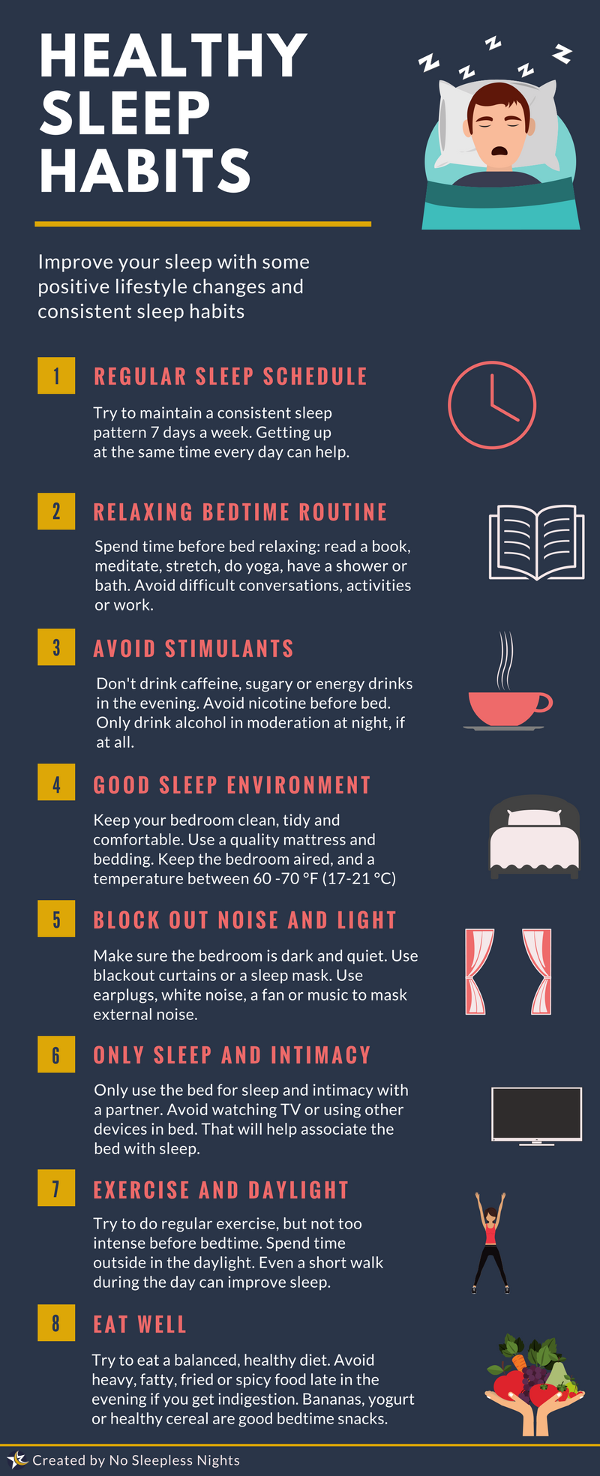
Sleep hygiene covers daily habits and bedroom setup. Here are the core elements you can adopt right away:
1. Regular sleep schedule
Go to bed and wake up at the same time every day, even on weekends. This trains your circadian rhythm so sleep comes more naturally.
2. Bed is for sleep (and sex) only
Avoid working, eating or scrolling in bed. When your brain links the bed with wakeful activities, it weakens the sleep cue.
3. Wind-down routine
Create a 30–60 minute pre-sleep ritual: dim lights, light reading, gentle stretches, or breathing exercises. Repeating the routine nightly tells your body it’s time to slow down.
4. Bedroom environment
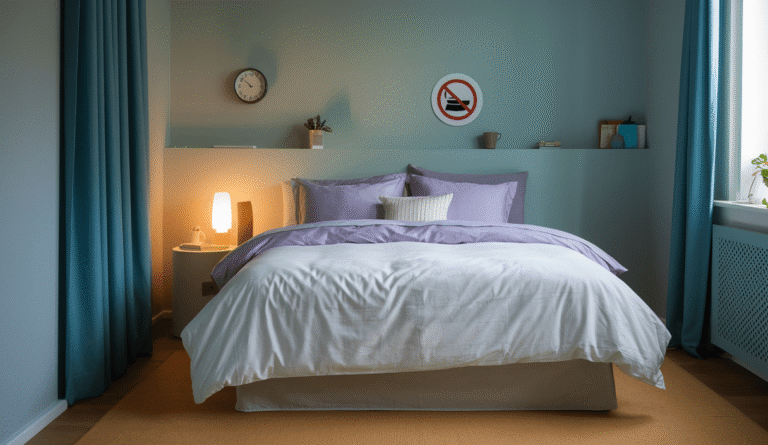
Make the room cool, quiet and dark. Consider blackout curtains, white noise, and a comfortable mattress and pillow. A good environment reduces interruptions and improves sleep depth.
5. Food, drink and substances
Avoid heavy meals, nicotine, and caffeine in the 4–6 hours before bed. Alcohol may make you sleepy but fragments sleep later in the night.
6. Daytime habits
Get daylight exposure, exercise regularly, and avoid long naps late in the day. Morning sunlight helps set your internal clock.
Practical sleep hygiene checklist
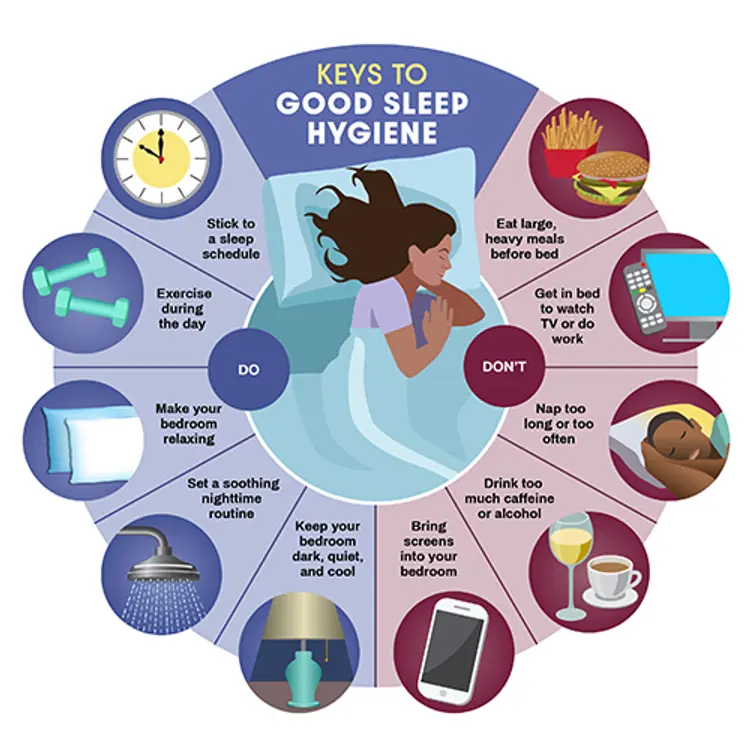
Use this quick checklist to evaluate and improve your routine:
- Wake/sleep at consistent times.
- Wind down 30–60 minutes before bed.
- Limit screens and bright lights before sleep.
- Keep bedroom dark, cool (60–67°F / 15–19°C), and quiet.
- Limit caffeine after mid-afternoon.
- Exercise earlier in the day, not right before bed.
- Reserve bed for sleep and intimacy only.
Common mistakes that hurt sleep hygiene
Even small habits can sabotage sleep. Watch for these common culprits:
- Using devices in bed — blue light and engaging content keep your brain active.
- Inconsistent sleep times — irregular schedules confuse your circadian rhythm.
- Relying on alcohol or sleeping pills long-term — these can impair sleep architecture.
- Excessive napping — long daytime naps reduce sleep drive at night.
Tools and strategies to improve sleep hygiene
Try these practical strategies to strengthen your sleep habits:
- Light control: Use blackout curtains and dim lights an hour before bed.
- Noise masking: White noise machines or fans can reduce disruptive sounds.
- Temperature: Keep the room comfortably cool; cooler bedrooms support deeper sleep.
- Relaxation practices: Progressive muscle relaxation, guided breathing, or mindful meditation help calm the mind.
- Limit screen time: Use a blue-light filter or stop screens an hour before bed.
:max_bytes(150000):strip_icc()/what-is-sleep-hygiene-5085887-FINAL-831b8421e75249f0952fbf4efb0adda7.png)
When good sleep hygiene might not be enough
Most sleep problems improve with consistent sleep hygiene, but some conditions need medical help. Consider professional evaluation if you:
- Have persistent trouble falling or staying asleep for more than a month.
- Experience loud snoring, gasping, or breathing pauses (possible sleep apnea).
- Feel excessively sleepy in the daytime despite reasonable sleep hours.
- Have symptoms of mood disorders or significant daytime impairment.
If these apply, talk to your healthcare provider about sleep testing or cognitive behavioral therapy for insomnia (CBT-I), which is highly effective.
Evidence and trusted sources
Sleep hygiene is supported by research and public health guidance. For clear, practical summaries see government and medical sources like Better Health Victoria, which explains that ‘sleep hygiene’ includes habits and environmental factors that can be adjusted to improve sleep. For research reviews, the National Institutes of Health hosts articles such as a systematic summary on behavioral recommendations (PMC review).
For practical tips and consumer guidance, see the sleep health pages on Sleep Foundation and WebMD. Harvard Health also offers a concise primer on simple sleep hygiene practices (Harvard Health).
Sample 7-day plan to improve sleep hygiene
Start small: pick two habits and add one more each day. Here’s a sample week:
- Day 1: Set a consistent wake-up time and use it every day.
- Day 2: Choose a bedtime to aim for—try to allow 7–9 hours in bed.
- Day 3: Remove screens from bed and start a 30-minute wind-down routine.
- Day 4: Dim lights an hour before bed and avoid caffeine after 2pm.
- Day 5: Optimize your bedroom: blackout curtains and a cool temperature.
- Day 6: Add daily daylight exposure and move exercise earlier in the day.
- Day 7: Review progress—keep what works and keep improving slowly.
Troubleshooting: If sleep doesn’t improve
If you’ve tried good sleep hygiene for several weeks and still struggle, consider these next steps:
- Keep a sleep diary to identify patterns and triggers.
- Try cognitive behavioral therapy for insomnia (CBT-I) with a trained therapist.
- Ask your clinician about sleep studies if you snore loudly or stop breathing at night.
Final tips for lasting change
Adopt sleep hygiene gradually and prioritize consistency. Remember that change takes time—two weeks of steady habits can produce noticeable results. Be patient and track progress. If you want a single take-away: prioritize a stable sleep schedule and a calming pre-sleep routine.
Watch: Quick overview
Sleep Hygiene Explained
Quick recap: What does it mean to define sleep hygiene?
To define sleep hygiene is to name the practical set of habits and environmental choices that make sleep more reliable and restorative. From consistent schedules to a cool, dark bedroom, sleep hygiene gives you a framework to improve rest without expensive gadgets or complex plans.
Want more? Explore practical sleep guides and routines at zenpulsehub.com and keep building better nights, one small habit at a time.
FAQs about Sleep Hygiene
What exactly is sleep hygiene?
Sleep hygiene is a set of healthy habits and environmental recommendations intended to promote consistent, restful sleep. It includes routines, bedroom setup, and lifestyle choices that support sleep.
How soon will I see improvements if I improve my sleep hygiene?
Some people feel better within a few nights, but most see noticeable improvement after 2–4 weeks of consistent changes. Stick to the routine and track progress.
Can sleep hygiene treat insomnia?
Good sleep hygiene helps many people, but chronic insomnia often requires targeted therapy like cognitive behavioral therapy for insomnia (CBT-I). If sleep problems persist, consult a healthcare provider.
Where can I find reliable tips and research?
Trustworthy resources include government and medical sites such as Better Health Victoria (betterhealth.vic), the Sleep Foundation (sleepfoundation.org), WebMD, and peer-reviewed reviews like the PMC article linked in this post.