
Essential oils for skincare: Safe uses & top picks
Essential oils for skincare are a popular way to add fragrance, targeted benefits, and botanical power to your routine. When used correctly, they can calm inflammation, balance oil, and support glowing skin. But safety matters — essential oils are highly concentrated and need careful dilution, testing, and storage.
Essential oils for skincare: Why they matter
Many people love essential oils because they deliver natural aroma and active plant compounds in a small drop. For skin, certain oils offer **anti-inflammatory, antimicrobial, or calming** benefits, while others support tone and texture. Still, an oil that suits one person can irritate another, so practical guidance is key.
What essential oils can do for your skin
- Soothe redness and inflammation: lavender and chamomile are often used for sensitive skin.
- Fight acne-causing microbes: tea tree and eucalyptus may help reduce bacteria.
- Balance oily skin: citrus and peppermint can feel refreshing and reduce perceived oiliness (but can be irritating to some).
- Hydrate and tone: rose and geranium oils are prized for nourishing and balancing effects.
How to use essential oils for skincare safely
Using essential oils for skincare safely is easy when you follow a few rules. **Always dilute** essential oils in a carrier oil, test on a small area first, and avoid sensitive zones like eyes and open wounds.
Basic safety steps
- Dilute: Most topical uses should be 0.5%–2% essential oil in a carrier oil (about 3–12 drops per ounce / 30 mL). Dermalogica and other skin experts recommend products with 1% or lower for general safety.
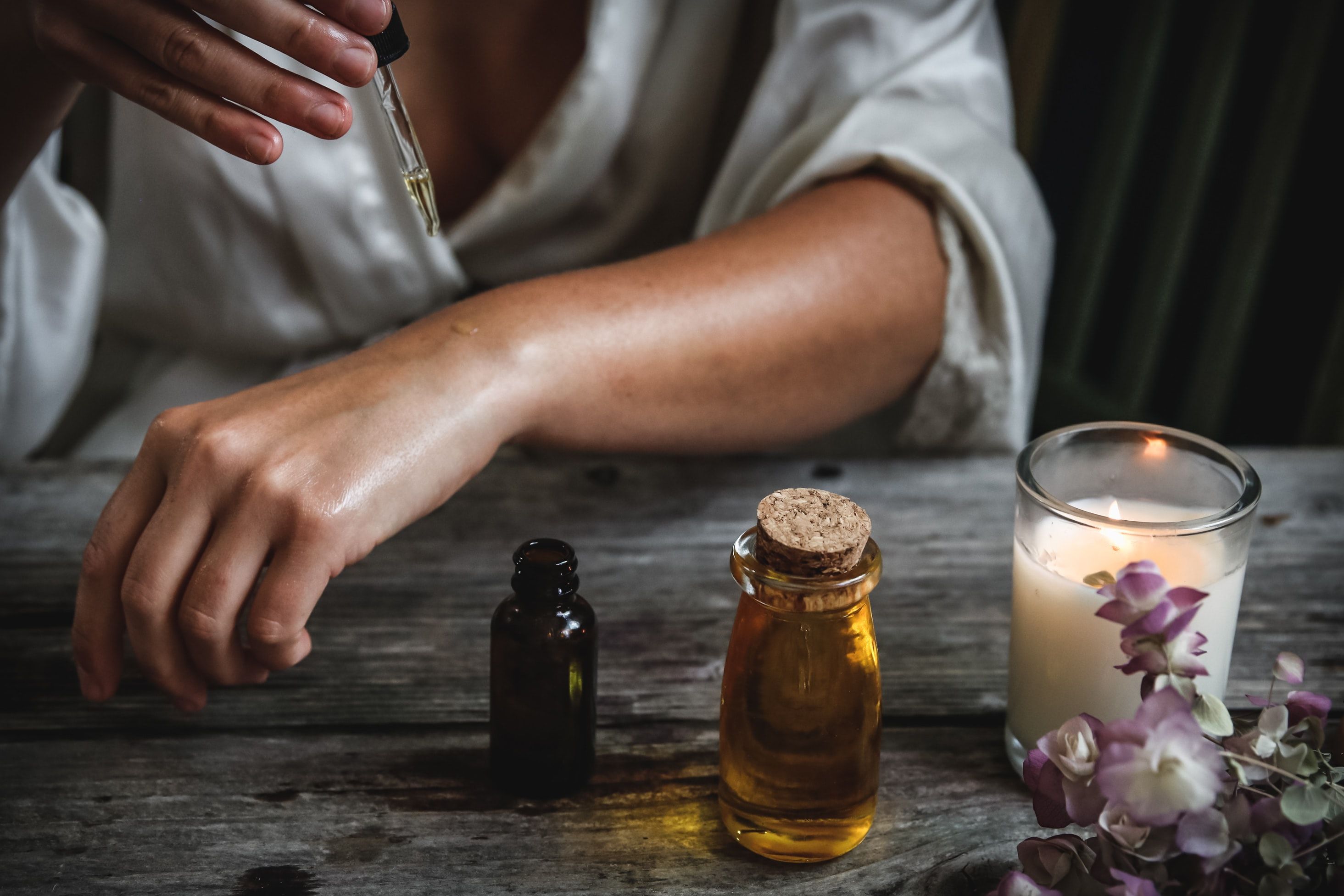
- Patch test: Apply a diluted drop to the inner forearm and wait 24 hours to check for reactions.
- Avoid photosensitizing oils: Citrus oils (lemon, bergamot) can cause sun sensitivity — stay out of direct sun for 12–24 hours after use.
- Keep away from eyes and mucous membranes.
- Store properly: Keep oils in dark glass bottles, away from heat and sunlight to preserve stability.

Best essential oils by skin type
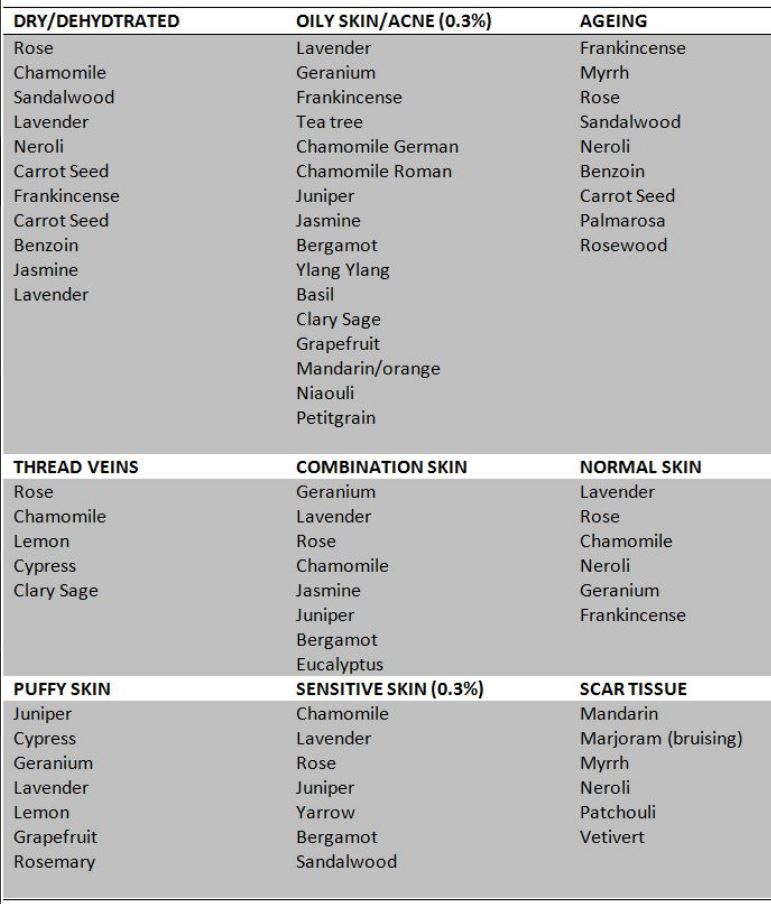
Choosing the right oil depends on your skin. Below are common skin types and essential oils that often help. Remember to use the keyword naturally: Essential oils for skincare can benefit most skin types if used correctly.
Oily & acne-prone
Look for tea tree, rosemary, and lavender. Tea tree has well-known antibacterial properties and is often recommended for blemishes (see Plant Therapy for options).
Dry & mature
Try nourishing oils like rose, frankincense, and neroli. These support hydration and may help with the appearance of fine lines.
Sensitive
Use gentle options such as chamomile and lavender in low dilutions. Always patch test and keep blends simple.
Combination
Blends that combine balancing oils like geranium with calming oils like lavender often help regulate oily zones while soothing drier areas.
Practical dilution guide (quick reference)
It helps to memorize a few dilution rules. These guidelines keep your uses of essential oils for skincare safe and effective.
- 0.5% (1 drop per 10 mL): Very sensitive skin, face serums for daily use.
- 1% (2 drops per 10 mL): General facial use; often recommended by skin pros.
- 2% (4 drops per 10 mL): Spot treatments, body oils for shorter-term use.
- 3–5%: Short-term body applications for muscle discomfort; not for facial use.
How to mix a 1% face serum
- Start with 30 mL (1 ounce) of carrier oil (jojoba, sweet almond, rosehip).
- Add 6 drops total of essential oil(s) to reach ~1%.
- Mix gently, label, and patch test before use.
Top essential oils to try and why
Here are some widely used oils and their common benefits.
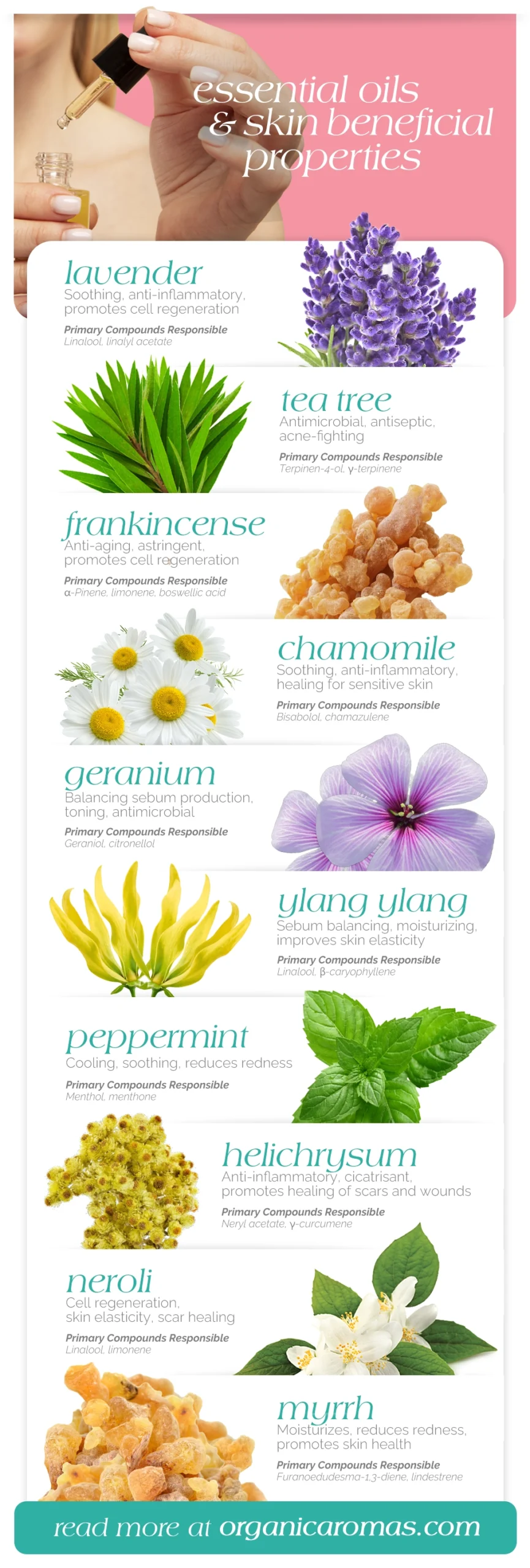
- Lavender: Calming, anti-inflammatory, good for sensitive skin.
- Tea tree: Antimicrobial, often used for blemishes (find options on Plant Therapy).
- Rose: Hydrating, soothing, often used for mature skin.
- Frankincense: May help with tone and firmness.
- Geranium: Balances oil production and supports skin tone.
DIY blends and recipes (safe, labeled)
Below are simple blends to try after patch testing. All blends are for 30 mL carrier oil unless noted and aim for ~1% dilution.
Calm & hydrate (for dry/sensitive skin)
- 3 drops lavender + 2 drops rose + carrier oil to 30 mL.
Balance & refresh (combination skin)
- 3 drops geranium + 2 drops lavender + carrier oil to 30 mL.
Spot acne treatment (small bottle)
- 1 drop tea tree + 4.5 mL jojoba oil (about 1 teaspoon). Apply only to spots.
Where to buy and what to look for
Quality varies. Look for reputable suppliers with clear botanical names, lot numbers, and third-party testing. You can find many options on marketplaces and specialty stores — for example, Amazon has a wide selection of essential oil kits for skin use. If you prefer single-origin or therapeutic-grade sources, brands like Plant Therapy and New Directions Aromatics offer curated collections and guidance.
- Amazon — essential oils for skin care (useful for starter sets and variety).
- Plant Therapy — essential oil collections (great selection and safety resources).
- New Directions Aromatics — full guide (detailed resource for choices and uses).
Common myths and facts
There’s a lot of misinformation. Let’s clear up a few points so you can use essential oils for skincare wisely.
Myth: More drops = better results
Fact: Too much can irritate skin and damage skin barriers. **Less is often more** — stick to recommended dilutions.
Myth: All natural means safe
Fact: Natural compounds can still be potent allergens. Patch testing and low dilutions reduce risk.
Expert resources and further reading
For credible overviews and safety evidence, read established health and skincare resources. Healthline provides a great summary of oils and uses, while Dermalogica discusses safe product percentages for skin. These sources help you balance benefit with safety.
- Healthline — essential oils for skin (overview of oils and tips).
- Dermalogica — safety guidance (notes on safe percentages in products).
Watch: Quick video guide
Watch this short video for a friendly walkthrough on essential oil uses and safety.
Common questions about essential oils for skincare
Below are short answers to frequent concerns. You’ll also find a fuller FAQ after the article.
- How often can I use a diluted essential oil serum? Daily use of a well-diluted (around 1%) serum is common. Monitor for irritation.
- Can I use essential oils during pregnancy? Some oils are not recommended in pregnancy. Consult a healthcare provider before use.
- Do essential oils expire? Yes — citrus oils often have shorter shelf life; store in dark glass and check aroma and color over time.
Summary: Smart steps to try essential oils for skincare
Essential oils can be a valuable tool in your skincare toolkit when used responsibly. **Always dilute, patch test, and pick oils suited to your skin type.** If you’re unsure, start with a trusted brand or consult a dermatologist for persistent concerns.
Want more practical guides? Explore product recommendations and step-by-step recipes linked above — Amazon and specialist suppliers like Plant Therapy and New Directions Aromatics can help you get started.
Conclusion: Ready to experiment safely? Try one small, well-diluted blend this week and track how your skin responds. Then, explore more skin guides on zenpulsehub.com to build a calm, glowing routine.
FAQ
Can essential oils cause allergic reactions?
Yes. Essential oils are concentrated plant extracts and can trigger allergies or irritation. Always perform a patch test and use low dilutions to reduce risk.
Which carrier oils are best for mixing essential oils?
Common carriers include jojoba (balanced and close to skin sebum), sweet almond (nourishing), and rosehip (rich in fatty acids for mature skin). Choose based on skin type and sensitivity.
Are citrus essential oils safe on the face?
Citrus oils can be photosensitizing. If you use them on the face, keep dilutions very low and avoid sun exposure for 12–24 hours after application.
How long do essential oil blends last?
Shelf life depends on the oils and carrier. Many blends last 6–18 months if stored in dark glass bottles away from heat. Citrus oils tend to have shorter life spans.