
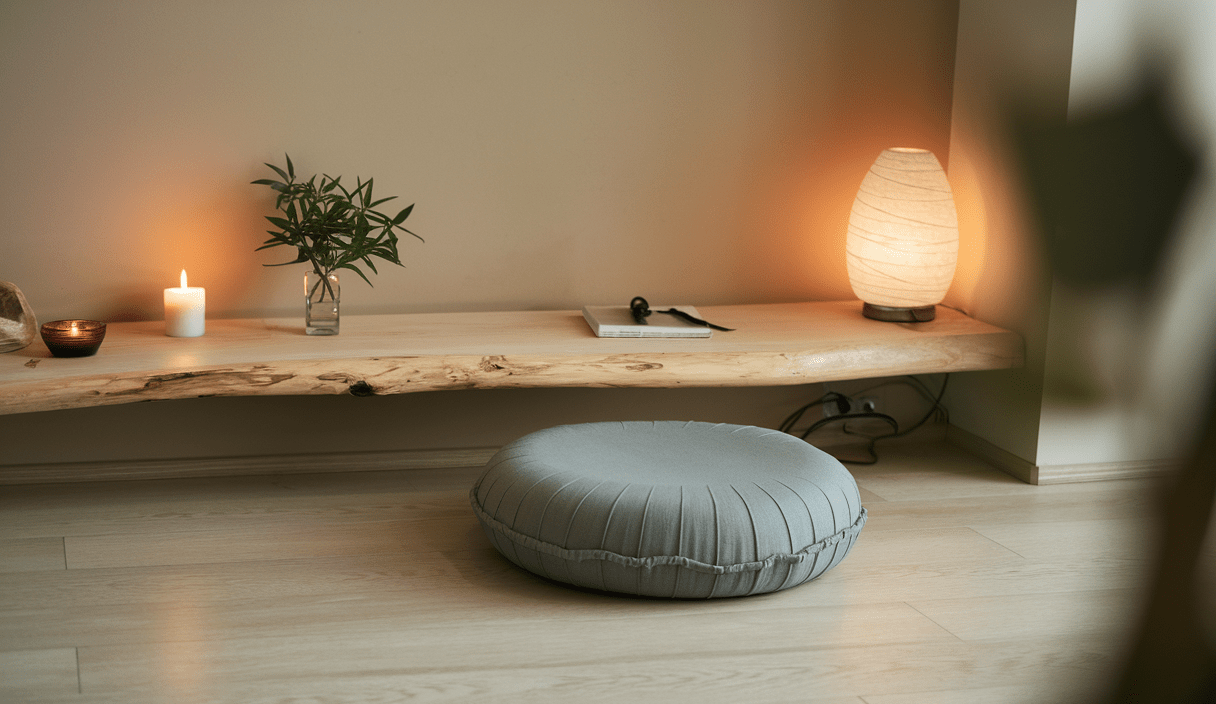

Home Meditation Corner: A Complete Guide
Creating a calm home meditation corner can transform a busy apartment or a noisy house into a personal sanctuary. In this guide you’ll find practical steps, design ideas, and tips to build a meditation corner that fits your style and schedule. Whether you have five square feet or a small spare room, these ideas will help you build a comfortable, consistent practice space.

Why have a Home Meditation Corner?
When you create a dedicated home meditation corner, you train your mind to associate that spot with calm and presence. A fixed place reduces setup friction and helps you build a daily habit. You’ll notice clearer thinking, reduced stress, and a calmer start or end to your day.
How to Choose the Right Spot
Start by finding a small area that feels private and quiet. It doesn’t have to be a room — a corner, a window seat, or the end of your bed will work. The main criteria are: low foot traffic, natural light if possible, and a simple backdrop to minimize distraction.
Questions to ask when choosing a location
- Is the space easy to access daily?
- Can you control noise and light there?
- Does the spot inspire calm when you look at it?
Designing Your Home Meditation Corner
Design around comfort, simplicity, and sensory balance. Keep the layout flexible so you can sit or lie down. **Comfort beats perfection** — a cushion, small rug, or low bench can make longer sits possible. Here are the building blocks:
Essential elements
- Seating: Floor cushion, zafu, meditation bench, or a comfortable chair.
- Soft surface: Rug or mat to define the area and protect knees.
- Back support: Pillow or bolster for longer sessions.
- Low table or shelf: For candles, a small statue, or a journal.
- Timer: Use an alarm or meditation app with a gentle sound.
Lighting, Color and Atmosphere
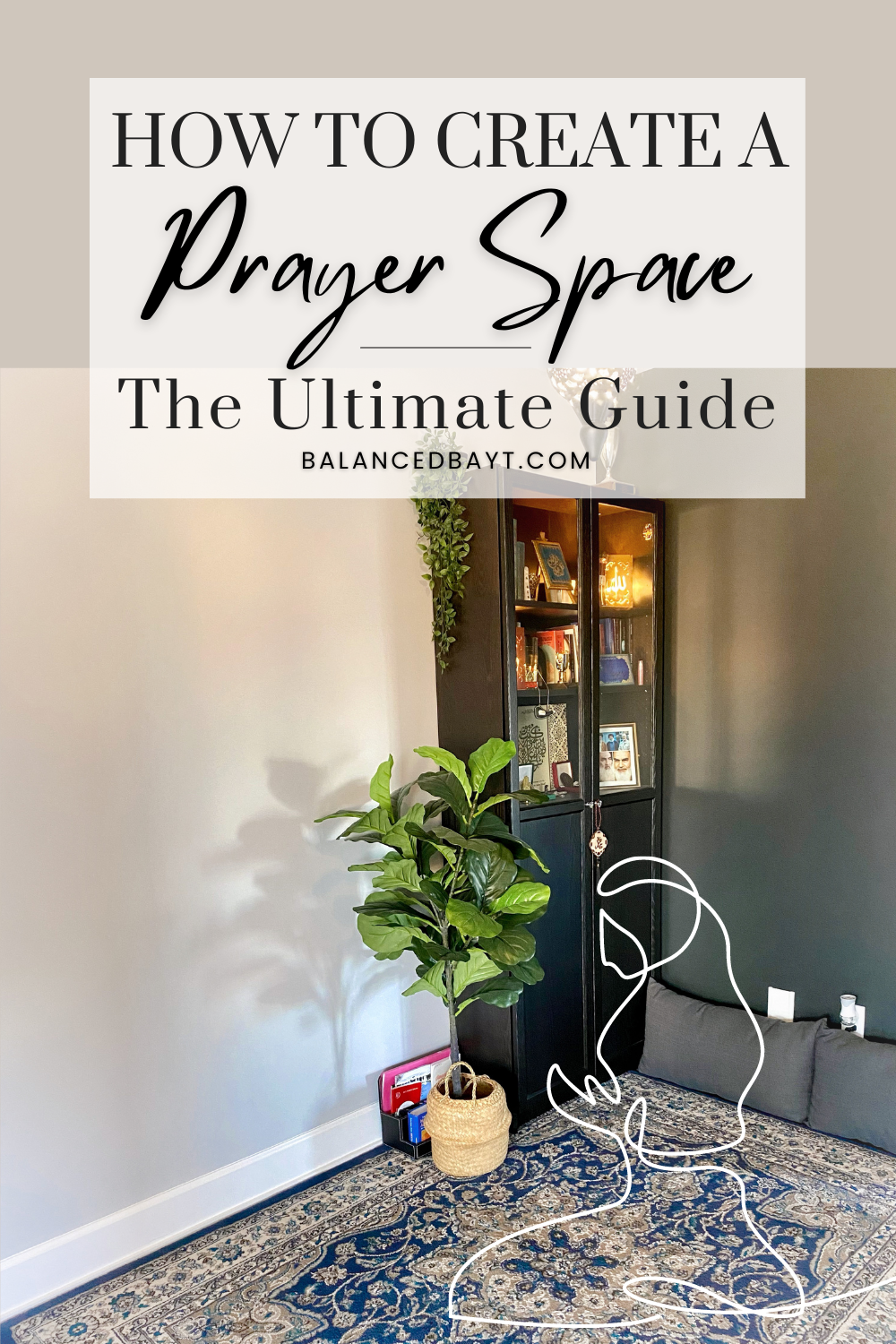
Light affects mood more than most people expect. Prefer natural light during the day and soft, warm light for evening sessions. Use dimmable lamps, candles, or string lights to create a gentle glow. Color choices should be calming — soft neutrals, greens, and muted blues work well.
Simple atmosphere tips
- Place a small lamp with a warm bulb for evening sits.
- Use blackout curtains or shades for better focus when needed.
- Add plants or natural elements for grounding energy.
Sound, Scent, and Focus
Choose sensory supports that help you relax. Gentle background sound like a fan, water, or a low-volume playlist can help. Aromas — a lightly scented candle or essential oil — can cue your nervous system to soften. But avoid anything too strong; subtle is best.
Sound and scent ideas
- Use a white noise app or a nature sound playlist when needed.
- Try sandalwood, lavender, or frankincense for calming scents.
- Keep a small bell, chime, or singing bowl to mark the start and end.
What to Place in Your Corner
Your home meditation corner should feel meaningful but uncluttered. Choose a few items that support your practice. Minimalism helps keep attention inward.
Five object rule
Consider using the tip from The Good Trade: select five objects to fill your space — a cushion, a plant, a light source, a prized object, and a journal. This small number prevents overcrowding and gives your corner personality without distraction. (See more ideas on The Good Trade.)
Budget-Friendly and DIY Options
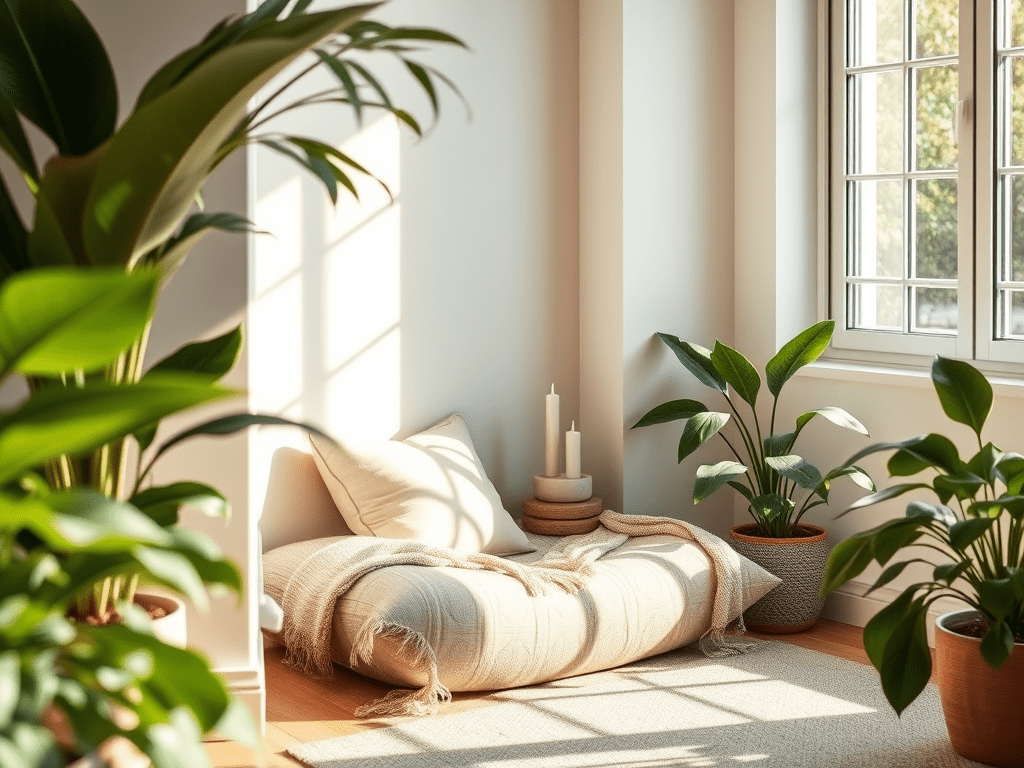
You don’t need expensive gear. Many meditation rooms and corners are crafted from repurposed items. Use a blanket as a mat, a folded towel as a bolster, or a low stool as a side table. Calm suggests several budget ideas including repurposing a small corner — see their DIY tips for cost-effective setups. (Calm: Meditation Room Ideas.)
DIY decor ideas
- Paint an accent wall to visually define the corner.
- Create a simple macramé shelf for candles and a plant.
- Make a meditation cushion cover from leftover fabric.
How to Create a Practice Routine
Routines make a corner effective. Use the same spot at similar times as often as you can. Start with 5–10 minutes daily and gradually increase. Keep a short checklist near the corner: sit, breathe, set an intention, and close with gratitude or a short journaling prompt.
Sample 10-minute practice
- Settle into your seat (1 min).
- Take deep, slow breaths (2 min).
- Focus on the breath or a short mantra (5 min).
- Gently open your eyes and note how you feel (2 min).
Dealing with Common Challenges
Distractions, irregular schedules, and discomfort are normal. If you struggle, shorten your sits, use earphones with guided sessions, or practice at a different time until you find a rhythm. The Mind Company has a take on crafting ideal spaces and routines if you want a structured approach (The Mind Company).
Keeping Your Corner Fresh
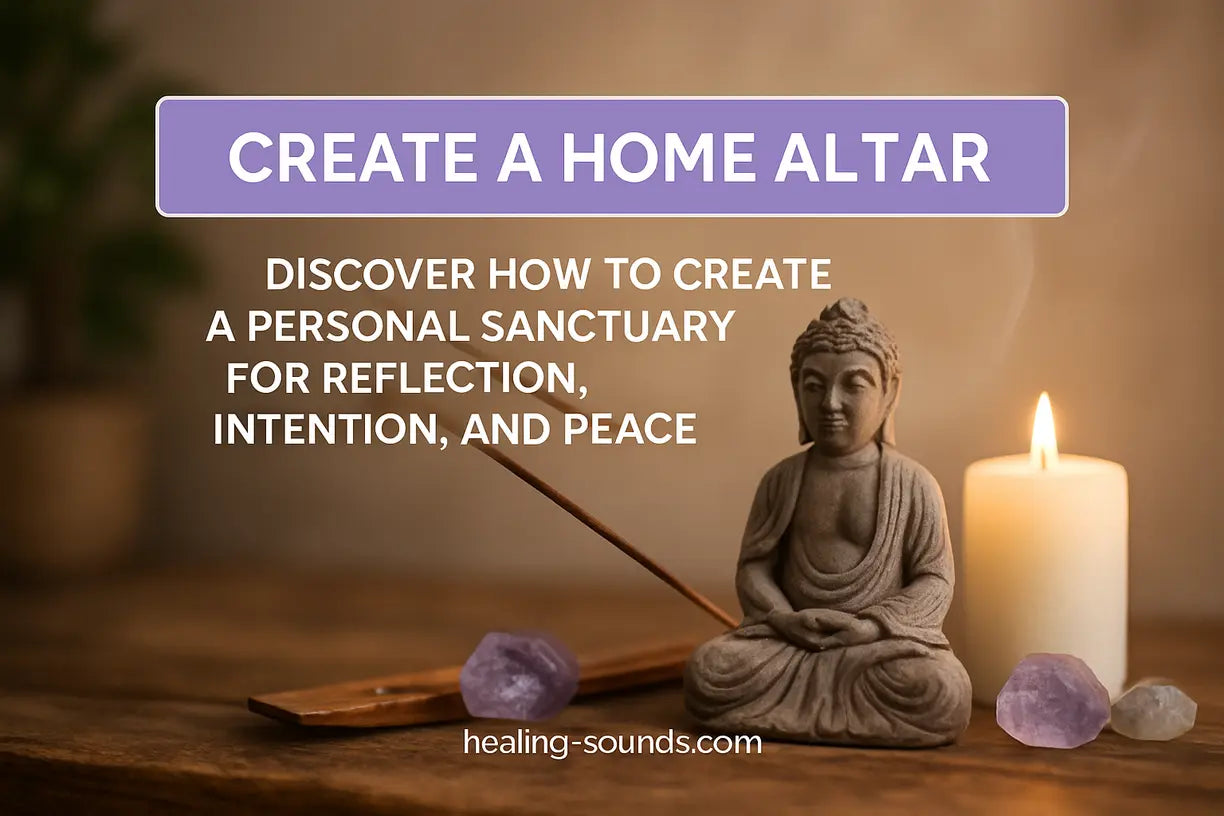
Rotate small elements by season or mood — a new plant, different cushion cover, or a seasonal scent. Frequent use naturally keeps the space meaningful. If you’re looking for inspiration or step-by-step ideas, MyMeditateMate and Calm have helpful guides to spark new designs and rituals (MyMeditateMate and Calm).
Advanced Tips for a Dedicated Meditation Room
If you have a whole room, consider soundproofing, storing meditation props neatly, and dedicating one wall for visual cues like art or a small altar. Camille Styles and The Good Trade both highlight ways to design full rooms and corners while keeping things cozy and functional (Camille Styles, The Good Trade).
When you have more space
- Add a comfortable chaise or a small bookshelf for inspirational reads.
- Create a ritual table for intention-setting items and a journal.
- Use rugs to define different practice zones (sitting, lying, journaling).
Guided Support: Use Video and Community
If you prefer guided sessions, video meditations can help stabilize a new habit. Here’s a short, calming guided practice you can watch while settling into your corner.
Guided Home Meditation
Resources and Further Reading
For practical tips and inspiration, these resources are helpful:
- MyMeditateMate — Essentials, practical tips & inspiration for your personal meditation space.
- The Good Trade — A simple method: find a corner, pick five objects, and visit often.
- Calm — Six tips for creating a DIY meditation room on a budget.
- Camille Styles — Cozy, design-forward meditation room ideas.
- The Mind Company — Step-by-step guidance for designing a dedicated practice area.
Final Checklist to Build Your Corner
Before you sit down, run through this quick checklist to finalize your home meditation corner:
- Clear or define a small area in your home.
- Choose comfortable seating and a soft surface.
- Control light and sound to suit your practice.
- Select 3–5 meaningful objects for the space.
- Keep a timer and a simple routine nearby.
Summary
Creating a home meditation corner is about making a small, consistent refuge for presence. With a thoughtful spot, a few meaningful items, and a short daily routine, you’ll build a practice that sticks. Start small, keep it simple, and adapt as your needs change.
Frequently Asked Questions
Do I need a whole room to meditate?
No. A corner, closet, or even a dedicated mat works. The key is consistency and minimal distractions. Many resources suggest repurposing a small corner to keep the practice accessible (see Calm and The Good Trade).
What is the best time to use my meditation corner?
Choose a time that you can repeat daily. Morning tends to work well for many people because it sets the tone for the day, but evening sits can help unwind. The best time is the one you actually maintain.
Which items should I avoid placing in my meditation corner?
Avoid clutter, bright screens, and anything that reminds you of work or stress. Keep the corner intentional: a few calming items are better than many stimulating ones.
Can I use music or guided meditations?
Yes. Gentle music or guided meditations are great for focus, especially when starting. Try soft nature sounds or a short guided video to anchor your practice.
Ready to build your corner? Explore more tips and step-by-step guides at zenpulsehub.com and start your daily practice today.






