

How to Fall Asleep Fast: 12 Quick Tips
How to fall asleep fast is one of the most searched questions at night. If you lie awake scrolling or counting sheep, this guide gives practical, science-backed steps you can use tonight. Read on for simple routines, breathing tricks, environment tweaks, and when to get help.
Why falling asleep fast matters
When you know how to fall asleep fast, you get more time in deep and restorative sleep. Falling asleep quickly reduces the stress that comes from lying awake and helps your brain shift into recovery mode sooner. Small changes add up — and you don’t need a perfect night to improve your sleep.
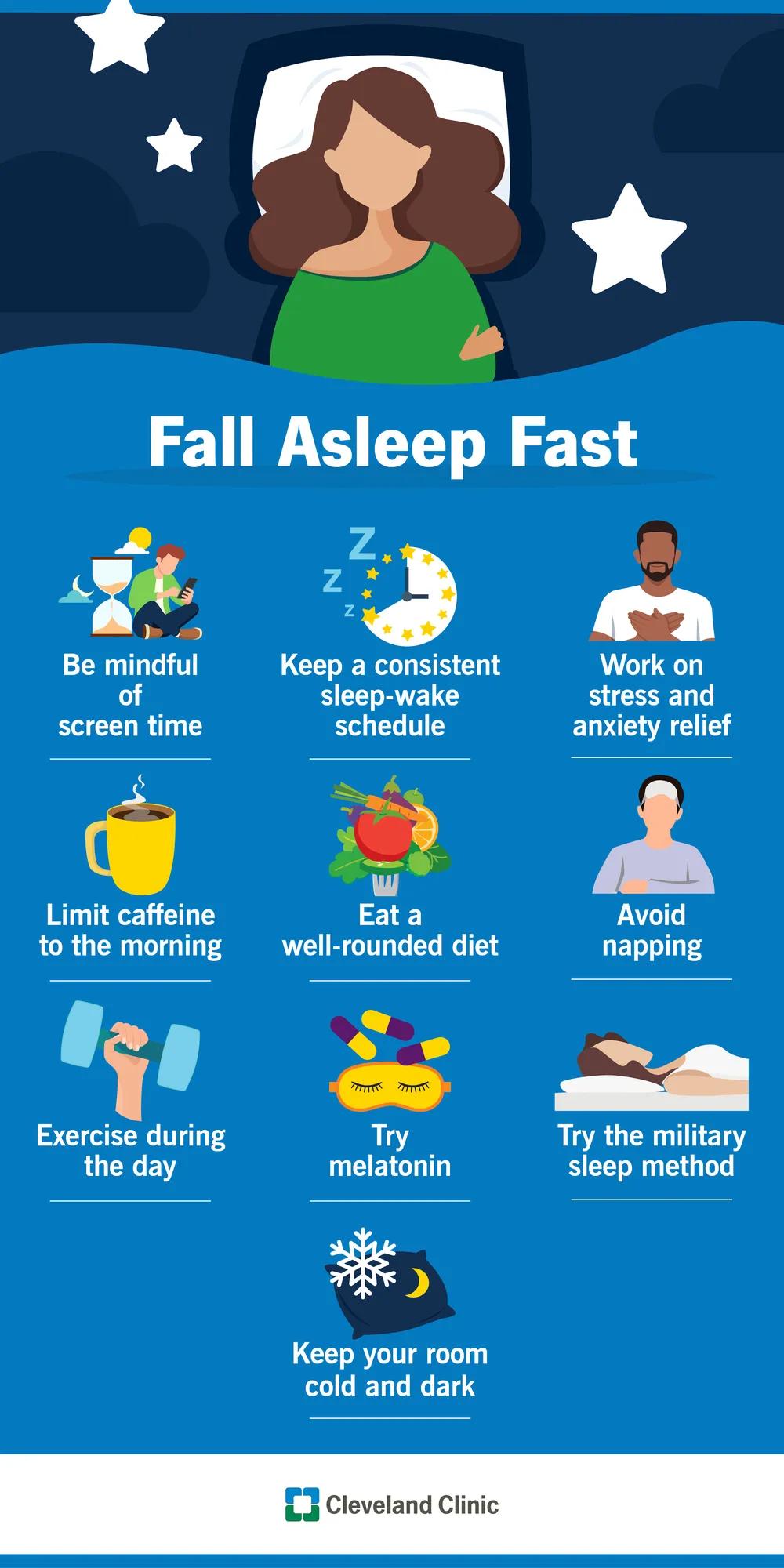
Quick checklist: 12 practical tips to fall asleep fast
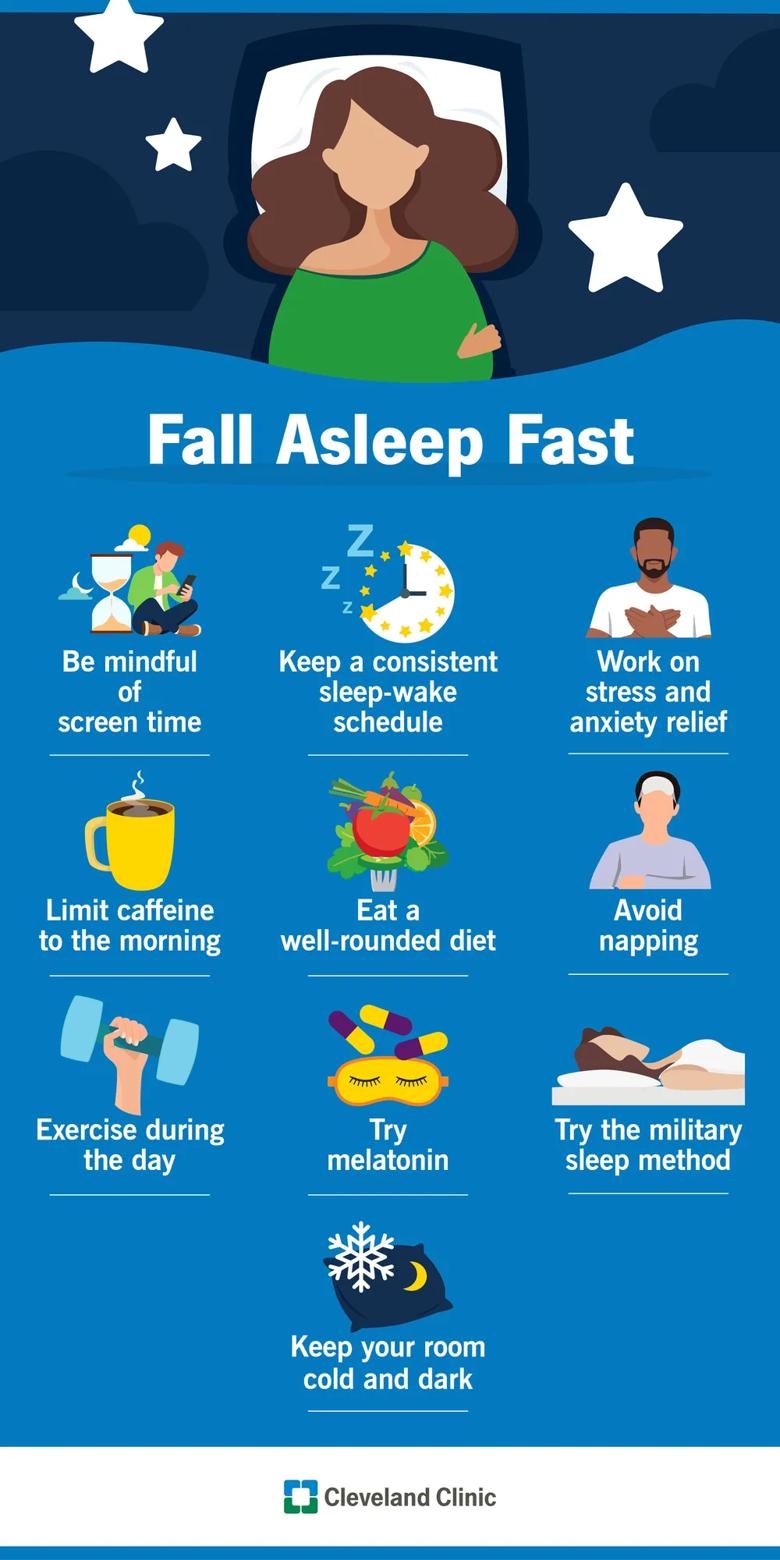
Try these in order or pick the few that fit your lifestyle. Use them consistently for best results.
- Keep a consistent bedtime: Go to bed and wake at the same time every day, even weekends.
- Cool your room: Aim for 60–67°F (15–19°C) for faster sleep onset.
- Limit screens 30–60 minutes before bed: Blue light suppresses melatonin.
- Use a wind-down ritual: Read, stretch gently, or take a warm shower.
- Try breathing techniques: Methods like 4-7-8 can calm your nervous system.
- Progressive muscle relaxation: Tense and release muscle groups from toes to head.
- Mind your caffeine and alcohol: Avoid late caffeine and heavy alcohol before bed.
- Limit naps: Keep daytime naps under 20 minutes and before mid-afternoon.
- Light exposure: Get bright daylight in the morning and dim lights in evening.
- Comfortable bedding: Choose a mattress and pillow that support your sleep posture.
- Use a short mental anchor: A simple phrase or visualization can stop racing thoughts.
- Get up if you can’t sleep: After 20 minutes, leave the bed and do something low-stimulating.
Build a bedtime routine that helps you fall asleep fast
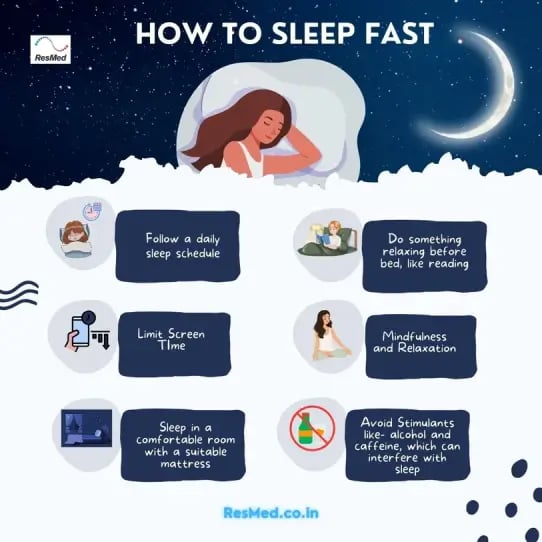
Routines cue the brain that it’s time to sleep. A solid wind-down takes 20–45 minutes and focuses on lowering stimulation and activating relaxation.
Simple 30-minute routine
- Dim the lights and put devices away.
- Do 5–10 minutes of light stretching or yoga.
- Practice a calming breathing exercise (see below).
- Read a physical book or listen to soft music.
- Write a short to-do list for tomorrow to clear your mind.
Breathing and relaxation techniques
Breathing techniques slow your heart rate and quiet your mind. These are easy to do in bed.
4-7-8 breathing
Inhale through the nose for 4 seconds, hold for 7, then exhale slowly through the mouth for 8 seconds. Repeat 4–6 cycles. The Hoag article highlights this method for quick relaxation.
Military method
This approach combines muscle relaxation with visualization. It was developed to help people fall asleep under stressful conditions and can work for civilians too. Follow the steps: relax face, shoulders, chest, then legs, and imagine a calming scene. If your mind wanders, return to the image and deep breaths.
![How To Fall Asleep Fast: 12 Quick Methods [+13 Extra Tips]](https://purple.com/sites/default/files/2023-09/military-method-steps.png)
Environment tweaks for faster sleep
Your bedroom should help you fall asleep fast. Make small changes that lower arousal and invite sleep.
- Darkness: Use blackout curtains or an eye mask.
- Quiet: Earplugs or white noise can drown out disturbances.
- Temperature: Keep the room cool — a lower body temperature helps sleep.
- Remove clutter: A tidy space reduces mental noise.
What to do when you can’t fall asleep fast
If you’ve tried breathing and relaxation and still can’t sleep, get up.
Rule of 20 minutes: If you’re awake for 20+ minutes, leave the bed and do something boring and low light — read (paper), stretch, or listen to calm music. Return to bed when sleepy. This helps the brain re-associate bed with sleep rather than wakefulness.
Food, drink, and habit changes
Small lifestyle shifts make a big difference over time.
- Cut late caffeine: Avoid caffeine 6–8 hours before bedtime.
- Eat lighter at night: Heavy meals close to bedtime can disrupt sleep.
- Limit alcohol: It may help you fall asleep but fragments sleep later in the night.
- Move daily: Regular activity promotes better sleep, but avoid intense exercise right before bed.
Science-backed tips and where to learn more
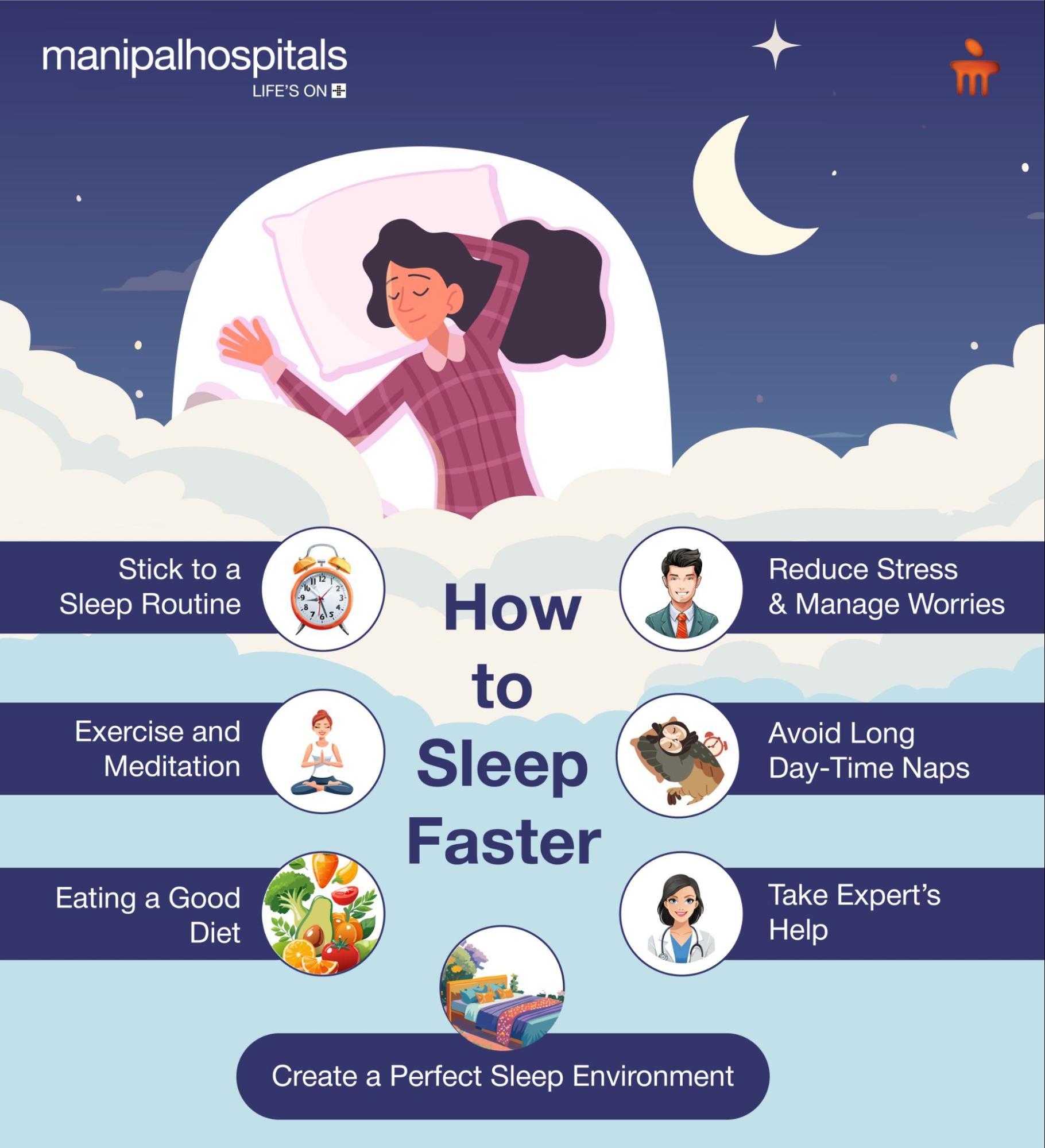
Trusted health sources give clear, research-based advice on sleep hygiene and relaxation techniques. For a deep dive on relaxation and visualization, see this Healthline guide. For practical sleep hygiene rules backed by clinicians, check the Cleveland Clinic article on how to fall asleep fast. The UK NHS also offers simple routines and mindfulness tips to help you wind down (NHS sleep tips).
Guided help: short video practice
Follow a short guided practice if you prefer audio or visuals. The video below demonstrates breathing, progressive relaxation, and visualization to help you fall asleep fast.
Mental strategies: stop racing thoughts
Racing thoughts are the most common reason people stay awake. Use these quick mental tools to slow the mind:
- Label worries: Name the thought — “planning” or “worry” — then let it go.
- Use a mantra: Repeat a calming phrase like “relax” or “soft breath” to replace spirals.
- Count with breath: Inhale and count to 4, exhale and count to 4, repeat for 5 minutes.
- Visualization: Picture a repetitive, non-stimulating scene, such as waves on a shore.
When to see a professional
Some sleep problems need clinical attention. If you regularly take more than 30 minutes to fall asleep despite good sleep habits, wake up exhausted, or experience loud snoring or gasping, consult a clinician. The Cleveland Clinic and Hoag provide helpful entry points for what to expect from a sleep evaluation (Cleveland Clinic, Hoag).
Short tips you can try tonight
- Turn off screens 45 minutes before bed — dim lights instead.
- Do one 5-minute breathing cycle (4-7-8) when you lie down.
- If your mind races, get up and do a quiet task for 15 minutes.
- Keep a notepad by your bed and write tomorrow’s top 3 tasks to clear thinking.
- Try a cool shower 60 minutes before bed to speed the body’s sleep signals.
Community tips and quick hacks
Real-world tips can also help. On Reddit, users share simple life hacks like counting up slowly to take attention away from stress. These methods can be a practical complement to evidence-based techniques (Reddit life hacks).
How quickly should I be able to fall asleep?
Many people fall asleep within 10–20 minutes. If you consistently take longer than 30 minutes, review your sleep habits and environment. If problems persist, consult a clinician.
Does counting help me fall asleep fast?
Counting can help by giving your mind a simple, repetitive focus. Combine counting with slow breathing or visualization for better results.
Will a warm bath help me fall asleep faster?
Yes — a warm bath about 60–90 minutes before bed can help. It raises body temperature slightly, and the subsequent cool-down signals your body it’s time to sleep.
Are apps and white-noise machines useful?
They can be. White noise masks sudden sounds and creates a steady background. Use apps that offer guided breathing or meditation, but avoid bright screens right before bed.
Final note: Learning how to fall asleep fast takes small, consistent changes. Start with one routine and build from there. If you want more step-by-step guides and soothing practices, explore other sleep and wellness articles on zenpulsehub.com.






