


How to Fall Asleep Fast with ADHD
How to fall asleep fast with ADHD feels impossible some nights — racing thoughts, buzzed energy, and a brain that won’t switch off. This guide gives clear, science-informed tips and simple routines to help you fall asleep faster, stay asleep longer, and wake up clearer. Read on for practical steps, quick tricks, and long-term strategies that actually work for people with ADHD.
Why ADHD makes sleep harder
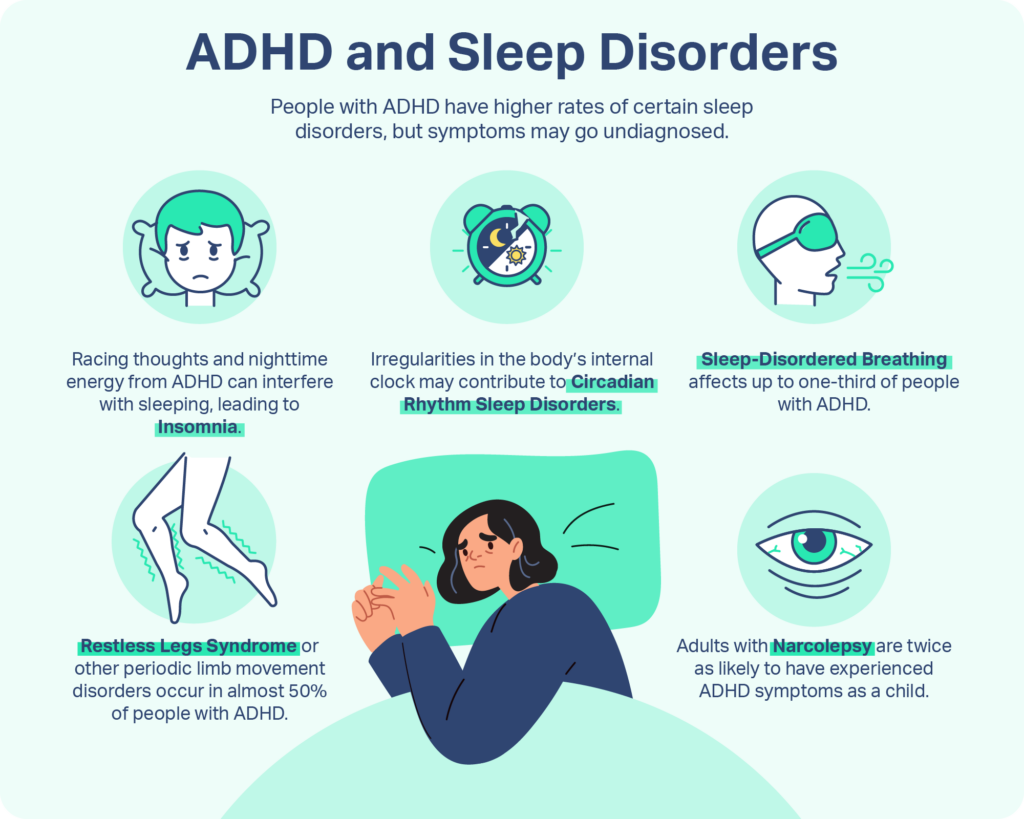
People with ADHD often struggle with bedtime because ADHD affects brain systems that regulate arousal, attention, and the sleep-wake cycle. That means you might feel wired when you want to wind down, or you may fall asleep only to wake up frequently. Understanding the cause helps you choose the right fixes.
Common drivers
- Hyperarousal: racing thoughts and trouble switching off.
- Delayed circadian rhythm: natural nights owls — late sleep times.
- Medication timing: stimulant meds can interfere if taken too late.
- Poor routines: inconsistent bedtimes and stimulating pre-bed activities.
How to Fall Asleep Fast with ADHD: Quick practical steps
If you need to fall asleep fast tonight, try this short, focused sequence. These steps are easy to follow and built for ADHD minds.
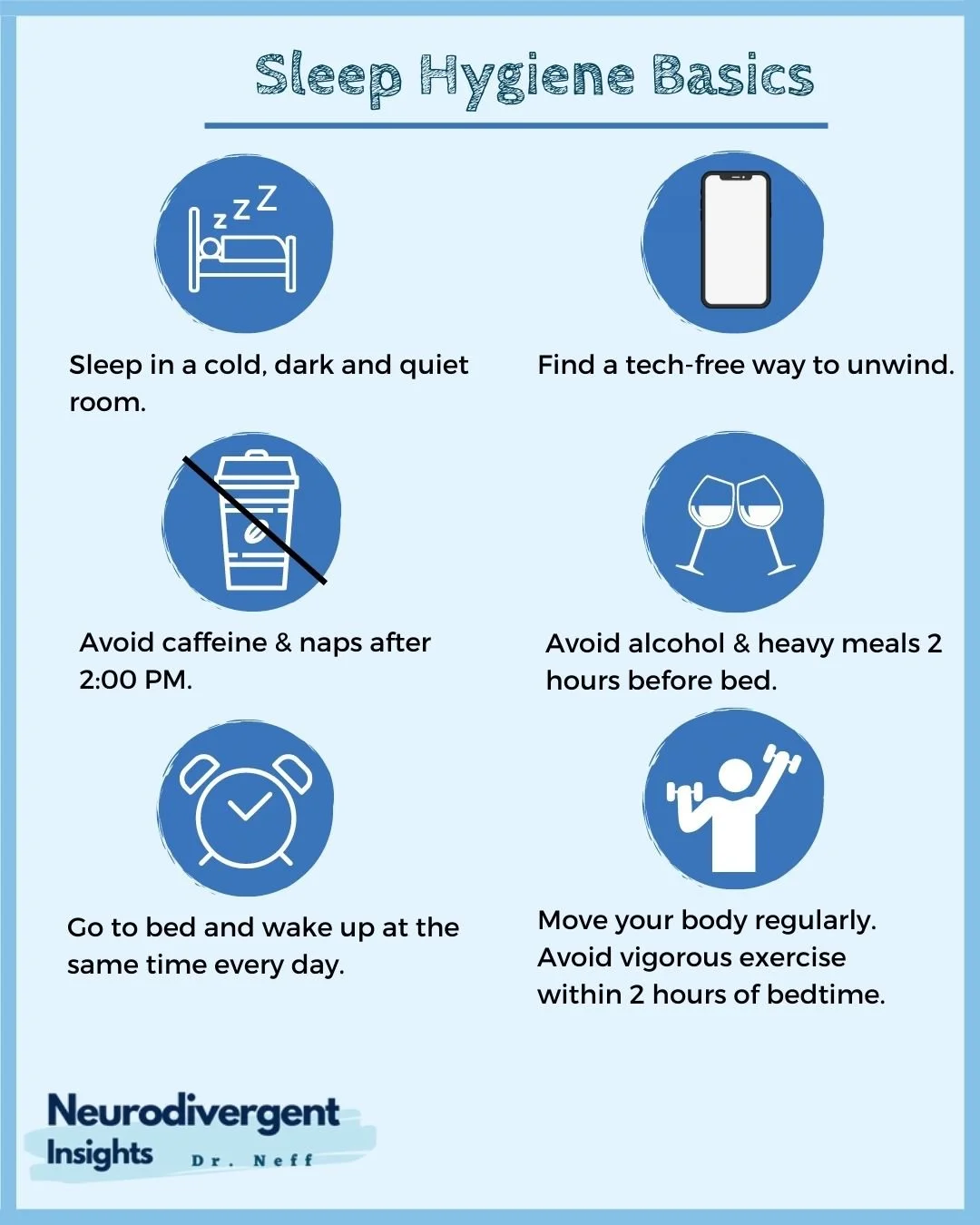
- Stop screens 30–60 minutes before bed. Bright screens raise alertness; dim or use blue-light filters early.
- Create a 10-minute unplug ritual: dim lights, make tea, change into bedtime clothes, and put on a low-volume sound machine or soft music. (This echoes the ideas in Additude’s routine suggestions like a warm bath or dim lights.) Read more about bedtime cues on Additude.
- Use a 4-7-8 breathing cycle: inhale 4, hold 7, exhale 8 — repeat 4 times to calm heart rate and focus the mind.
- Try a quick brain dump: write down three things you must remember and one positive thought, then set the paper somewhere visible so the mind can let go.
- Use guided audio: a short 10–20 minute guided sleep meditation or body scan helps redirect attention away from rumination.
Set up a reliable sleep-friendly environment
Small environmental changes create big wins. People with ADHD benefit especially from clear, consistent cues that say “bedtime.”
Room checklist
- Darkness: blackout curtains or a sleep mask to limit light.
- Cool temperature: 60–67°F (15–19°C) is ideal for most people.
- Low noise: white noise or a calming sound machine can mask jarring sounds.
- Comfortable bedding: reduce friction from scratchy sheets or too-warm covers.
- Minimal clutter: a tidy space reduces visual stimulation and makes winding down easier.
Daily habits that help you fall asleep faster
Changing daytime habits changes nights. Build consistent cues that train your body to sleep.
Key habits
- Consistent wake time: even on weekends. This anchors your circadian rhythm.
- Morning light exposure: get sun within 30–60 minutes of waking for 10–20 minutes to set your clock.
- Exercise: regular daytime exercise helps, but avoid intense workouts within two hours of bed.
- Watch caffeine: avoid caffeine at least 4 hours before bed (WebMD recommends avoiding caffeine 4 hours before bedtime).
- Limit naps: avoid napping within 4 hours of sleep time to preserve sleep drive.
For more tips on day-to-day ADHD sleep improvements, Verywell Mind offers practical bedtime activities and calming tea suggestions. See their guide for ADHD-friendly habits.
Practical techniques to fall asleep fast (ADHD-friendly)
1. Behavioral ‘stimulus control’ for ADHD brains
Use your bed only for sleep and sex. If you can’t sleep after 20 minutes, get up and do a quiet, low-light activity until you feel sleepy, then return to bed. This helps break the “I can’t sleep” cycle.
2. Short, repeatable routines
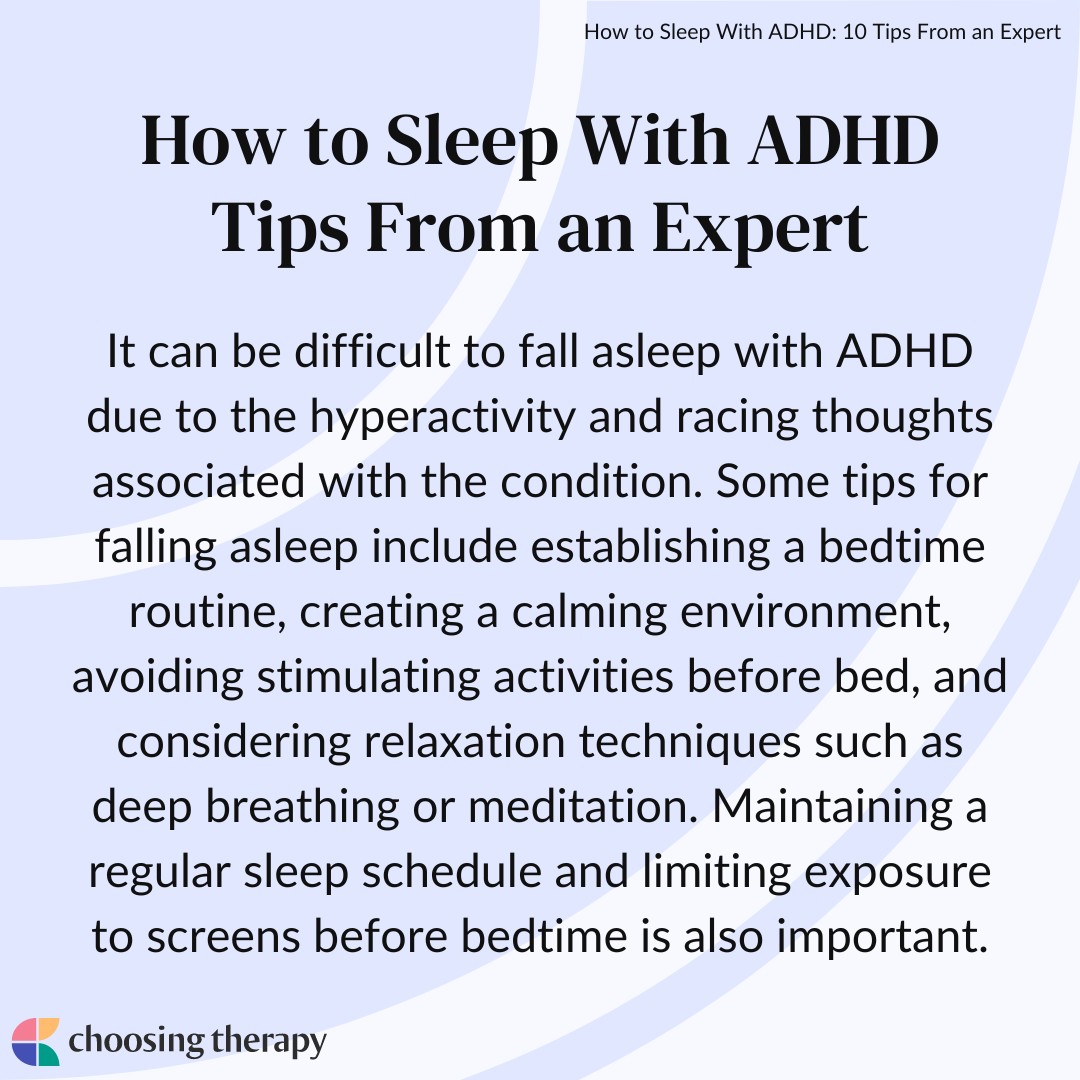
People with ADHD benefit from short, predictable rituals that limit decision fatigue. Try a 20–30 minute routine you follow most nights:
- Prepare for next day (lay out clothes, pack bag) — 5 minutes.
- Hygiene: brush teeth, wash face — 5 minutes.
- Calm activity: warm decaf tea or reading for 10 minutes.
- Breathing/body scan for 5–10 minutes then lights out.
3. Mind strategies — redirect, not suppress
Trying to force thoughts away often backfires. Instead:
- Label thoughts: “planning thought” or “worry” — then let it float away.
- Use imagery: imagine a slow, neutral scene — rain on a tin roof, a quiet library.
- Schedule worry time: if a worry comes up, jot it down and promise yourself 10 minutes tomorrow to address it.
When medications and timing matter
Many adults with ADHD take stimulants. If timing is off, stimulants can delay sleep onset. WebMD recommends avoiding stimulant medication too late in the day and adjusting timing with your prescriber. WebMD explains medication and sleep interactions.
If you take medication that affects sleep, talk with your prescriber about options: shifting dose time, switching medications, or adding a short-acting evening strategy. Don’t change prescriptions without checking with your clinician.

Supplements, aids, and medical options
Some people find melatonin or other aids helpful. Use caution: start with a low dose and consult a clinician. If sleep problems persist, a sleep study or CBT-I (cognitive behavioral therapy for insomnia) can be effective for ADHD-related insomnia.
Be wary of sedative prescription meds unless a doctor recommends them. Infographics on medication and natural aids can help you decide; for pediatric specifics and infographics see resources like Goally’s sleep guides. Goally’s sleep ideas.

Real user tips and community wisdom
Forums and subreddits contain rapid, lived-experience tips. Some users report effective hacks like specific snack timing, med adjustments, or short rituals. For firsthand strategies, people share routines and wins on Reddit threads — note these are personal reports and not medical advice. See examples: one thread on falling asleep quickly and a collection of sleep tips.
Sample 30-minute wind-down routine
This routine is short, repeatable, and designed for ADHD brains that need structure.
- 30 minutes before bed: stop screens; dim lights; set an alarm for wake time.
- 25 minutes: prepare clothes and tasks for tomorrow (5 minutes).
- 20 minutes: warm caffeine-free beverage (chamomile or ‘sleep’ tea) and brush teeth (10 minutes).
- 10 minutes: 4-7-8 breathing then a 7-minute guided body scan audio.
- 0 minutes: lights out. If you’re not asleep in 20 minutes, get up and repeat a calm activity until sleepy.
Tracking progress
Keep a simple sleep log: bedtime, wake time, total sleep, and a note about what worked. After 2–4 weeks you’ll see patterns—what helps and what disrupts sleep.
Troubleshooting common obstacles
My brain is buzzing with ideas
Use the brain dump method: keep a small notebook by the bed and write the idea down in one sentence. Then return to your breathing exercise.
I wake up multiple times
Limit fluids 60–90 minutes before bed and check room temperature and noise. If waking persists, talk to a clinician; sleep apnea or restless legs can co-occur with ADHD.
Stimulant meds are keeping me awake
Talk to your prescriber about dose timing or alternatives. WebMD suggests adjusting stimulant schedules and avoiding late caffeine. See WebMD for medication-sleep interactions.
How to Fall Asleep Fast with ADHD: professional resources
If sleep problems are severe or chronic, consider these next steps:
- Consult a sleep specialist for a sleep study.
- Try CBT-I (cognitive behavioral therapy for insomnia), which adapts well for ADHD-related insomnia.
- Work with your ADHD clinician to review medication timing and interactions.
Reliable articles and community resources to explore:
- Additude’s ADHD sleep strategies — routines, light cues, and warm baths to signal bedtime.
- Verywell Mind’s ADHD sleep tips — calming teas and ADHD-friendly bedtime activities.
- WebMD on adult ADHD and sleep — medication timing and general sleep hygiene.
Final checklist to help you fall asleep fast with ADHD
Use this short checklist before bed to stack the odds in your favor.
- Stopped screens 30–60 minutes before bed.
- Did a short, repeatable 20–30 minute wind-down routine.
- Used a breathing exercise or guided body scan.
- Set consistent wake time and got morning light.
- Checked medication timing with your prescriber if sleep still disrupts you.
How to fall asleep fast with ADHD takes practice and adjustments, but small consistent steps add up. Try one new strategy each week and track the change.
FAQs
How quickly can I expect improvement?
Some people notice improvements within days when they add a reliable wind-down and stop screens early. Others need 3–4 weeks of consistent routine to shift circadian timing. Track changes and be patient.
Is melatonin safe?
Melatonin can help with circadian shifts, but start with low doses and discuss it with your clinician — especially if you take other medications.
What if medication is the main problem?
Talk to your prescriber. Adjusting dose timing, changing formulations, or trialing different meds can reduce sleep disruption. WebMD covers common medication-sleep interactions and options.
Are naps okay?
Short naps (20 minutes) can boost alertness, but avoid napping within 4 hours of bedtime to keep nighttime sleep drive strong.
Ready to sleep better? Try one change tonight and track it for two weeks. Explore more practical sleep and focus guides at zenpulsehub.com to build a calmer, better-rested routine.






