


Make Meditation a Daily Habit: Simple Ways
Make Meditation a Daily Habit by building small, consistent steps into your day. If you want calm, better focus, and less stress, daily meditation is one of the simplest and most powerful tools. This guide shows practical, friendly ways to turn meditation into a habit you actually keep.
Why make meditation a daily habit?
Meditation helps reduce stress, improve focus, and boost emotional balance. Scientists and long-time practitioners report better sleep, clearer thinking, and reduced reactivity when they practice regularly. But benefits grow when the practice is consistent. That’s why it matters to make meditation a daily habit — even just for a few minutes each day.
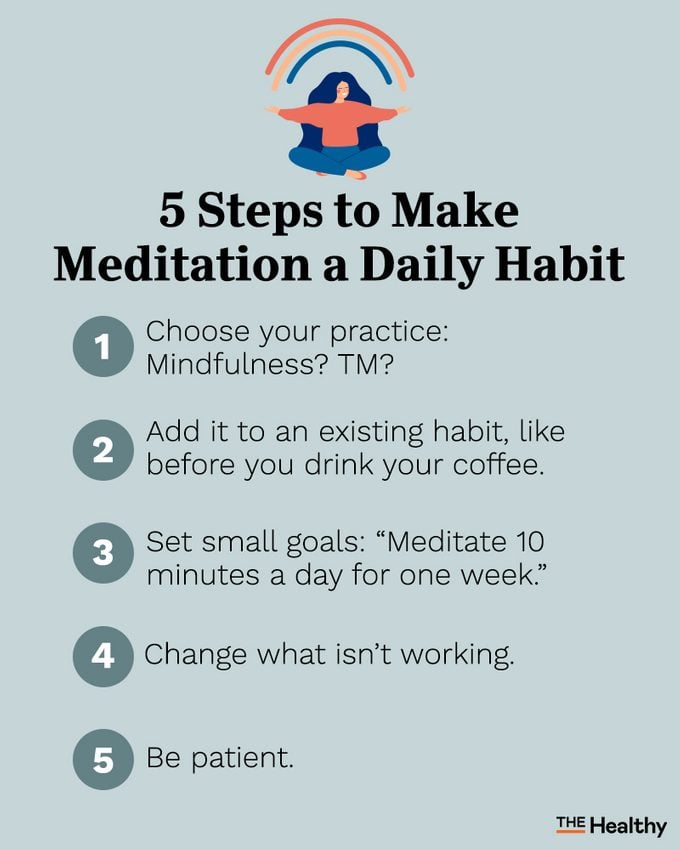
How to Make Meditation a Daily Habit
Below are simple, proven steps to help you practice daily. Use them one at a time. Each step builds momentum and makes it easier to keep going.
1. Start tiny: commit to 2–5 minutes
Large goals fail fast. Starting with a tiny, doable step helps you win early and build confidence. Try meditating for 2 minutes right after you wake up or before bed. The short duration lowers resistance and makes the habit stick.
2. Use a clear trigger or cue
Link meditation to a specific, existing habit. Triggers make behavior automatic. Examples:
- After brushing your teeth, sit for 3 minutes.
- Right after your morning coffee, practice a 5-minute breath focus.
- When you sit down at your desk, do a 2-minute grounding practice.
This tip echoes advice from community discussions that recommend a precise cue instead of vague plans (see this Reddit thread for examples of triggers and a mental contrasting exercise).
3. Pair with a habit you already do
Habit pairing reduces friction. Choose a reliable daily activity and attach meditation to it. For example, meditate after lunch or when you finish your workout. Over time, the cue will signal your brain that it’s time to meditate.
4. Make a simple routine
Keep the structure predictable. A routine could look like this:
- Sit comfortably for 30 seconds.
- Breathe slowly for 2 minutes.
- Scan your body for tension for 1 minute.
- End with 30 seconds of gratitude or intention.
Simple steps reduce decision fatigue and help you follow through.
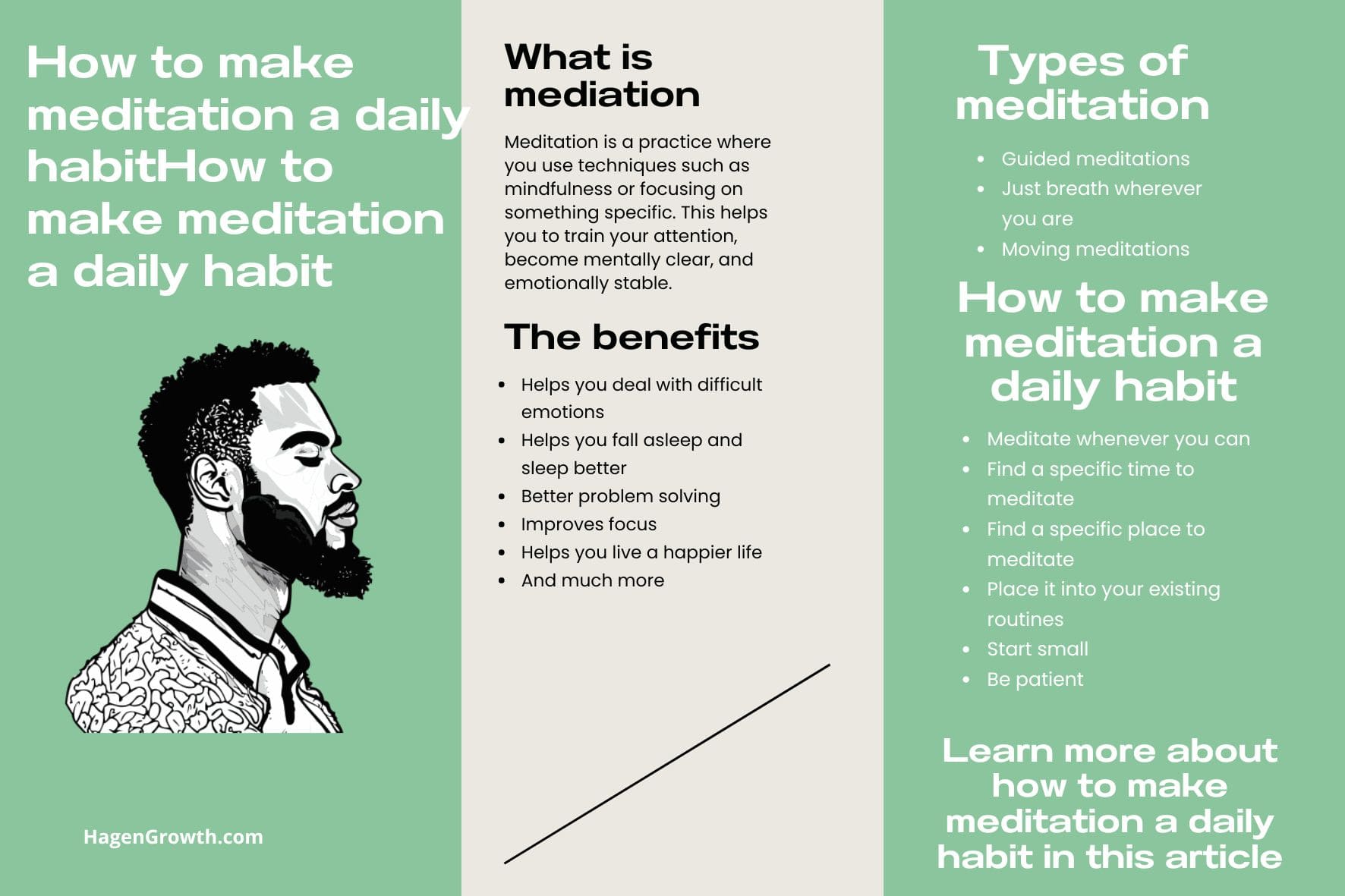
Practical tools to keep you consistent
Use practical aids that match your lifestyle. These tools make it easier to stick with the practice.
Use guided meditations and apps
Guided meditations help beginners and busy people stay on track. Apps like Headspace and others offer short sessions and reminders. For a focused set of tips on daily routine building, check Headspace’s advice on creating a daily meditation habit: Headspace daily tips.
Track your progress
Tracking turns small wins into visible progress. Use a habit app, a calendar, or a paper journal. Marking each day you sit down reinforces behavior through positive feedback.
Schedule time like an appointment
Treat meditation as a calendar event. A fixed time reduces the chance of skipping. If your morning is unpredictable, try meditating at lunch or right before bed.
Design a welcoming space
Create a small, pleasant corner for practice. You don’t need special props — a cushion, a plant, or soft lighting helps. A comfortable space signals your brain that it’s time to relax and focus.
Techniques that fit a daily routine
Choose styles that match your energy and time. Switching techniques keeps practice fresh and reduces boredom.
Breath awareness
Count or watch your breath for 2–10 minutes. This is fast, portable, and ideal for daily practice.
Body scan
Slowly move attention through the body, noticing tension. A short body scan works well before sleep or after long work sessions.
Walking meditation
Turn a short walk into a practice by focusing on steps and sensations. It’s great for people who find sitting uncomfortable.
Loving-kindness (metta)
Spend a few minutes sending kind intentions to yourself and others. This practice strengthens empathy and emotional balance.

Psychology-backed ways to stick with practice
Understanding how habits form helps you stay consistent. Use the following psychology-backed tips to make meditation a daily habit.
Use implementation intentions
Set a specific plan: “I will meditate for 5 minutes after I shower in the morning.” This clarity increases follow-through. For more on concise steps and tiny starts, Leo Babauta’s approach recommends committing to 2 minutes and picking a clear trigger: Zen Habits: How to do it daily.
Reward yourself
Small rewards help. After meditating, enjoy a cup of tea or mark a calendar. The reward links the habit to positive feeling.
Practice mental contrasting
Visualize the benefits, then imagine obstacles. This technique makes plans more realistic and creates commitment. Community advice often highlights this strategy (see the Reddit discussion).
Common obstacles and how to beat them
Even with good intentions, people run into predictable roadblocks. Here’s how to handle the most common ones.
“I don’t have time”
Shorten the practice. Two minutes daily is better than a long session once a week. Consistency matters more than duration.
“I get distracted”
Distraction is normal. When your mind wanders, gently bring it back. Every return strengthens focus. Guided meditations can help maintain attention in the early days.
“It feels boring”
Vary techniques and settings. Try walking meditation, guided sessions, or brief mindful pauses. Variety keeps your mind engaged.
Use trusted resources
Lean on reputable guides and articles when you need structure or motivation. For research-backed benefits and habit building advice, check a clear breakdown of meditation benefits in mainstream media like Forbes: Forbes: Make meditation a habit. For structured steps to develop a daily practice, Mindful.org offers practical how-tos: Mindful: Developing a daily practice.

Accountability, community, and social tips
Practicing with others increases commitment. Try these options:
- Join a local meditation group or online forum.
- Share your goal with a friend and check in weekly.
- Use social challenges or habit groups to stay motivated.
Communities often share practical cues and mental contrasting exercises that help sustain a habit (community tips can be found in forums like the Reddit link above).
Short guided video to get started
Use this short video if you want an easy guided session to follow now:
YouTube: Guided Meditation for Daily Practice
Advanced tips for long-term success
Once daily sessions feel natural, add depth and variety to maintain growth.
Gradually increase time
When a habit is secure, add 1–2 minutes per month. Slow increases avoid burnout.
Mix formal and informal practice
Combine seated meditation with mini-practices: mindful eating, single-tasking, and breathing breaks. These small pauses extend the benefits beyond formal sessions.
Reflect and journal
Write one line after practice. Note how you feel and any changes over weeks. Journaling reinforces consistency and awareness.
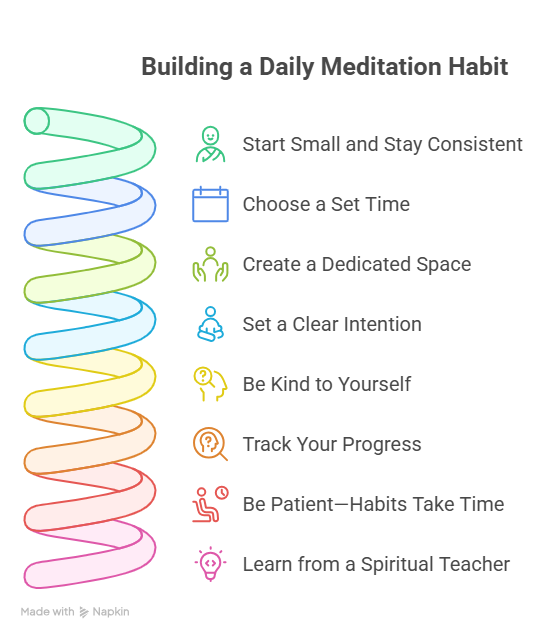
Quick checklist to start today
- Decide on a cue and time. (Example: after breakfast.)
- Set a timer for 2–5 minutes.
- Choose a simple technique (breath or body scan).
- Track the session and reward yourself.
- Repeat daily and increase slowly.
Resources and further reading
Want structured steps or research-based guidance? Here are helpful links:
- Headspace — Tips to build daily meditation (short sessions and reminders).
- Forbes — Why and how to make meditation a habit (benefits overview).
- Zen Habits — Start with 2 minutes (tiny habit strategy).
- Mindful.org — Six steps to a daily practice (practical steps).
Final thoughts
Learning to make meditation a daily habit is about being patient and kind to yourself. Start small, pick a clear cue, and track progress. Over time, small daily actions compound into lasting change. If you miss a day, simply return the next day — consistency is built over weeks and months, not single perfect days.
Ready to start? Try a two-minute session now and pick one cue you will use tomorrow. Small steps lead to big results.
If you enjoyed these tips, explore more guides and practical routines at zenpulsehub.com to deepen your practice.
How long should I meditate each day to see benefits?
Start with 2–5 minutes per day. Consistency matters more than length. Many people notice benefits after a few weeks of daily practice.
What if I get distracted during meditation?
Distraction is normal. Gently bring your attention back to the breath or chosen focus. Each return strengthens your attention.
Can I meditate without sitting on the floor?
Yes. Sit in a chair, lie down for a body scan, or try walking meditation. Comfort helps you stay consistent.
Which apps or resources help build a habit?
Headspace and other guided apps offer short sessions and reminders. Check expert articles from Mindful.org and Forbes for additional strategies and research.






