
Meal Prep for a Calm, Balanced Mind
Meal Prep for a Calm, Balanced Mind is more than a weekend routine — it’s a practical, daily tool to reduce stress, stabilize mood, and protect your focus. When you plan and prepare meals ahead, you remove decision fatigue, nourish your brain consistently, and build a gentle rhythm that supports mental clarity.
This guide walks you through easy, science-smart meal-prep strategies, mindful cooking practices, and simple recipes designed to support a calm, balanced mind. Read on for actionable tips, a short video walkthrough, and a calming meal plan you can start this week.
Why Meal Prep for a Calm, Balanced Mind Works
Eating consistently helps steady blood sugar, reduce anxiety spikes, and promote a regulated nervous system. Meal prep creates structure — and structure is grounding. When meals are ready, you’re less likely to reach for fast, processed foods that can worsen mood swings and brain fog.
Key benefits
- Less decision fatigue: fewer daily food choices frees mental energy.
- Consistent nutrients: steady intake of protein, healthy fats, and fiber supports neurotransmitter balance.
- Lower stress: predictable meals reduce last-minute scramble and anxiety.
- Better sleep: balanced meals help regulate circadian eating patterns.
Simple Principles to Follow
Start with a few guiding rules. Keep them small and doable so you build consistency without overwhelm.
1. Prioritize protein at every meal
Protein supports dopamine and serotonin production, which are essential for mood and focus. Aim for a palm-sized portion per meal.
2. Add healthy fats
Omega-3s (found in salmon, walnuts, flax) help reduce inflammation and anxiety. Include a source of healthy fat in snacks and meals.
3. Favor low-glycemic carbs
Whole grains, legumes, and vegetables keep blood sugar steady and prevent mid-day crashes.
4. Hydrate and include calming teas
Dehydration can mimic anxiety. Keep a water bottle handy and try chamomile or lemon balm in the evening.
How to Meal Prep for a Calm, Balanced Mind (Step-by-Step)
Follow this simple routine once or twice a week. It takes 60–90 minutes and pays off all week.
Step 1: Plan with purpose
Write a short plan: 3 breakfasts, 3 lunches, 3 dinners, and snacks. Keep flavors simple and repeat favorites to reduce decision fatigue.
Step 2: Shop mindfully
Buy ingredients that are versatile: roasted veggies, cooked grains, a protein you enjoy. If you’re short on time, use trusted sources for ideas — for example, the tips shared during Stress Awareness Month highlight how healthy eating keeps you calm and centered (prepuk).
Step 3: Cook in batches
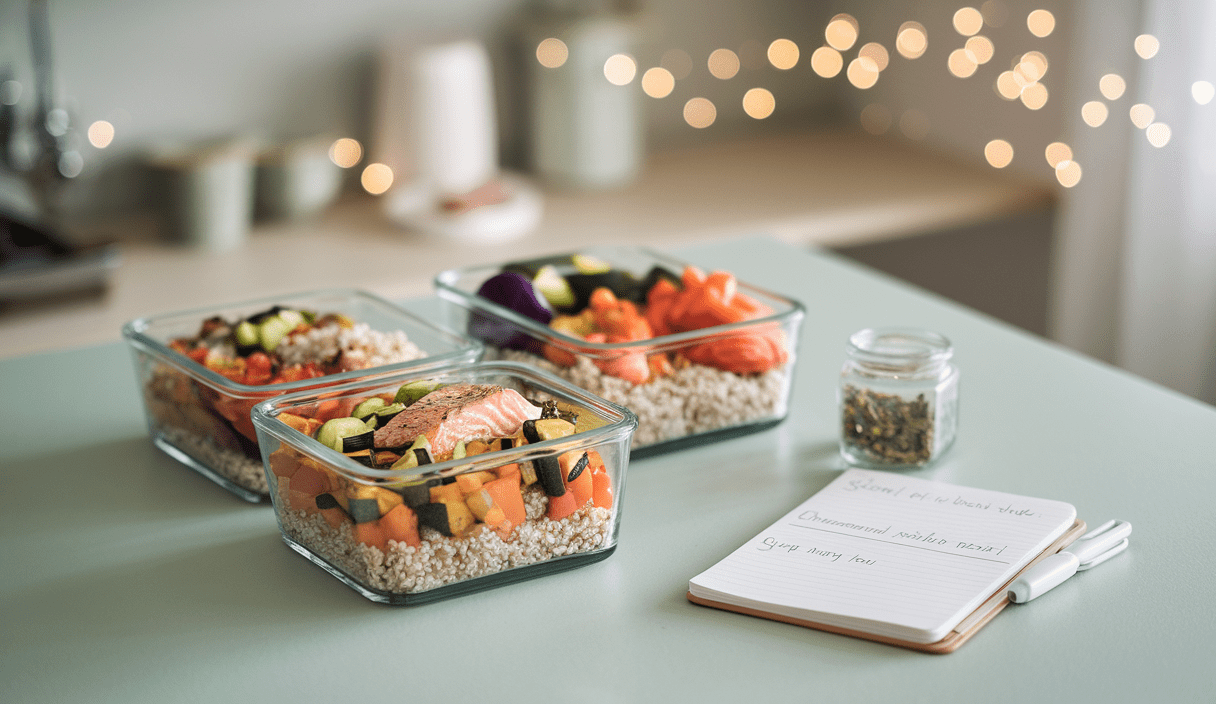
Roast a tray of vegetables, cook a pot of grains, and prepare two protein options (one plant-based, one lean animal option). Store in clear containers so you see what’s available.
Step 4: Portion and store
Use glass containers with compartments or silicone trays. Label with dates and rotate meals so freshness lasts.
Step 5: Create calming rituals
Turn prep time into something therapeutic: play soft music, light a candle, or practice mindful breathing as you chop. Preparing food can be a calming and therapeutic process, as noted in many nutrition guides (MindBodyBliss).

Weekly Meal Plan Example
Here’s a simple, flexible plan you can adapt. These meals focus on nutrients linked to mental calm and balance.
Breakfast (choose 1 each day)
- Greek yogurt with walnuts, berries, and a drizzle of honey.
- Oat bowl with flaxseed, banana, and almond butter.
- Savory scramble with spinach, mushrooms, and whole-grain toast.
Lunch (prep 3 main options)
- Grilled salmon, quinoa, and roasted broccoli.
- Chickpea salad with cucumbers, tomatoes, olive oil, and lemon.
- Turkey and avocado wrap with mixed greens.
Dinner ideas (rotate)
- Stir-fried tofu with brown rice and mixed veggies.
- One-pan chicken with sweet potato and green beans.
- Hearty lentil soup with a slice of whole-grain bread.
Snacks
- Apple slices with almond butter.
- Carrot sticks and hummus.
- A small handful of mixed nuts and a chamomile tea.
Mindful Cooking Tips
Turn meal prep into a short mindfulness practice. These small shifts make the process calming rather than stressful.
- Breathe before you start: take three slow breaths to ground yourself.
- Notice textures and smells: pay attention while you chop and stir.
- Keep your workspace tidy: a clear counter reduces cognitive clutter.
- Play a short guided track: try a 10-minute meditation app before cooking to center your mind (see daily wellbeing tips at Boston University for inspiration: BU Student Wellbeing).
Quick Recipes That Support Calm
Omega-3 Salmon Bowl
Ingredients: salmon fillet, cooked quinoa, roasted broccoli, avocado, lemon. Bake the salmon for 12–15 minutes. Combine and drizzle olive oil and lemon.
Lentil Comfort Soup
Ingredients: red lentils, carrot, celery, onion, garlic, bay leaf, vegetable broth. Simmer 25–30 minutes and season to taste. Serve with whole-grain bread.
Calming Tea Mix
Chamomile, lemon balm, and a slice of fresh ginger. Steep 5–7 minutes. Sip before bed or after a stressful meeting.
How Meal Prep Connects to Stress Awareness
Studies and public health guides emphasize that healthy eating helps keep stress levels lower. During Stress Awareness Month, experts shared how consistent food choices can stabilize mood and reduce reactivity — exactly what thoughtful meal prep delivers (read more).
Extra support: planning and sleep
Pairing meal prep with simple sleep hygiene and daily routines amplifies benefits. A popular weekly reset checklist suggests planning meals and prioritizing quality sleep to fuel the body and mind (example checklist: Sunday Reset tips).
Watch: A Short Guide to Calm Meal Prep
Follow along with this video demo to see a 60-minute prep session and calming cooking habits. The video is a practical companion to this guide — watch and cook along.
Practical Troubleshooting
Meal prep doesn’t need to be perfect. Here are solutions to common hurdles.
- No time: chop veggies and store them raw, then roast in 20 minutes when you need them.
- Limited kitchen skills: choose sheet-pan meals or simple bowls — minimal technique required.
- Repeat boredom: swap sauces and spices to change flavors without extra work.
How Often Should You Meal Prep?
Choose a rhythm that fits your life. For many people, a twice-weekly session keeps food fresh and variety high. If you have a busier routine, prepping once a week with flexible components (like cooked grains and frozen cooked proteins) works well.
Practical Resources and Further Reading
If you want deeper reading on the link between diet and mental health, consider authoritative articles and wellness routines. The Boston University wellbeing guide offers simple daily practices that pair well with meal prep (BU Student Wellbeing), and community posts about weekly resets highlight how planning meals supports rest and recovery (Sunday Reset ideas).
Final Notes
When you practice Meal Prep for a Calm, Balanced Mind, you create a foundation for steady energy, clearer thinking, and less reactivity. It’s not about perfection — it’s about making predictable, nourishing choices that support your inner balance.
Ready to start? Pick one breakfast, one lunch, and one dinner from the plan above. Spend one hour this weekend preparing them. Notice the small relief of not having to decide at 5 PM — that relief adds up and supports a calmer mind.
FAQs
How quickly will meal prep impact my mood?
Some people notice reduced stress and clearer thinking within a few days because consistent meals stabilize blood sugar. For lasting benefits, give it 2–4 weeks while pairing meal prep with sleep and movement.
What if I don’t like meal repetition?
Rotate sauces, spices, and sides. Keep core components (like grains and proteins) but change dressings or herbs to vary flavors without extra work.
Can meal prep help with anxiety?
Yes. Structured eating reduces decision fatigue and blood sugar swings, both of which can lower anxiety triggers. Combining meal prep with calming routines amplifies benefits.
Where can I find inspiration and plans?
Start with short guides and community checklists. The Stress Awareness Month resources and wellbeing posts linked in this article provide practical ideas and week-by-week approaches (prepuk, Sunday Reset).
Explore more guides on zenpulsehub.com — start small, stay consistent, and let simple meal prep nourish your calm.