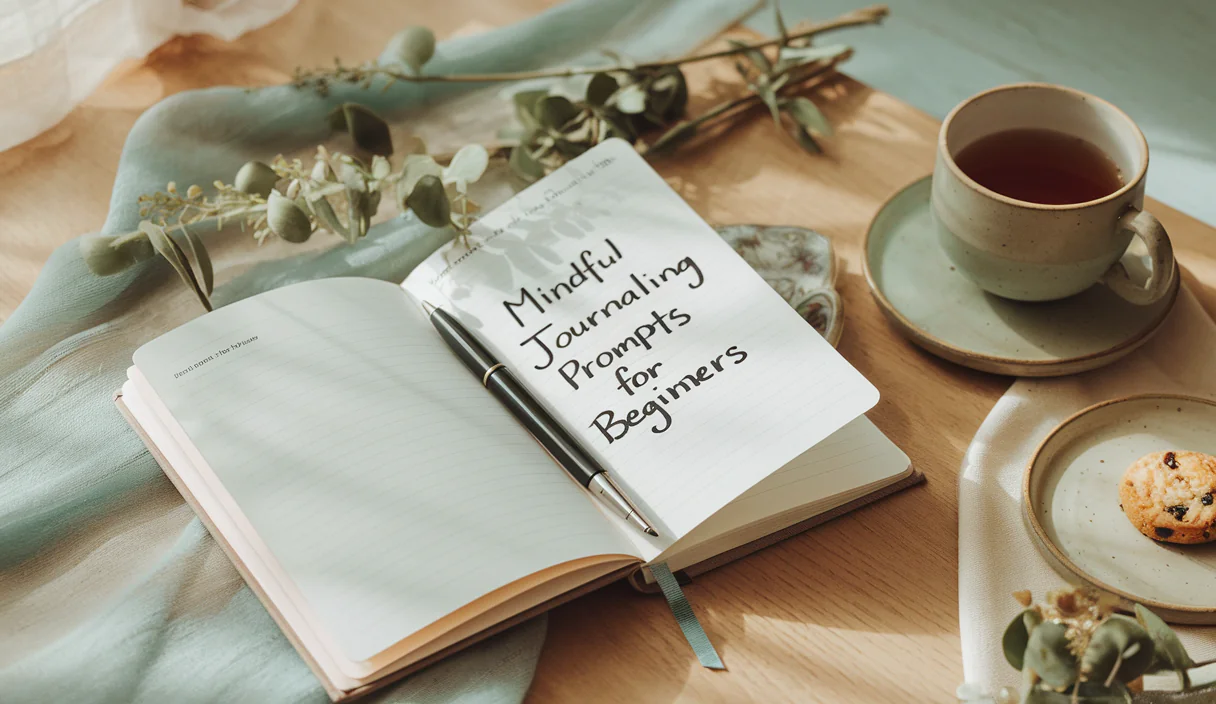

Mindful Journaling Prompts for Beginners
Mindful Journaling Prompts for Beginners can make starting a daily journaling habit simple, calming, and meaningful. If you feel unsure where to begin, this guide walks you through practical prompts, tips, and a gentle 7-day plan to help you build presence, reduce stress, and reflect with clarity.
Why Use Mindful Journaling Prompts for Beginners?
Starting a journaling routine can feel overwhelming. Prompts act like gentle signposts: they reduce decision fatigue, keep you focused, and guide you toward deeper reflection. For many people, written reflection becomes a practical form of meditation. Use prompts to build presence, notice emotions, and track growth.
Benefits at a glance
- Clarity: Prompts help surface what’s important.
- Calm: Writing anchors attention and lowers stress.
- Consistency: A prompt removes the question, “What should I write?”
- Growth tracking: Revisit earlier entries to see change over time.
How to Use These Prompts: Quick Ground Rules
Before the prompts, set a gentle structure. A consistent but short practice (5–15 minutes) is better than sporadic long sessions. Here are simple guidelines:
- Timebox it: 5–15 minutes per session.
- Write freely: Don’t edit while writing — just let thoughts flow.
- Stay present: Breathe for a minute before you write to center your attention.
- Review weekly: Skim past entries to notice patterns and small wins.
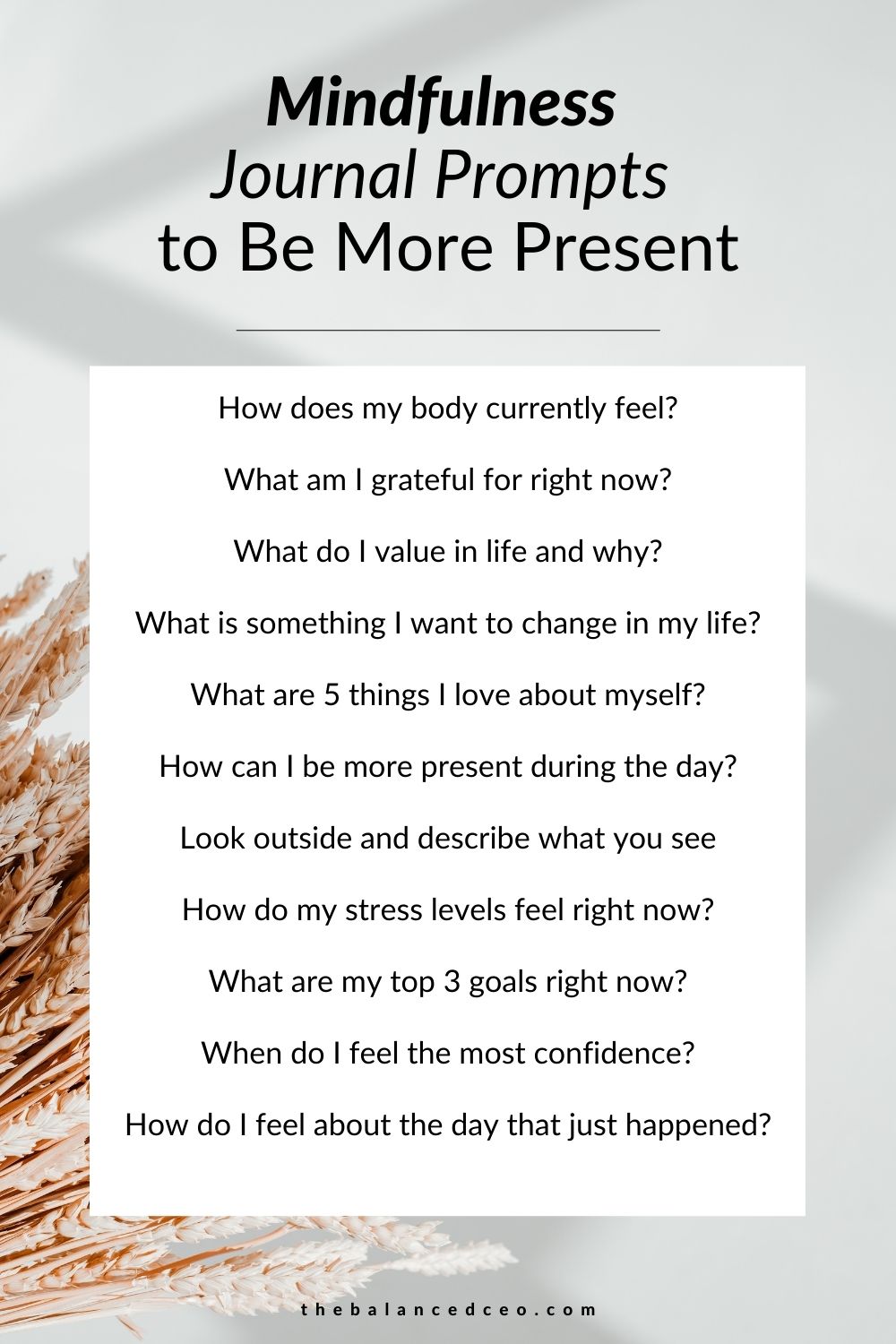
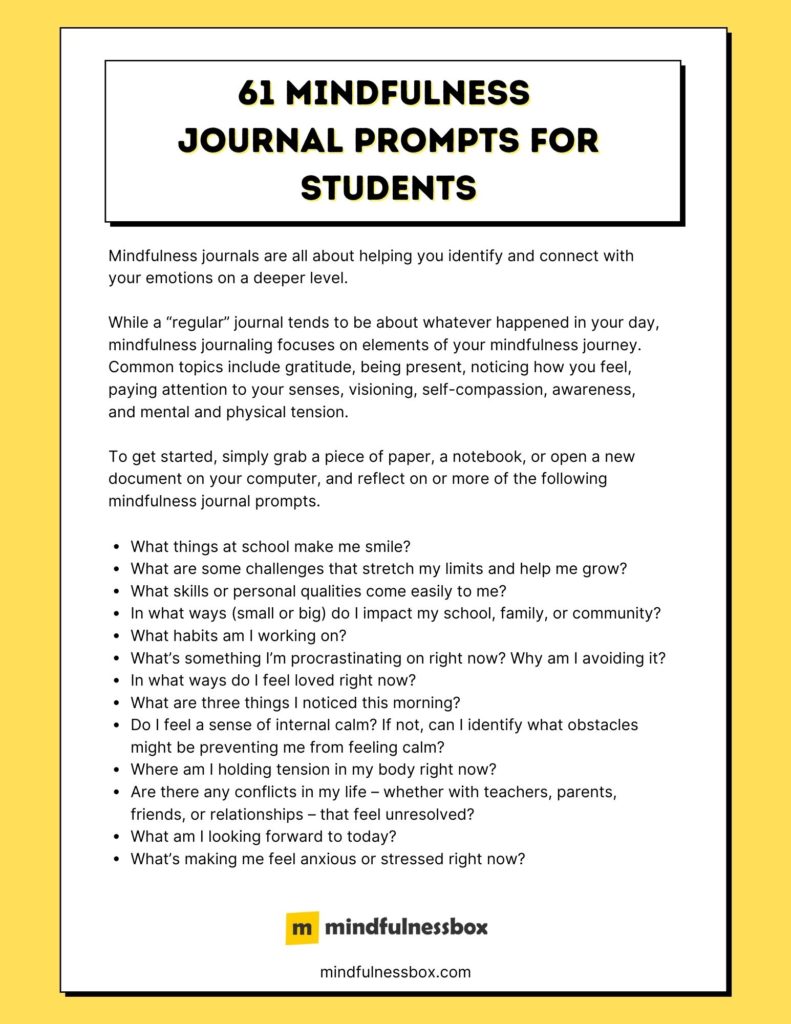
Top 30 Mindful Journaling Prompts for Beginners
Below are prompts grouped by theme. Pick one each day or mix-and-match to match your mood.
Presence & Awareness
- What can I hear, see, or feel right now? Describe five details.
- Where do I feel tension in my body? What does it want me to know?
- What small thing in my environment brings me calm today?
- Describe a moment from today when I felt fully present.
- What breath pattern helps me return to the present?
Emotions & Self-Check
- What emotion is strongest right now? Name it and why it’s here.
- What story am I telling myself about today? Is it true?
- What would I say to a friend feeling this way?
- What emotion would I like to feel more of this week?
- One thing I can do today to move through an uncomfortable feeling.
Gratitude & Perspective
- List three small things you’re grateful for and why.
- Who supported me today? How did they help?
- What is one setback that showed me something valuable?
- How would I describe today to someone in 10 years?
- What did I learn about myself this week?
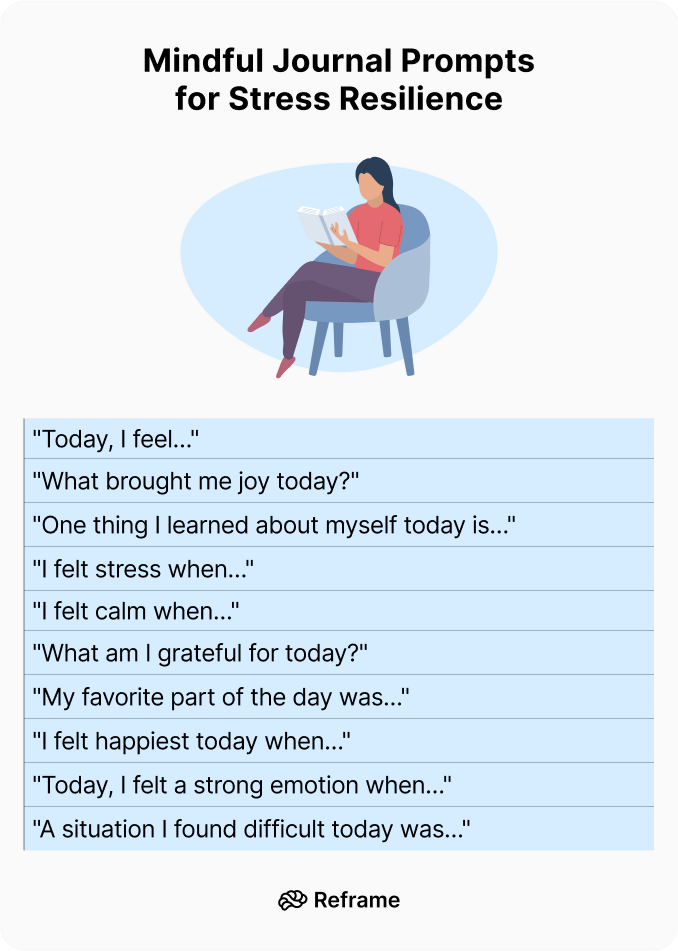
Stress Relief & Resilience
- What is one worry I can name and set aside for now?
- Write a short plan (three steps) to tackle a current stressor.
- How have I handled hard moments before? What strengths helped?
- List activities that restore me—schedule one this week.
- What small boundary can I create to protect my energy?
Goals & Intentions
- What is one small goal for the next 7 days?
- Why does this goal matter to me? (Write down the deeper purpose.)
- What’s a tiny habit that supports this goal?
- How will I celebrate progress, not perfection?
- What’s one question I can ask myself weekly to stay aligned?
Simple 7-Day Beginner Plan
This short plan uses the prompts above and builds consistency. You can repeat or adapt it to your schedule.
- Day 1 — Presence: Write about five details in the room and one moment of presence.
- Day 2 — Emotion check: Name your strongest feeling and write a letter to it.
- Day 3 — Gratitude: List three small things you’re grateful for and why.
- Day 4 — Stress plan: Name one stressor and outline three small steps.
- Day 5 — Goal setting: Pick one 7-day goal and a tiny habit that supports it.
- Day 6 — Reflection: Revisit Days 1–5; note patterns or surprises.
- Day 7 — Intentional pause: Write what you’ll carry forward into next week.
Tips to Stay Consistent
- Keep your journal and a pen where you’ll see them each morning.
- Pair journaling with another habit (coffee, tea, or a short walk).
- Use voice notes if writing feels hard—transcribe a sentence or two later.
- Be kind: skip days without judgment and start again tomorrow.
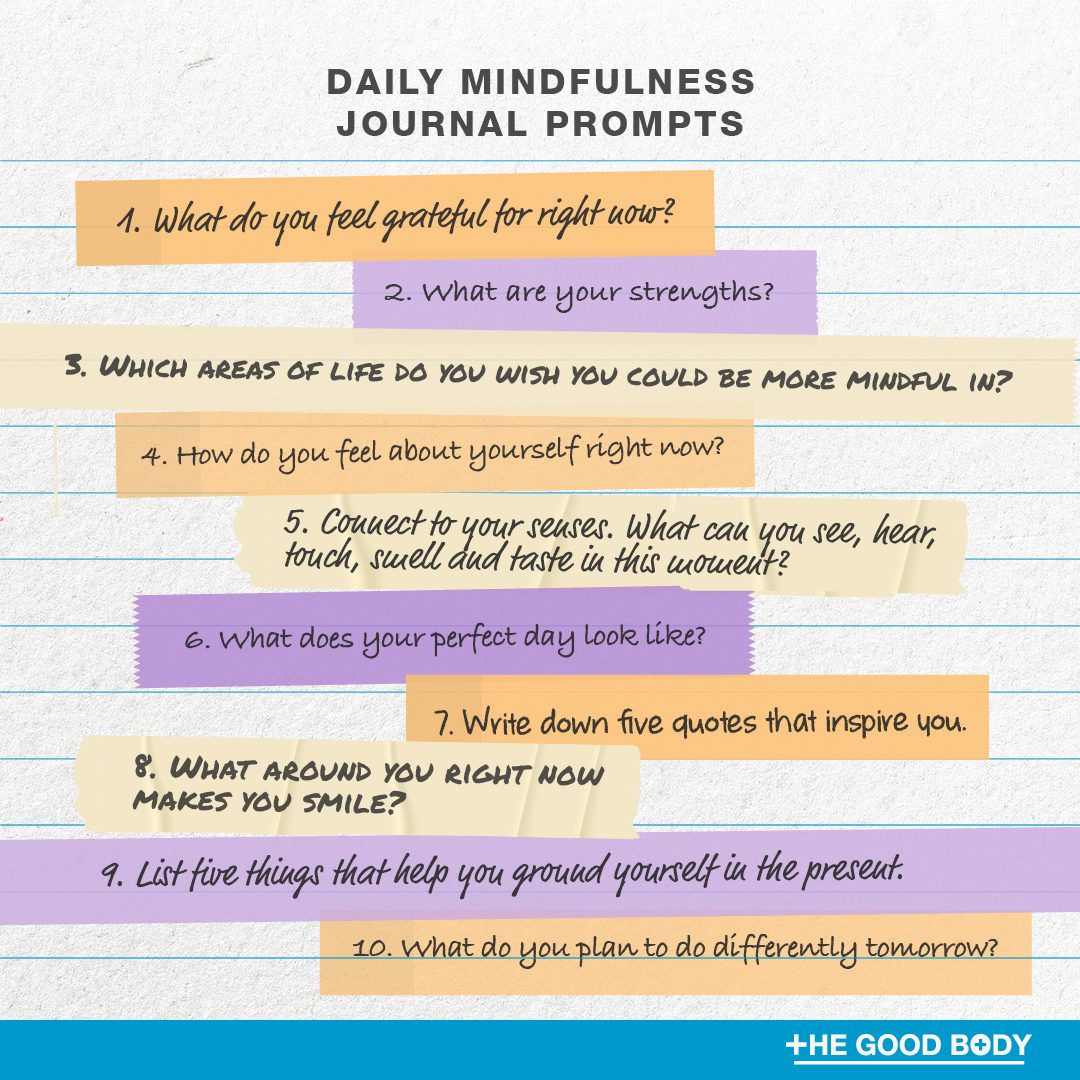
Mindful Journaling Prompts for Beginners: Practical Tools & Extras
If you want to expand your practice, consider these resources and techniques to enrich your journaling habit.
Prompt cards & printable lists
Create a deck of prompt cards to draw one at random when you sit down to write. This keeps your practice surprising and fresh.
Combine journaling with mindful art
Try pairing a prompt with a short doodle, color wash, or collage to capture feelings visually. For ideas, check guided videos curated as a playlist of mindful art journaling practices for beginners.
Easy Mindful Art Journaling Ideas for Beginners | Playlist

Further reading
Want more prompts or structured programs? Explore curated lists and research-backed techniques:
- 365 Mindfulness Journaling Prompts — a long list for daily practice and self-improvement.
- Journaling for Mindfulness — research-backed benefits and how journaling supports mindfulness.
- Journaling Prompts for Mindfulness — prompts aimed at becoming less anxious and more grounded.
- 10 Mindful Journal Prompts — a practical list from a therapy perspective to help identify and reframe thoughts.
Watch: A Short Guided Intro
If you prefer a quick guided introduction to mindful journaling, try this short video to accompany your first sessions.
Common Pitfalls and How to Avoid Them
Starting a practice is easy; staying with it is the challenge. Here are common traps and simple fixes:
- Perfectionism: Don’t aim for beautiful pages—aim for honesty.
- Overwhelm: Timebox the session to 5–10 minutes.
- Stuckness: Use a prompt card or pick a sensory detail to start.
- Comparison: Your pages are for your eyes; avoid comparing to others.
Frequently Asked Questions
What is the difference between journaling and mindful journaling?
Mindful journaling focuses on present-moment awareness—observing sensations, emotions, and thoughts without judgment—while general journaling can include planning, storytelling, or free association. The prompts in this guide help you anchor to the present.
How long should a mindful journaling session be?
Start with 5–15 minutes. Shorter daily sessions are better for building habit. The goal is consistency rather than duration.
Can these prompts help with anxiety or stress?
Yes. Prompts that name emotions, list small actions, and focus on breath or senses can reduce overwhelm and create space to respond instead of react. For additional support, see resources like therapy-informed prompt lists and long-form prompt collections linked above.
Final Thoughts
Mindful journaling is a simple, powerful practice. Use these Mindful Journaling Prompts for Beginners to lower resistance, build presence, and notice change over time. Keep it gentle, consistent, and curious.
Ready to try it? Start with one prompt today and commit to seven small sessions. For more guides and tools, explore additional articles and resources on zenpulsehub.com.