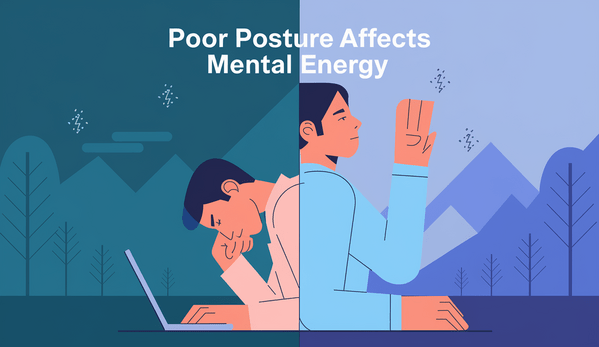

Poor Posture Affects Mental Energy: Why It Matters
Poor Posture Affects Mental Energy more than you might expect — and that relationship starts the moment you slump or crane your neck over a screen. In everyday life, posture influences breathing, circulation, mood, and focus. This post breaks down the science and practical steps to feel more energetic and clear-headed by improving the way you sit and stand.
Poor Posture Affects Mental Energy: the basics
When we talk about posture, we usually mean how the spine, shoulders, and head are aligned. But posture also shapes how our body works: it changes lung capacity, muscle tension, and even the way the brain interprets stress. Over time, these small changes add up and can sap mental energy — making it harder to concentrate, manage emotions, and stay motivated.
How posture links to energy
Here are the main ways posture influences mental energy:
- Breathing and oxygen: Slouching compresses the chest and diaphragm, reducing lung capacity and oxygen intake. Less oxygen can mean feeling sluggish or foggy.
- Muscle tension and pain: Poor alignment forces muscles to work harder, leading to chronic tension and pain that drain focus.
- Nervous system signals: Body position sends feedback to the brain. A hunched posture can amplify stress signals, while an upright posture cues alertness and confidence.
- Circulation: Slumped positions may impair blood flow, affecting the delivery of nutrients to the brain and muscles.
What the research says
Several studies highlight the link between posture and psychological states. For example, controlled experiments show that a slumped seated posture can increase responses to psychological stress tasks compared with an upright posture. You can read about one such study at PubMed.
Other sources summarize practical effects: improved posture has been associated with increased energy, better concentration, and a boost in mood and confidence. For a readable overview, see the ultrahuman article on posture and mental health at blog.ultrahuman.com, and a campus wellness piece at campusrec.wfu.edu.

Why breathing matters
Breathing is the quickest route from posture to brain function. When slumped, the diaphragm can’t fully expand and the upper chest takes over — but chest breathing is shallow and inefficient. That leads to lower oxygen delivery and can make the mind feel tired or anxious.
Improving posture, even briefly, opens the chest and encourages diaphragmatic breathing. That results in better oxygenation and a natural energy bump.
Quick breathing reset
- Sit or stand tall with shoulders back and down.
- Place one hand on your belly and one on your chest.
- Inhale slowly through your nose for 4 counts, feeling your belly rise.
- Exhale fully for 5 counts. Repeat 6–8 times.
How posture affects mood and stress
Body posture doesn’t just reflect mood — it shapes it. Research and reviews suggest that upright, open posture supports positive emotion and resilience, while slumped posture is linked with increased feelings of sadness and stress. Psychology Today also notes that good posture boosts energy and productivity, which reinforces positive cycles in mood and performance (Psychology Today).
Why this happens
There are two main mechanisms:
- Biochemical feedback: Posture influences hormones and neurotransmitter patterns related to arousal and stress.
- Psychological signaling: Holding an open posture signals confidence and readiness to the brain, which can lower stress perception.

Everyday habits that lower mental energy
Some common posture-related habits quietly sap energy over time:
- Hunching over laptops or phones for long periods.
- Sitting in slumped positions while watching TV or working.
- Carrying heavy bags on one shoulder, causing imbalance.
- Ignoring small aches that lead to compensatory movement patterns.
Even small changes can make a big difference. For a student-friendly rundown of posture impacts and easy fixes, see the Campus Recreation article referenced earlier (How Your Posture is Affecting Your Life).
Practical adjustments to reclaim energy
Use these simple, practical tips to fight fatigue and boost focus:
- Set up your workspace: Screen at eye level, keyboard at elbow height, feet flat on the floor.
- Take movement breaks: Every 30 minutes stand, stretch, or walk 1–2 minutes.
- Try a standing desk: Alternating between sitting and standing reduces strain and increases alertness.
- Strengthen and stretch: Focus on mid-back, hip flexors, and core to support better posture.
- Be mindful: A quick posture check several times a day can prevent slumping from becoming habitual.
Simple posture exercises (2–3 minutes)
Try this short sequence at your desk:
- Shoulder blade squeeze: Sit tall, squeeze shoulder blades together for 5 seconds. Repeat 10 times.
- Chin tuck: Draw chin gently in to align neck. Hold 5 seconds. Repeat 8 times.
- Standing chest opener: Interlace fingers behind your back, lift chest, hold 20–30 seconds.
When to seek professional help
If poor posture leads to persistent pain, dizziness, or very low energy despite self-care, consult a professional. Physical therapists, chiropractors, or behavior health specialists can evaluate posture, pain patterns, and underlying stress responses. Behavioral health sources also note that posture improvements can complement therapy for mood and energy concerns (montarebehavioralhealth.com).
Practical workplace tips to boost energy
If you work at a desk, these small changes help maintain alertness and reduce posture-related fatigue:
- Use a timer to remind you to stand and breathe.
- Alternate sitting and standing every 30–60 minutes.
- Adjust chair height so knees are at 90 degrees.
- Position monitor at eye level to avoid forward head posture.
Power posture moments
Before a meeting or a challenging task, taking 60 seconds to stand tall, breathe deeply, and open your chest can increase confidence and mental energy. This quick habit leverages the same feedback loops that make posture powerful for mood and performance.
Real-life examples and benefits
People who fix common posture errors often report:
- Better focus during study or work sessions.
- Less mid-day fatigue and fewer headaches.
- Improved mood and resilience under stress.
- Greater confidence in social and professional settings.
These benefits align with summaries and guides found on wellness blogs and campus health sites, which highlight increased energy, better concentration, and higher productivity as common outcomes of improved posture (see Ultrahuman and Campus Rec).
Embed: Quick posture video
Watch this short video for simple posture checks and stretches you can use right away:
Putting it together: daily plan to boost mental energy
Use this simple daily routine to turn posture into a tool for energy:
- Morning: 2 minutes of chin tucks and chest openers when you wake.
- Work blocks: 25–50 minute focused work, then 2 minutes of posture exercises and breathing.
- Midday: 5–10 minute walk with an upright posture and deep breaths.
- Evening: Gentle stretching to release tension before bed.
Why it’s worth the effort
Small posture changes are low-cost and high-impact. Improving posture supports breathing, reduces pain, and sends calming signals to your nervous system — all of which preserve and enhance mental energy. If you want a deeper dive into how posture affects mood and mental health, check out the in-depth article at Ultrahuman and the behavioral health overview at Montare Behavioral Health.
Final thoughts
Poor Posture Affects Mental Energy in noticeable and measurable ways. The good news: you can take control with a few minutes a day. Small posture wins — like sitting up straight, breathing deeply, and moving regularly — add up to better focus, mood, and stamina.
Take the next step: Try a 3-minute posture reset now — stand tall, breathe deeply, and notice the difference. For more simple guides and practical tools to improve focus, energy, and wellbeing, explore more posts at zenpulsehub.com.
How quickly can improving posture raise my energy?
Some people feel a small boost after their first posture reset and breathing exercise; lasting change usually develops over weeks with consistent practice and regular movement breaks.
Can posture changes reduce anxiety or depression?
Posture is one helpful factor. Upright, open posture can reduce stress signals and support positive emotions, but it’s best used alongside other strategies like therapy, exercise, and sleep management.
Are standing desks really better for energy?
Standing desks can help by encouraging movement and reducing long periods of sitting. The key is to alternate between sitting and standing and to maintain good alignment when standing.
When should I see a professional about posture?
If you have persistent pain, numbness, or dizziness, or if posture adjustments don’t improve your symptoms, consult a physical therapist, physician, or behavioral health professional for evaluation.