


5 principles of sleep hygiene: Simple guide
5 principles of sleep hygiene are a simple, research-backed framework to help you get deeper, more consistent rest. This guide unpacks each principle — Value, Prioritise, Personalise, Trust, and Protect — and gives practical sleep-hygiene tips you can use tonight. Read on for easy steps, expert links, and a short plan to sleep better this week.
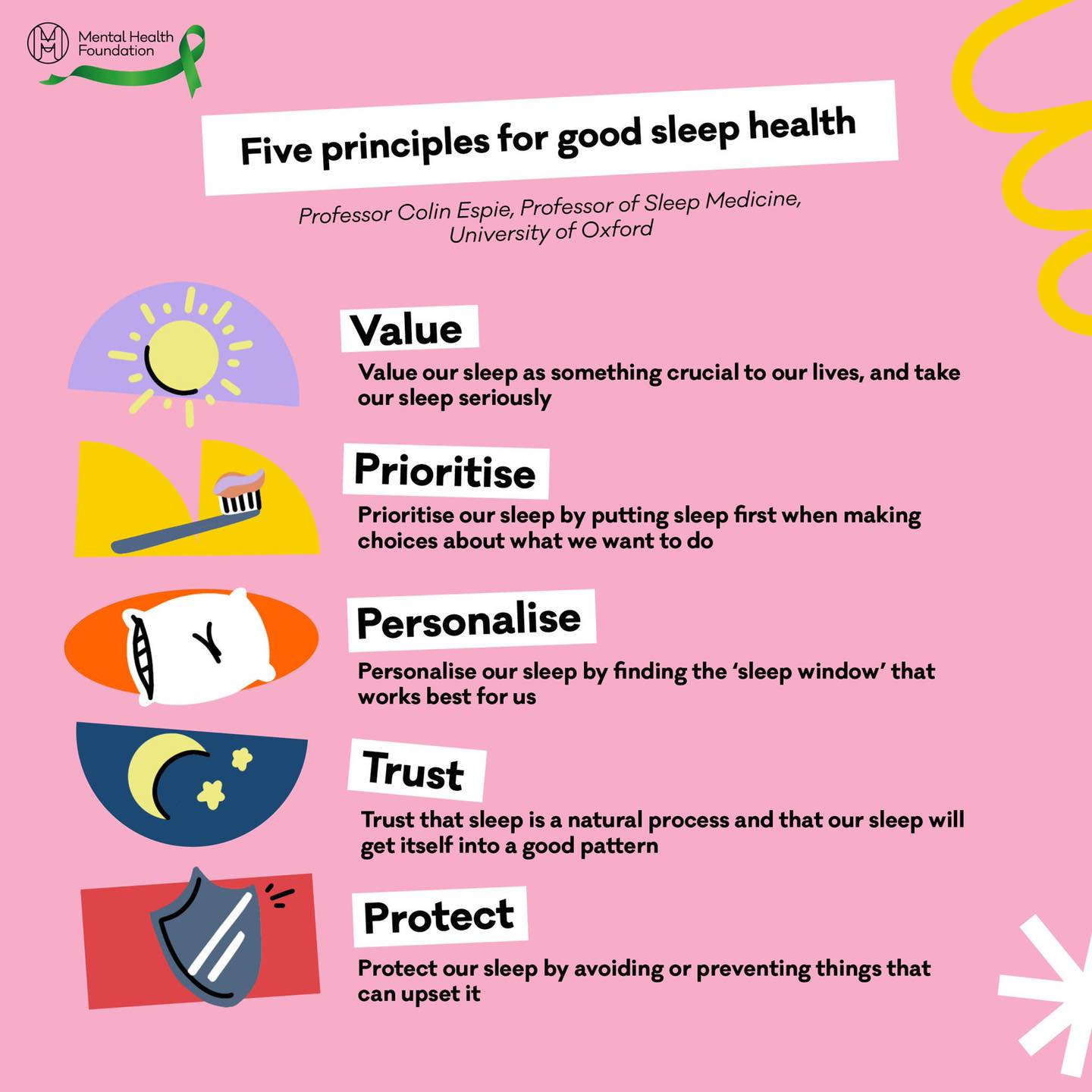
The 5 principles of sleep hygiene — quick overview
The phrase 5 principles of sleep hygiene comes from a public-health style framework designed to help people think about sleep in five simple ways: Value your sleep, Prioritise it, Personalise your routine, Trust your sleep system, and Protect your sleep environment. These principles are described in public resources and peer-reviewed summaries (see the summary in PubMed/PMC for the evidence behind this model).

Why these principles matter
Modern life fragments sleep: screens, late work, and unpredictable schedules make consistent rest hard. The 5 principles of sleep hygiene offer a practical, flexible route back to better nights. They help you build daily habits that support your biology instead of working against it.
How this guide is organized
Below you’ll find each principle explained, tips you can try, and short scripts to personalise sleep rules for your life. Where relevant, I link to trusted sources like the Sleep Foundation and Harvard Health for deeper reading.
Principle 1 — Value your sleep
Valuing sleep means treating sleep as important — not optional. When you see sleep as essential, you are more likely to build routines and say no to activities that erode rest.
- Mindset shift: View sleep as recovery time for your brain and body, not as wasted hours.
- Quick action: Set a non-negotiable bedtime and block it on your calendar like any other appointment.
Research summaries describing this approach recommend simple public messaging to help people reframe sleep as a priority (see the PubMed/PMC overview for the original framing of the five principles).
Principle 2 — Prioritise sleep
Prioritising means scheduling sleep and designing your day to protect those hours. It also includes reducing behaviours that shorten or fragment sleep.
- Consistency: Aim for a regular sleep window. Going to bed and waking up within 30–60 minutes each day helps your internal clock.
- Limit late caffeine & alcohol: Avoid caffeine after mid-afternoon and limit alcohol before bed — both can erode sleep quality (Harvard Health explains how alcohol and meals affect rest).
- Plan evening meals: Try to finish big meals 2–3 hours before bed to reduce reflux and discomfort.

Principle 3 — Personalise your sleep plan
No single routine fits everyone. Personalisation means testing what works for your schedule, energy patterns, and responsibilities.
How to personalise
- Track sleep and daytime energy for 1–2 weeks. Use a journal or sleep app to note what affects your sleep.
- Adjust your wake time first. Once wake time is consistent, evening timing usually becomes easier.
- Build a short wind-down routine that suits you: 20–30 minutes of low-light, calming activity like reading, stretching, or breathing practice.
Personalisation is one reason behavioural programs like cognitive-behavioural therapy for insomnia (CBT-I) work: they tailor strategies to the individual. See the CBT-I overview image for common techniques.

Principle 4 — Trust your sleep
Trust means letting your body control sleep timing more than your worry does. Anxiety about falling asleep often makes sleep harder. These strategies help you build trust again.
- Stimulus control: Use the bed only for sleep and sex. If you can’t fall asleep after ~20 minutes, get up and do something quiet until you feel sleepy.
- Limit clock-watching: Turn the clock away. Obsessive checking increases stress.
- Practice relaxation: Short breathing or body-scan exercises help signal safety to your nervous system.
Principle 5 — Protect your sleep environment
Protecting your environment means designing a bedroom that helps, not hurts, sleep. This includes light, temperature, noise, and your mattress or pillow.
- Dark: Use blackout curtains or an eye mask to remove light that suppresses melatonin.
- Cool: Aim for a bedroom temperature between about 60–68°F (15–20°C) if comfortable for you.
- Quiet or masked sound: Use earplugs or a white-noise machine if noise is a problem.
- Comfort: A supportive mattress and comfortable pillow matter — they reduce pain and restless sleep (see Sleep Foundation guidance on mattress and pillow importance).
Practical sleep-hygiene checklist (use tonight)
- Set a wake time and stick to it for the next 7 days.
- Finish heavy meals 2–3 hours before bed and avoid caffeine after mid-afternoon (Harvard Health recommends these simple changes).
- Create a 20–30 minute wind-down routine with dim lights and low-stimulation activities.
- Keep the bedroom cool, dark, and quiet.
- If you can’t sleep within 20 minutes, get up and do a relaxing task until you feel sleepy again.
How to apply the 5 principles in a busy life
Work, parenting, and social life make consistent sleep difficult. Here are realistic ways to apply the five principles when life is busy.
Shift workers
Use blackout curtains and schedule a consistent sleep window. Protect daytime sleep by blocking light and minimizing interruptions.
New parents
Prioritise short naps when possible and accept flexible sleep targets. Protect periods of uninterrupted sleep when the baby sleeps longer.
Students and shiftable schedules
Plan study blocks earlier in the day and use caffeine strategically. Keep a steady wake time on most days to help your circadian rhythm.
Simple 7-day plan to test one principle at a time
Try this short plan to see steady improvements without feeling overwhelmed.
- Day 1 — Value: Commit to a sleep goal and block your bedtime on the calendar.
- Day 2 — Prioritise: Set a consistent wake time and limit late caffeine.
- Day 3 — Personalise: Try a 20-minute wind-down routine that fits your life.
- Day 4 — Trust: Practice stimulus control: get out of bed if you can’t sleep.
- Day 5 — Protect: Improve darkness and temperature in your room.
- Day 6 — Combine: Follow the full checklist and notice changes in energy.
- Day 7 — Review: Note what worked and personalise further.
When to seek professional help
If insomnia lasts more than a month, or if you have loud snoring, gasping, or daytime sleepiness despite following good sleep hygiene, consult a professional. Evidence-based treatments such as CBT-I are highly effective for chronic insomnia (see CBT-I resources above).
Helpful resources and further reading
For evidence and practical tips, check these trusted sources:
- PMC article on the ‘5 Principles’ (Value, Prioritise, Personalise, Trust, Protect) — summary and public-health framing.
- Sleep Foundation — sleep hygiene basics — mattress, pillows, and environment recommendations.
- PubMed summary — peer-reviewed context for the 5 principles.
- Harvard Health — simple practices — tips on meals, caffeine, and alcohol.
- News-Medical — 5 simple habits — concise habits you can start today.
Video: See the 5 principles in action
Watch this short explainer to see how each principle works in everyday routines.
Common mistakes people make
- Relying on the weekend to “catch up” (inconsistent sleep harms circadian rhythm).
- Using the bed for work or long screen sessions (reduces the bed’s cue for sleep).
- Chasing long sleep durations at the expense of consistency (regular timing often beats length).
Wrapping up
The 5 principles of sleep hygiene give a clear, practical roadmap: Value, Prioritise, Personalise, Trust, and Protect. Start small — pick one principle and try the 7-day plan above. Most people notice better daytime energy within a week or two.
Want more guides? Explore additional sleep tips and routines at zenpulsehub.com to continue improving your rest and daytime energy.
What are the 5 principles of sleep hygiene?
The five principles are: Value your sleep, Prioritise it, Personalise your routine, Trust your sleep system, and Protect your sleep environment. They are a simple framework for better sleep habits.
How soon will I notice improvements?
Many people notice small improvements in daytime energy within a week if they consistently follow one or two principles (like consistent wake time and a wind-down routine). Longer changes to sleep quality may take 2–4 weeks.
Are these principles backed by research?
Yes. The five-principle framework is based on public-health and clinical evidence; see the PubMed/PMC summary for peer-reviewed context and the Sleep Foundation for practical guidance on mattress, pillow, and environment choices.
When should I see a sleep specialist?
If poor sleep persists for several weeks despite good sleep hygiene, or if you experience loud snoring, gasping, or severe daytime sleepiness, consult a clinician. Treatments like cognitive-behavioural therapy for insomnia (CBT-I) are effective for chronic problems.






