

Bedtime Hygiene: Simple Steps for Better Sleep
Bedtime hygiene is the set of habits and bedroom choices that help your body wind down and sleep well. In this guide you’ll get clear, practical tips to build a calming nightly routine, optimize your sleep space, and avoid the common traps that steal rest.
Why bedtime hygiene matters
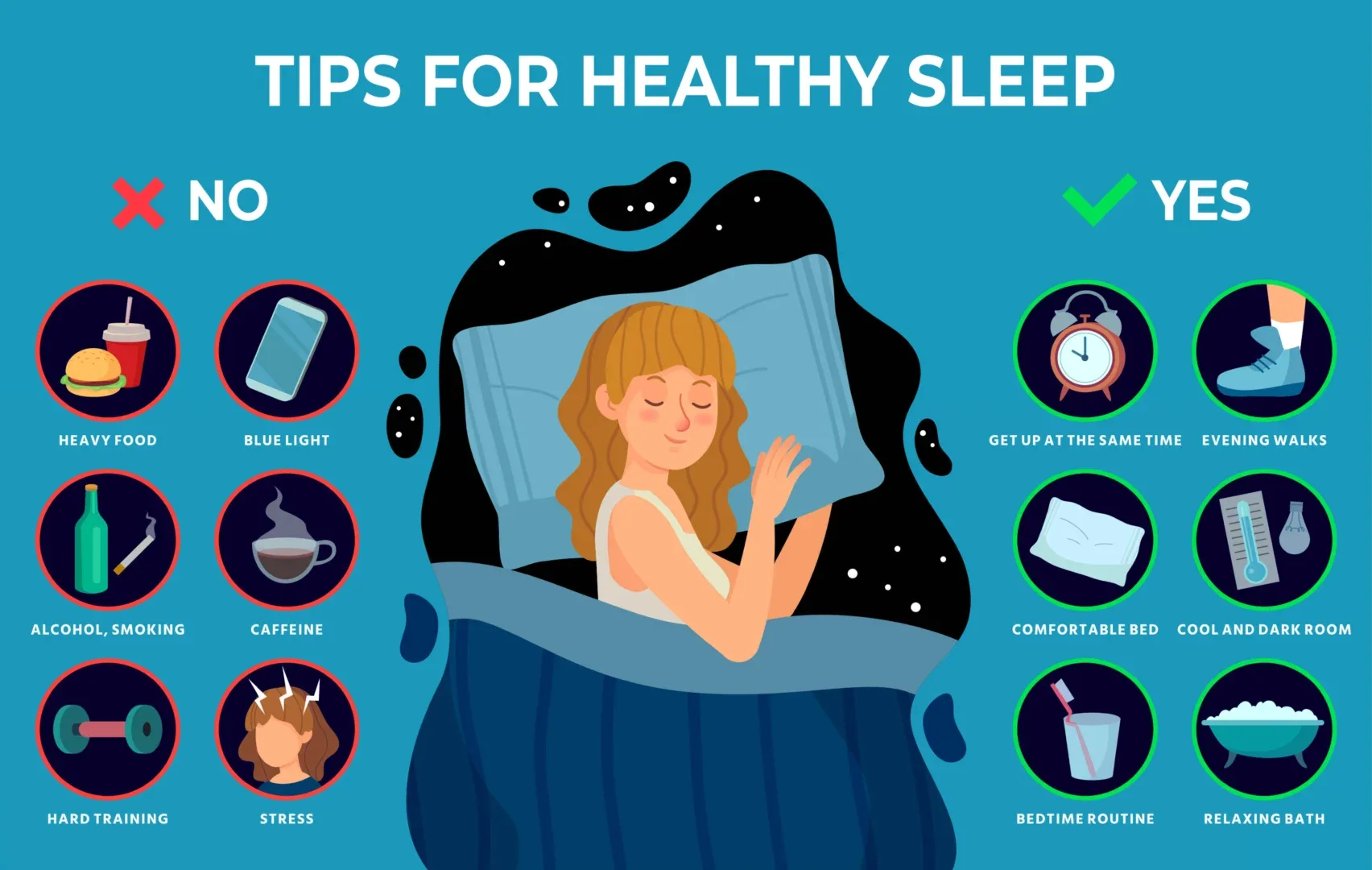
Good sleep is a foundation for mood, memory, focus, and immunity. Practices that fall under bedtime hygiene help your brain learn when it’s time to sleep, reduce nighttime wakings, and leave you feeling restored in the morning. Small, consistent changes often yield big results.
Core elements of a strong bedtime hygiene routine
Below are easy-to-follow elements you can apply tonight. Each section includes quick actions and why they work.
1. Keep a consistent sleep schedule
Go to bed and wake up at the same times every day — even on weekends. This trains your internal clock and makes sleep more reliable.
- Action: Pick a wake time and count back 7–9 hours for your target bedtime.
- Why it helps: Consistency strengthens your circadian rhythm, so falling asleep becomes easier.
2. Build a relaxing pre-sleep routine
Rituals signal your body that sleep is coming. Keep activities calming and screen-free in the last 30–60 minutes before bed.
- Warm shower or light stretching
- Reading a paperback or listening to soft music
- Journaling one or two lines about what went well today
:max_bytes(150000):strip_icc()/what-is-sleep-hygiene-5085887-FINAL-831b8421e75249f0952fbf4efb0adda7.png)
Optimize your bedroom for sleep
What’s in your bedroom matters. Aim for a space that supports calm and comfort.
Temperature, light, and sound
Keep it cool: A bedroom slightly on the cool side helps you fall asleep faster. Most people sleep best between 60–68°F (15–20°C).
Darkness: Remove bright lights and block streetlight with blackout curtains or an eye mask.
Quiet: Use earplugs, a white noise machine, or a fan to mask disruptive sounds.
Mattress, pillows, and bedding
Comfortable bedding and a supportive mattress make a big difference. Replace pillows every 1–2 years if they’ve lost shape; mattresses every 7–10 years depending on wear.
What to avoid before bed
Cutting out certain activities and substances in the hours before bed will improve sleep quality.
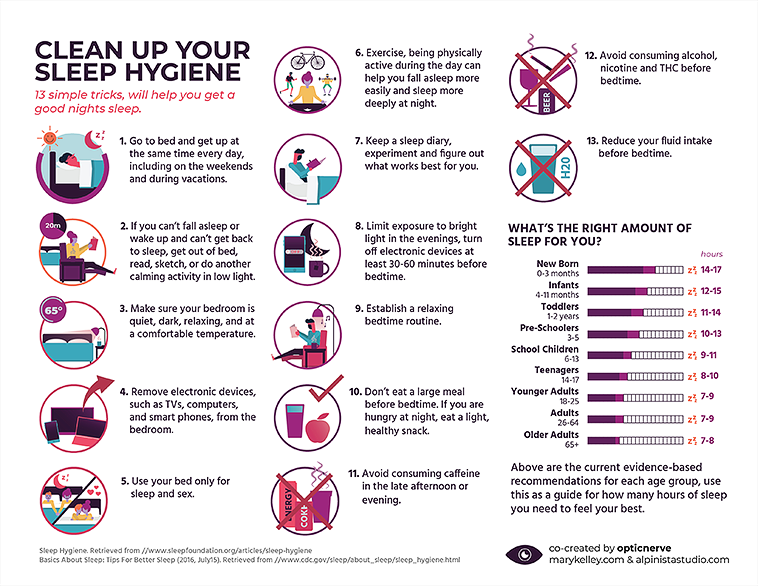
- Avoid heavy meals and large amounts of liquid within three hours of bedtime to reduce digestion-related wake-ups. This follows guidance suggesting evening meals be consumed at least three hours before bed.
- Limit caffeine after mid-afternoon. Caffeine can stay in your system for 6–8 hours for some people.
- Avoid alcohol as a sleep aid. Alcohol may help you fall asleep but fragments sleep later in the night.
- Turn off screens 30–60 minutes before bed. The blue light from phones and tablets suppresses melatonin and confuses your circadian rhythm.
Bedtime hygiene and daily habits
Daily behaviors shape nighttime rest. Combine daytime and evening habits for the best results.
Daylight, exercise, and naps
- Get morning light: Exposure to natural light early in the day sets your internal clock.
- Move regularly: Moderate exercise improves sleep; finish vigorous workouts at least a few hours before bed.
- Use naps wisely: Keep naps short (20–30 minutes) and before mid-afternoon to avoid interfering with night sleep.
Mental hygiene: stress and wind-down
Stress and worry are common causes of sleeplessness. Add calming practices to your evening routine: breathing exercises, guided relaxation, or a short gratitude list. These simple rituals lower arousal and invite sleep.
When to seek professional help
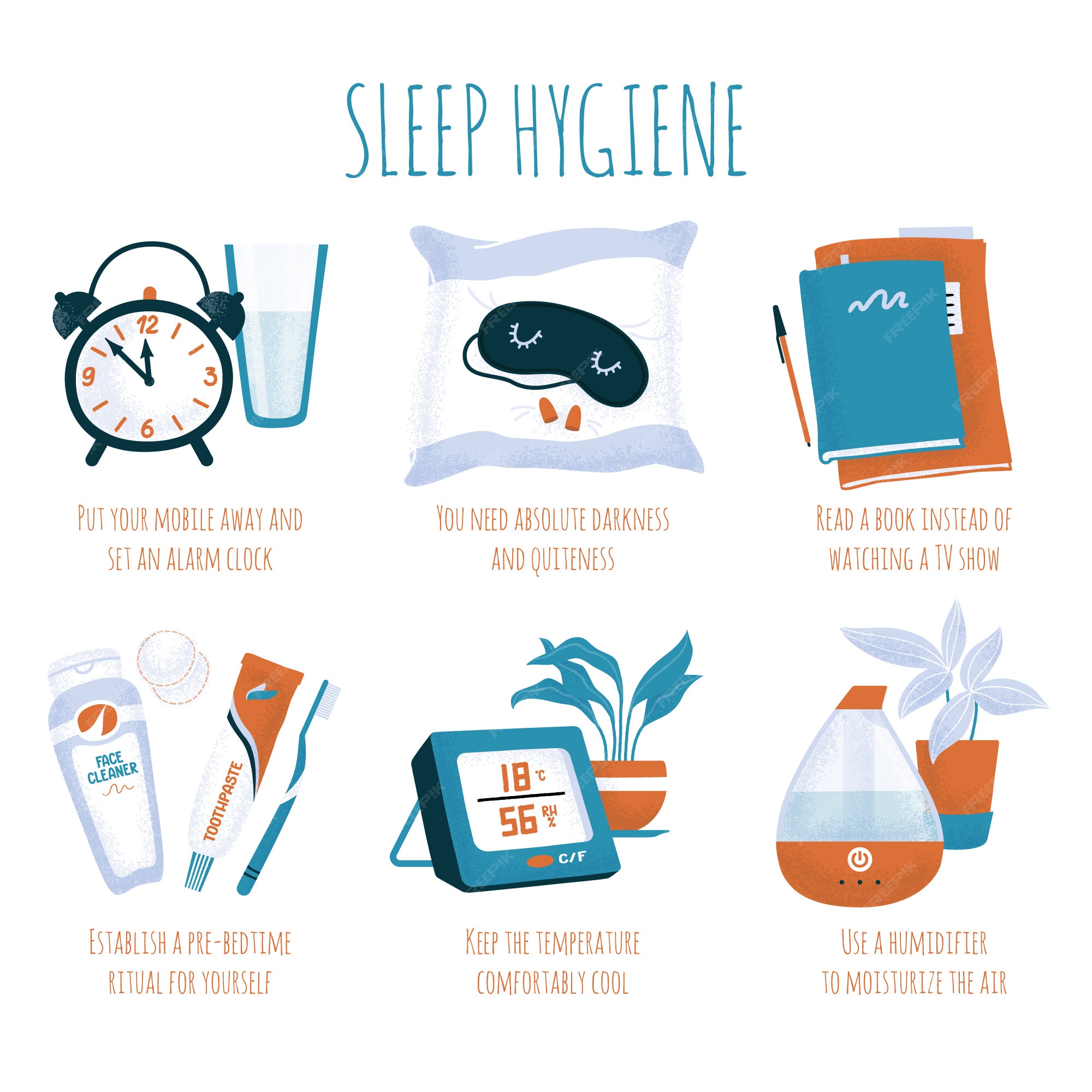
If improving your bedtime hygiene and daily habits doesn’t help after a few weeks, or if you experience loud snoring, gasping, frequent awakenings, or daytime sleepiness that impacts work or mood, contact a healthcare professional. Sleep disorders like sleep apnea, restless legs, and chronic insomnia often need targeted care.
Evidence-based resources and further reading
Trusted organizations provide detailed guidance you can follow:
- Harvard Health — practical tips like delaying late meals and avoiding alcohol near bedtime.
- Sleep Foundation — guides on schedules, routines, and bedroom optimization.
- NHS Every Mind Matters — concise routines and techniques to fall asleep faster.
- Healthline — a clear list of 12 healthy sleep hygiene tips, including turning off screens and consistent schedules.
- CDC — public-health focused tips on regular sleep times and bedroom environment.
Quick bedtime hygiene checklist
Use this checklist tonight to test how easily you can improve sleep quality:
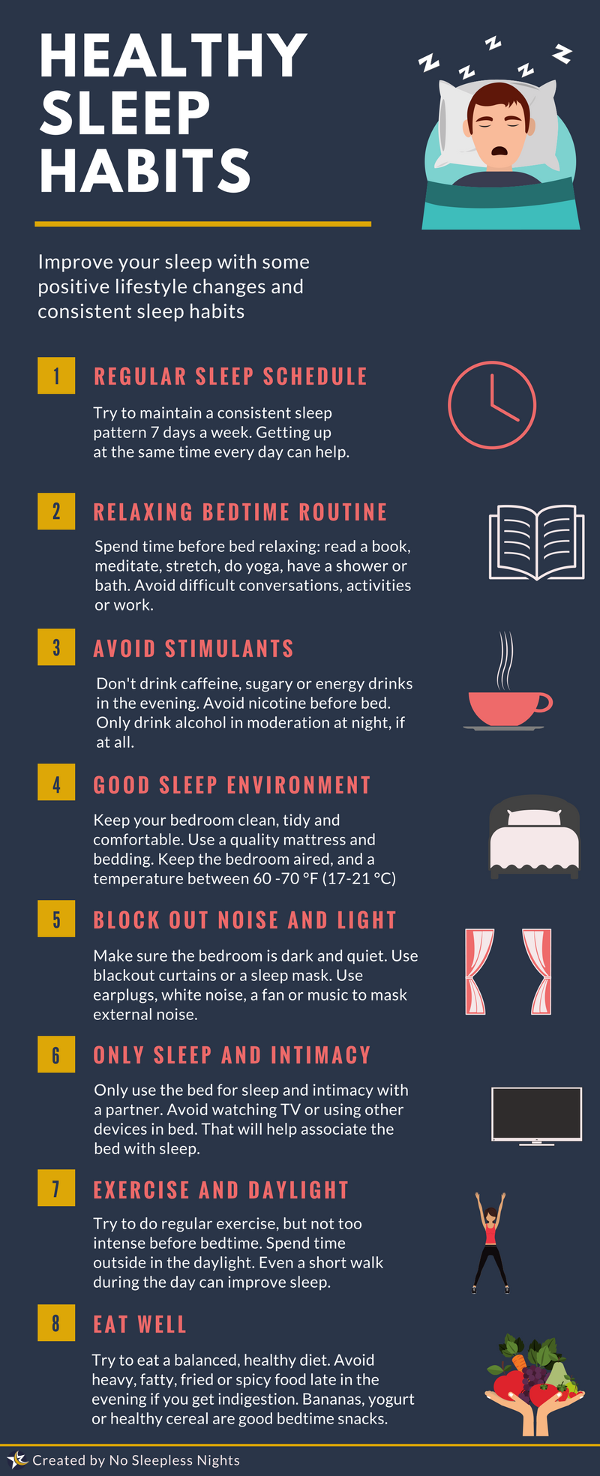
- Set a fixed wake-up time and bed time.
- Wind down 30–60 minutes before bed with low-stimulation activities.
- Make the room cool, dark, and quiet.
- Avoid heavy meals, caffeine, and alcohol in the evening.
- Use the bed only for sleep and intimacy — not work or TV.
Practical examples: two routines to try
Quick 30-minute routine
- 30–20 minutes before bed: dim lights, stop screens.
- 20–10 minutes: wash face, brush teeth, put on comfy sleep clothes.
- 10–0 minutes: read a short chapter or do 5 minutes of deep breathing, then lights out.
Relaxed 60-minute routine
- 60–45 minutes: light stretching, herbal tea (caffeine-free).
- 45–20 minutes: warm shower to lower core body temperature after leaving the shower.
- 20–0 minutes: journaling, gentle breathing, turn lights off.
Common myths about bedtime hygiene
Myth: You can “catch up” on sleep over the weekend
Reality: Large swings in sleep times confuse your circadian rhythm. Try keeping wake time within an hour on weekends.
Myth: Alcohol helps you sleep better
Reality: Alcohol may speed sleep onset but fragments sleep later and reduces REM sleep quality.
How to measure progress
Track simple metrics for 2–4 weeks and look for improvements:
- Time to fall asleep
- Number of nighttime awakenings
- Daytime energy and mood
If improvements are small, tweak one habit at a time to identify what helps most for you.
Bedtime hygiene in special situations
Shift workers
For night-shift schedules, reverse the cues: bright light during work hours, blackout curtains and consistent sleep times during the day. Consider short naps before a night shift to boost alertness.
New parents
Sleep fragmentation is normal with infants. Share nighttime duties if possible, and nap strategically when the baby naps to reduce chronic sleep debt.
Practical troubleshooting
If you follow bedtime hygiene steps but still struggle, try these targeted adjustments:
- Move your wake time earlier by 15 minutes each day for a week to reset your rhythm.
- Use a short pre-sleep worry journal: 5 minutes to list concerns and one possible next step for each.
- If your mind races in bed, get up for 10–15 minutes and do a calming, low-light activity before returning to bed.
Watch and learn: a short guided bedtime routine
Below is a short video with practical bedtime routine ideas you can try tonight.
Summary: simple rules that work
To recap, follow these pillars for reliable rest: keep a regular sleep schedule, create a calming pre-sleep routine, optimize your bedroom environment, and avoid substances or activities that fragment sleep. Practicing good bedtime hygiene consistently gives your body the cues it needs to rest and repair.
Ready to start? Pick one checklist item tonight and build from there. Small, steady changes often lead to the biggest wins.
For more evidence-based guidance, see resources from Harvard Health, the Sleep Foundation, the NHS, Healthline, and the CDC.
Note: The guidance above reflects general healthy sleep practices and is not a substitute for personalized medical advice.
Key phrase mentions check: This post includes practical steps to improve bedtime hygiene and make sleep easier and more restorative.
Motivating close: Try one change tonight — even a single new habit can start improving how you feel tomorrow. Explore more sleep and wellness guides at zenpulsehub.com to keep building better nights.
Frequently Asked Questions
How long does it take for bedtime hygiene changes to work?
Most people notice improvements within 2–4 weeks of consistent changes. Gradual adjustments (adding one habit at a time) make the new routine easier to maintain.
Can bedtime hygiene fix chronic insomnia?
Good bedtime hygiene often helps mild sleep problems, but chronic insomnia may require targeted treatments such as cognitive behavioral therapy for insomnia (CBT-I) or medical evaluation.
Is it okay to nap if I have trouble sleeping at night?
Short naps (20–30 minutes) earlier in the afternoon can help, but long or late naps may reduce sleep pressure and make falling asleep harder at night.
What should I do if I can’t fall asleep after 20 minutes?
Get up and do a calm, low-light activity (reading, breathing exercises) for 10–15 minutes, then return to bed when you feel sleepy. This reduces frustration and strengthens the bed-sleep connection.






