
How Lighting Affects Mood & Energy
How Lighting Affects Mood & Energy is more than a design idea — it’s a daily tool you can use to feel better, focus more, and sleep deeper. Lighting influences our hormones, circadian rhythm, and even creativity. In this guide you’ll learn practical science-backed tips to tune light in your home and workspaces for better mood and energy.

Why light matters for mood and energy
Light is a biological signal. It tells our body when to wake up, when to speed up, and when to wind down. This happens because light affects melatonin production and the brain’s alertness centers. When you understand these cues, you can use lighting to boost energy during the day and relax at night.
Key scientific takeaways
- Circadian rhythm: Light exposure helps set your internal clock, which controls sleep, appetite, and mood.
- Color temperature: Cooler (bluer) light tends to increase alertness; warmer light promotes relaxation.
- Intensity and timing: Bright light during daytime raises energy; blue-heavy light at night can disrupt sleep.
For a deeper review on how light impacts mood and health, see the review on PubMed Central: Understanding how light affects mood, which summarizes biological pathways and practical implications.
How light quality shapes emotion
Not all light is the same. Two main qualities you can control are color temperature and brightness. They affect mood and energy in different ways.
Color temperature (Kelvin)
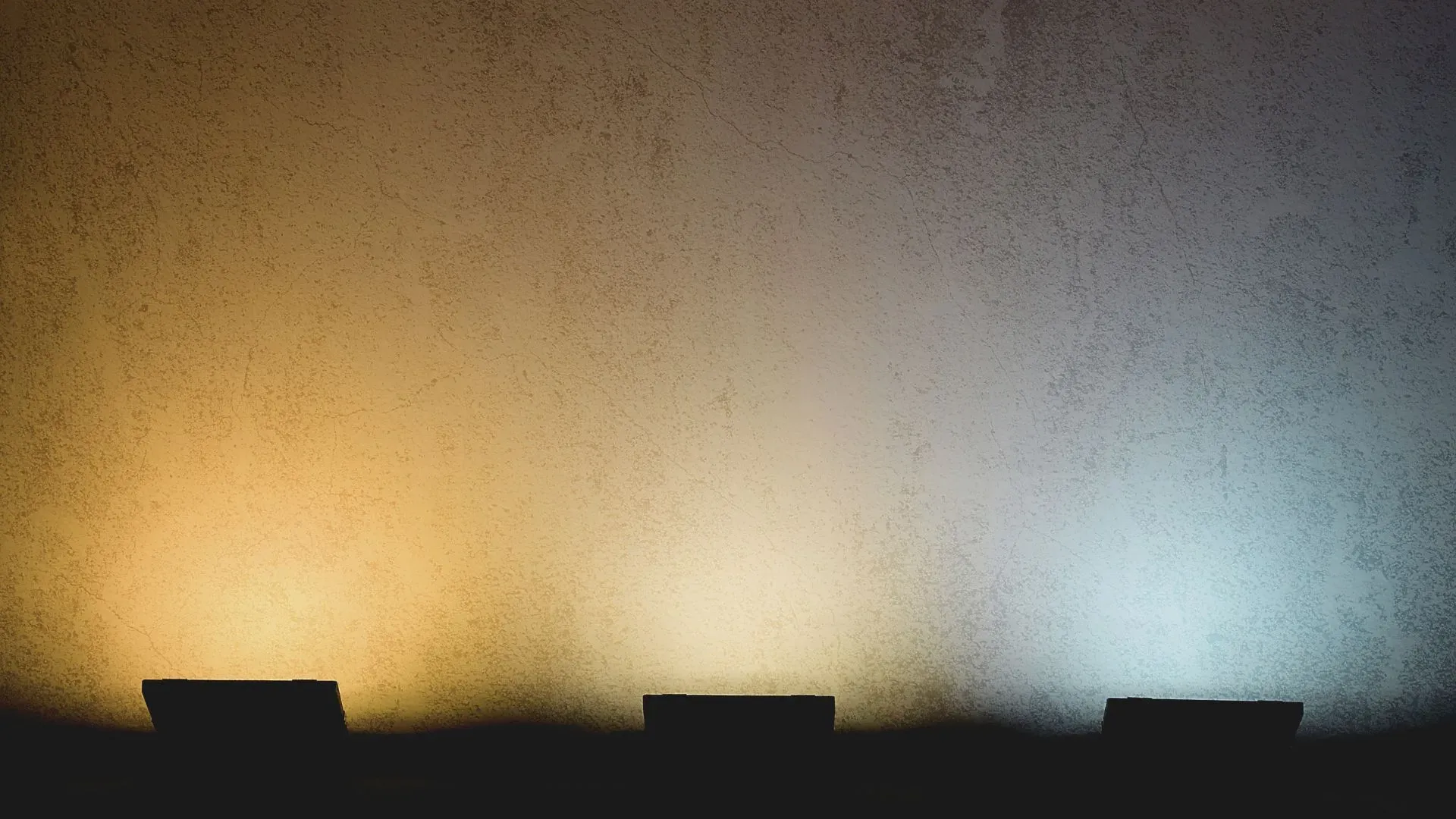
Color temperature is measured in Kelvins (K). Use these simple guidelines:
- Warm light (2,700–3,000K): Cozy and calming — ideal for evenings and bedrooms.
- Neutral light (3,300–4,000K): Balanced and comfortable — good for living rooms and dining areas.
- Cool light (4,000–6,500K): Bright, blue-rich light that promotes alertness — best for offices or morning routines.
Brightness and contrast
Intensity matters. Brighter spaces support productivity and positive mood when used during the day. But harsh glare or high contrast can cause eye strain and irritability. Aim for diffuse, layered lighting and avoid single, overly bright sources.
How Lighting Affects Mood & Energy throughout the day
To get the most from light, match the lighting to the time of day and the task. Below are practical morning, daytime, evening, and night strategies.
Morning: wake up with light
Expose yourself to bright, cool light in the first hour after waking. This helps suppress melatonin and raises alertness. If natural sunlight is available, open curtains or step outside for 10–30 minutes.
Daytime: stay energized
During work or study, use cooler color temperatures (4,000–5,000K) and higher brightness levels to maintain focus. Avoid dark rooms; even indirect daylight can improve mood and cognition. Psychology Today discusses how glare-free natural light boosts mood, creativity, and cognitive performance: How lighting choices can affect your mood.
Evening: shift to warm, gentle light
At least two hours before bed, reduce bright and blue-rich light. Use warm bulbs and lower intensity to cue your body to produce melatonin. This supports better sleep and improved mood the next day.
Night: avoid blue light near bedtime
Limit screens and cool-toned lights. If you need lighting, choose dim, warm sources oriented away from your eyes.

Design tips: simple changes with big impact
Whether you’re decorating a studio or upgrading an office, small lighting changes can shift mood and energy quickly. Here are practical, actionable tips.
Layer your lighting
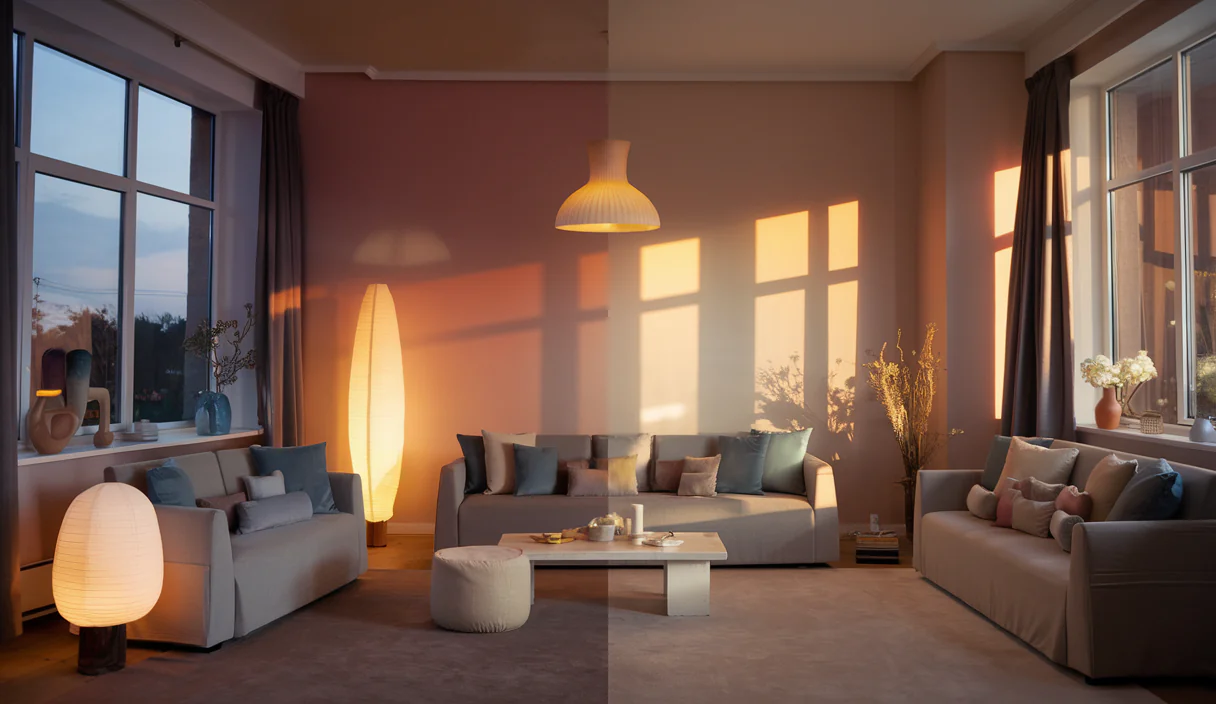
Use a mix of ambient (overhead), task (desks, reading), and accent (art, plants) lighting. Layering creates depth and lets you choose the exact mood you want.
Use dimmers and tunable white bulbs
Dimmers let you lower intensity for relaxation. Tunable white or smart bulbs shift color temperature across the day — a powerful way to automate healthy lighting patterns.
Prioritize natural light
Maximize daylight by positioning workspaces near windows, using light curtains, and keeping reflective surfaces clean. If your space lacks windows, consider full-spectrum bulbs or light therapy lamps for morning use.
Reduce glare and harsh shadows
Diffuse light with shades, lampshades, or frosted bulbs. For screens, use bias lighting (a soft light behind the monitor) to reduce eye strain.
For design-driven discussions about how lighting affects mood in built spaces, ArchDaily has a useful overview about configurations that support circadian rhythm and energy: How lighting affects mood – ArchDaily.
Special contexts: work, wellness, and storytelling
How Lighting Affects Mood & Energy depends on context. Below are examples for workplaces, health settings, and creative spaces.
Offices and co-working
Use bright, cool light for task zones and more neutral or warm light in break areas. Consider circadian-friendly lighting systems for shift workers or people who spend most of their day indoors.
Wellness and healthcare
In clinics, controlled light schedules can reduce anxiety and improve sleep patterns for patients. Research summarized on NCBI highlights the clinical importance of light exposure for mood disorders and circadian entrainment: Light and mood studies (NCBI).
Film, photography, and ambiance
Lighting is a storytelling tool. Film uses color and contrast to cue emotion — warm glows for intimacy, cool blue for tension. Mack Sennett Studios explores these creative techniques in depth: How Lighting Affects Mood in Film.
Common questions about light and wellbeing
Here are answers to frequent practical questions about adjusting lighting for mood and energy.
Does blue light really make you more awake?
Yes. Blue-rich light stimulates pathways in the brain that increase alertness and suppress melatonin. Use it during the day, avoid it at night. More context on blue light and productivity is discussed on Illuminated Integration: How lighting affects mood – Illuminated Integration.
Can lighting help with seasonal mood changes?
Light therapy is a proven strategy for seasonal affective disorder (SAD). Bright, early-morning exposure to a light box can reduce depressive symptoms for many people.
What color temperature is best for focus?
Cooler temperatures (4,000–5,000K) support concentration and performance. But comfort matters too — extremely cool light all day can feel harsh, so balance with breaks and warmer zones.
Products and solutions that make a difference
Not every space needs expensive equipment. Here are reliable, accessible options:
- Smart bulbs with tunable white settings — program day/night scenes.
- LED panels with dimming and color temperature control for work areas.
- Light therapy lamps for short morning sessions during dark months.
- Dimmers and layered lamps to switch moods quickly.
For examples of design-forward products and storytelling about color temperature, Gantri explores emotional effects of color temperature in home lighting: Does Lighting Affect Mood? | Gantri Stories.
Practical daily checklist
Use this simple checklist to tune light for better energy and mood:
- Morning: Get 10–30 minutes of bright, preferably natural, light.
- Workday: Use cool, bright task lighting; reduce glare.
- Evening: Dim lights and switch to warm bulbs two hours before bed.
- Night: Avoid screens or use night mode and warm bias lighting.
Watch: quick guide
Below is a short video that summarizes practical tips for how light influences mood and energy.
How Lighting Affects Mood & Energy — final thoughts
Lighting is an easy, powerful lever for improving how you feel and perform. By aligning light with your daily rhythm — bright and cool in the morning, layered and warm in the evening — you can raise daytime energy, reduce stress, and sleep better at night.
For more practical guides on wellbeing and design, explore other articles and resources at ZenPulse Hub.
Question: Can changing my bulbs really change my mood?
Answer: Yes. Switching to cooler, brighter bulbs during the day can lift alertness and focus, while warm, dim lighting in the evening supports relaxation and sleep. Small changes often have noticeable effects.
Question: How long should I get morning light to feel the benefits?
Answer: Aim for at least 10–30 minutes of bright exposure soon after waking. Outdoor sunlight is best, but a bright light therapy lamp can help on dark mornings.
Question: Are smart lights worth it for wellbeing?
Answer: Smart lights that adjust color temperature and brightness across the day can automate healthy lighting patterns, making them a convenient, effective investment for many people.
Question: Where can I read more scientific details?
Answer: The PubMed Central review (PMC7445808) is a thorough starting point on how light impacts mood and circadian systems.
Ready to try small light changes with big results? Explore more guides and product picks at zenpulsehub.com and start tuning your light for better mood and energy today.