

Morning Sunlight and Circadian Rhythm
Getting regular morning sunlight and circadian rhythm alignment is one of the simplest, most powerful steps you can take to improve sleep, mood, energy, and long-term health. In the first 100 words, this article explains why morning light matters, how it rewires your internal clock, and practical steps you can use starting tomorrow.
Why morning light matters for your circadian rhythm
Our bodies follow a roughly 24-hour cycle called the circadian rhythm. Light is the most important external cue that sets this rhythm. When you get bright light in the morning, it tells your brain it’s time to be awake and alert. That morning signal advances the clock so you feel sleepy earlier in the evening and sleep better at night.
Multiple studies support this idea: for a deep review of how morning light shifts the clock, see this scientific overview at PMC (NIH), which explains that morning light tends to advance circadian timing while evening light delays it.
Simple science in plain language
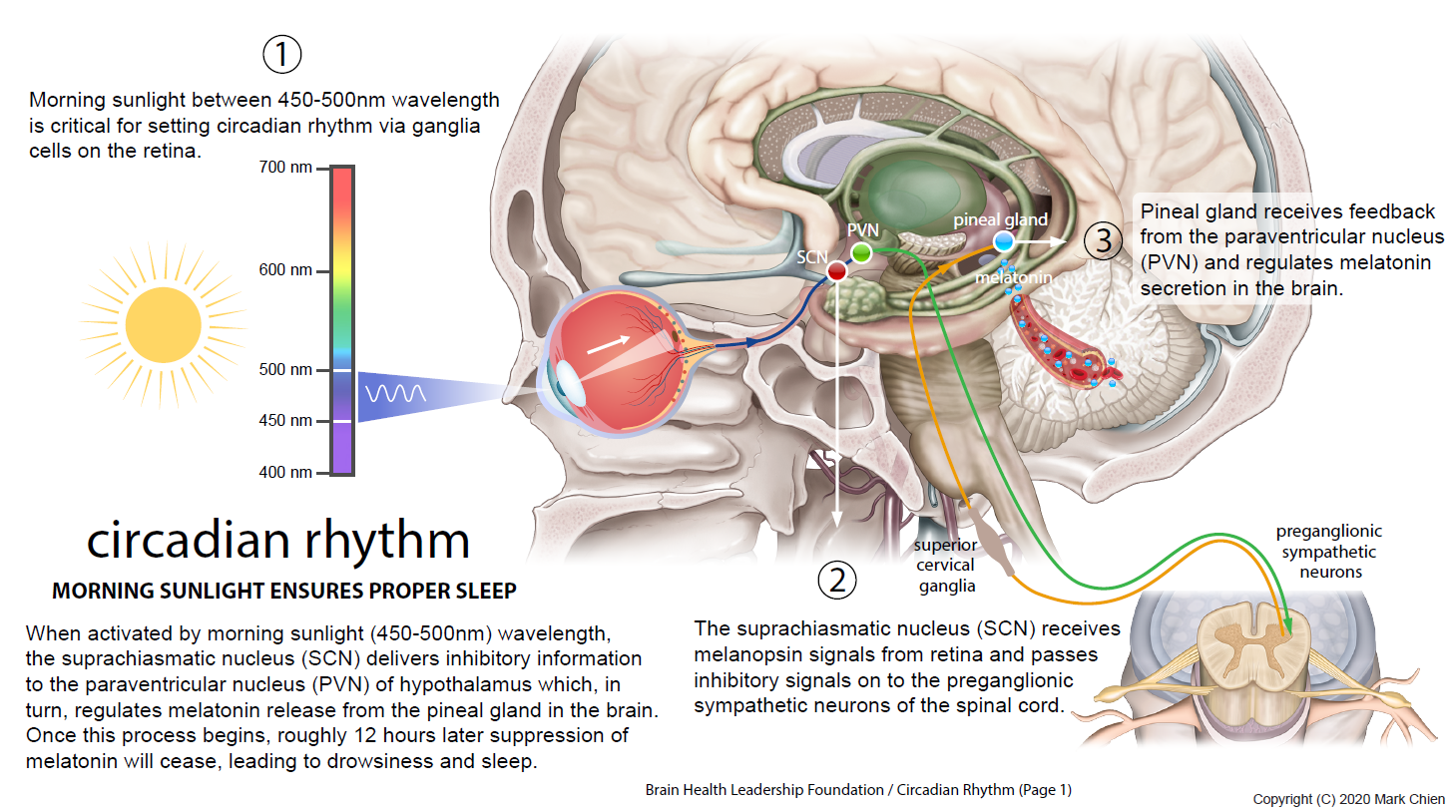
When light hits your eyes, special cells send signals to the brain’s suprachiasmatic nucleus (SCN) — your internal timekeeper. Morning light triggers a cascade: cortisol rises, melatonin production drops, body temperature increases slightly, and alertness follows. Over days and weeks, this daily morning cue helps keep your sleep-wake cycle regular.

Benefits of morning sunlight and circadian rhythm alignment
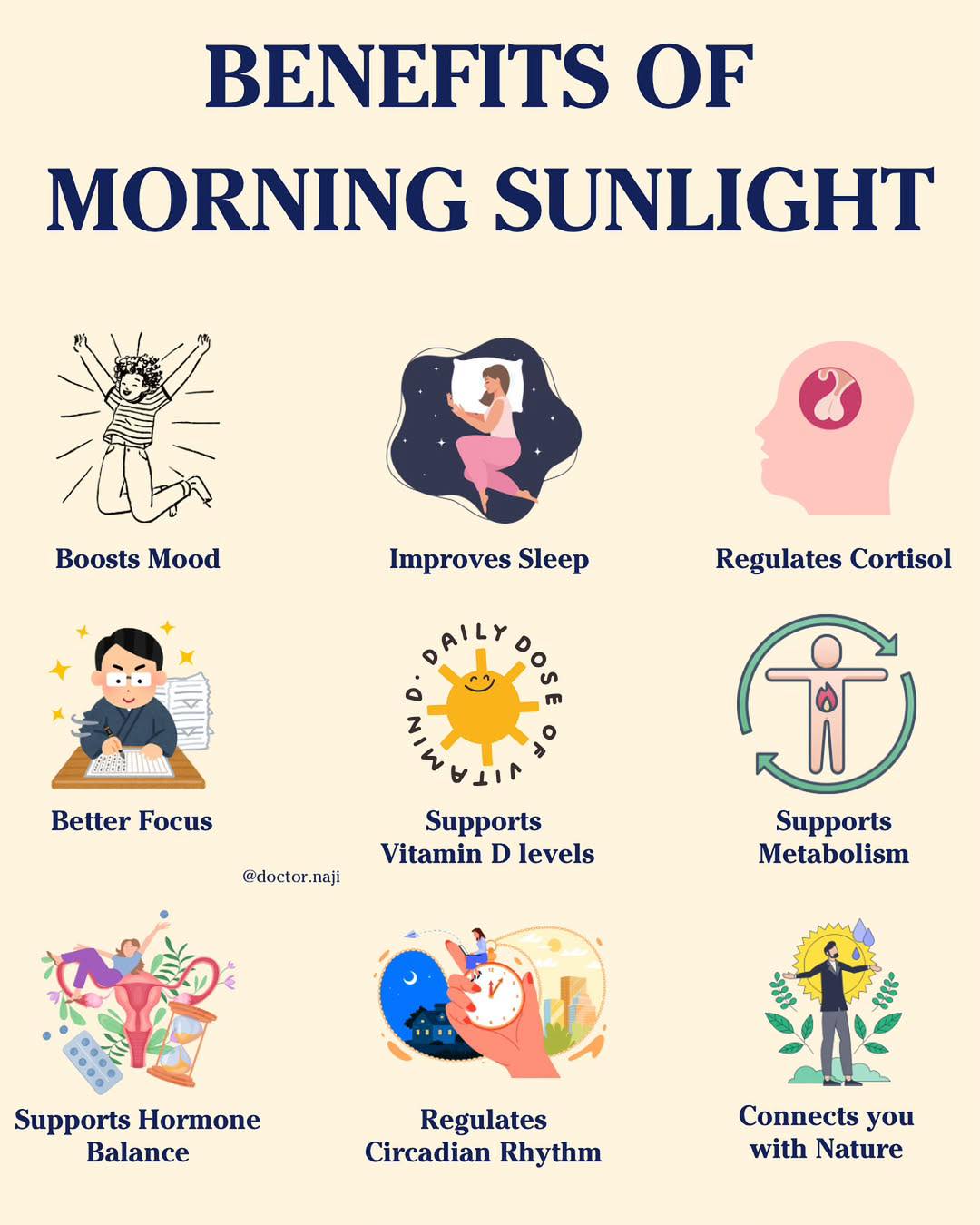
When your circadian rhythm stays in sync thanks to consistent morning sunlight, you can expect several practical benefits:
- Better sleep: Easier to fall asleep and more restorative deep sleep at night.
- Improved mood: Reduced risk of daytime low mood and seasonal mood dips.
- More energy and focus: Morning light boosts daytime alertness and cognitive performance.
- Metabolic advantages: A steady circadian rhythm helps regulate appetite and glucose metabolism.
Clinical and field studies link daytime light exposure with better cognition and sleep health — see the recent field intervention study summarized on PubMed for evidence that daytime light improves circadian timing and cognitive markers.
How to use morning sunlight: practical, science-backed steps
Here are easy, realistic habits that will help your circadian rhythm get the signal it needs:
- Get outside within 30–60 minutes of waking: Aim for 10–30 minutes of direct outdoor light on most days. Natural light intensity is far higher outdoors than indoors.
- Skip sunglasses for a short period: Unless you’re in bright glare or have an eye condition, brief unshaded exposure helps the SCN capture the light signal. Protect your eyes beyond this short window.
- Move or stretch while outside: Walk, stretch, or do light yoga — motion increases circulation and helps the brain register the wake signal.
- Keep evening light dim: Reduce screen and overhead light after sunset so you don’t delay your clock.
- Be consistent: Try to get morning light at roughly the same time each day — consistency strengthens the entrainment effect.
WebMD and Verywell both highlight that morning sunlight helps reset your body’s internal clock and improves nighttime sleep — see WebMD and Verywell Health for practical tips and accessible explanations.

How much light do you need?
There’s no single perfect dose, but here are general targets:
- Cloudy day outdoors: ~30 minutes
- Bright sunny day: 10–15 minutes may be enough
- Windows indoors: much weaker signal — ideally step outside for maximum effect
Morning Sunlight and Circadian Rhythm: Troubleshooting common issues
If you struggle to get morning light, here are solutions that still help reset your clock:
- Work nights or shifts: Use bright light therapy with a medical-grade lightbox timed to your wake window and consult a sleep specialist.
- Live in high-latitude winter months: Longer, consistent exposure to bright light in the morning or scheduled light therapy can compensate when natural sunlight is scarce.
- Sensitivity to light: Wear adequate eye protection but try short periods of unobstructed light early on.
For an accessible newsletter and science-forward recommendations about using light for health, check the Huberman Lab resources at Huberman Lab.
When to seek professional help
If you try morning light strategies for several weeks and still have severe insomnia, extreme daytime sleepiness, or mood symptoms, consult a primary care provider or sleep specialist. The research base (see PMC) shows that some circadian disorders need clinical timing and targeted therapies.
Daily routine example: 7 steps to sync your clock
Here’s a realistic morning routine you can build in this week to harness morning sunlight and circadian rhythm benefits:
- Wake up at a consistent time (±30 minutes) each day.
- Within 10–30 minutes of waking, step outside for 10–30 minutes of natural light.
- Go for a brisk walk, stretch, or sip water in the sunlight.
- Eat breakfast within 1–2 hours (timed feeding helps stabilize metabolism).
- Keep evening light dim and avoid screens 60–90 minutes before bed.
- Keep a regular bedtime that allows sufficient sleep for your needs.
- If needed, use a lightbox in the morning under clinician guidance when natural light is limited.
Evidence snapshot
Research consistently finds that morning light tends to advance circadian phase, helping people fall asleep earlier and improving sleep quality. For an accessible summary about how morning light can improve sleep, see Verywell Health and the practical tips on WebMD. For peer-reviewed work, read the review on PMC (NIH).
Real-life wins: what people notice
People who add consistent morning sunlight often report:
- Falling asleep earlier without medication
- Waking more refreshed and with stable energy
- Less late-night snacking and improved appetite control
- Better mood across the day
These anecdotal reports match controlled studies that show better sleep, cognition, and mood after improved daytime light exposure — a clear reason to prioritize morning sunlight where possible.
Watch: Quick guide to using light for sleep and health
Video: Morning Light and Circadian Rhythm — Guide
Key takeaways
Morning Sunlight and Circadian Rhythm matter because light is the primary signal your brain uses to set its internal clock. With simple, consistent morning exposure you can improve sleep, mood, energy, and metabolic health.
Start small: step outside for 10–30 minutes each morning. Keep evenings dim. If you need more help, talk to a clinician about timed light therapy.
For deeper reading, explore the scientific review on the physiology of light and circadian timing at PMC, practical health tips on WebMD and Verywell Health, plus applied guidance from the Huberman Lab.
Want evidence linking daytime light and cognition? See the field study on PubMed: PubMed article.
Make one change this week: pick a consistent wake time and get outside right after you wake. Small, regular light exposure pays off faster than you think.
If you enjoyed this guide, explore more step-by-step health and sleep guides at ZenPulse Hub.
How soon after waking should I get morning sunlight?
Ideally within 30–60 minutes of waking. Getting light early helps shift your circadian rhythm earlier, making it easier to fall asleep at a regular bedtime.
How long do I need to be outside?
Aim for 10–30 minutes depending on brightness. On bright sunny days, 10–15 minutes can be enough. Cloudy days often need closer to 30 minutes.
Can indoor light or windows substitute for morning sunlight?
Windows reduce light intensity and spectrum; they’re better than nothing but aren’t as effective as direct outdoor exposure. If you can’t go outside, consider a clinically validated lightbox.
Will morning light help if I have insomnia?
Many people with insomnia benefit from consistent morning light, but chronic or severe insomnia may need tailored treatment. If symptoms persist, consult a sleep specialist.
Conclusion: Embrace the morning sun as a gentle, natural tool to reset your clock and improve health. Ready to build better sleep habits? Explore more guides and practical tips at zenpulsehub.com.