
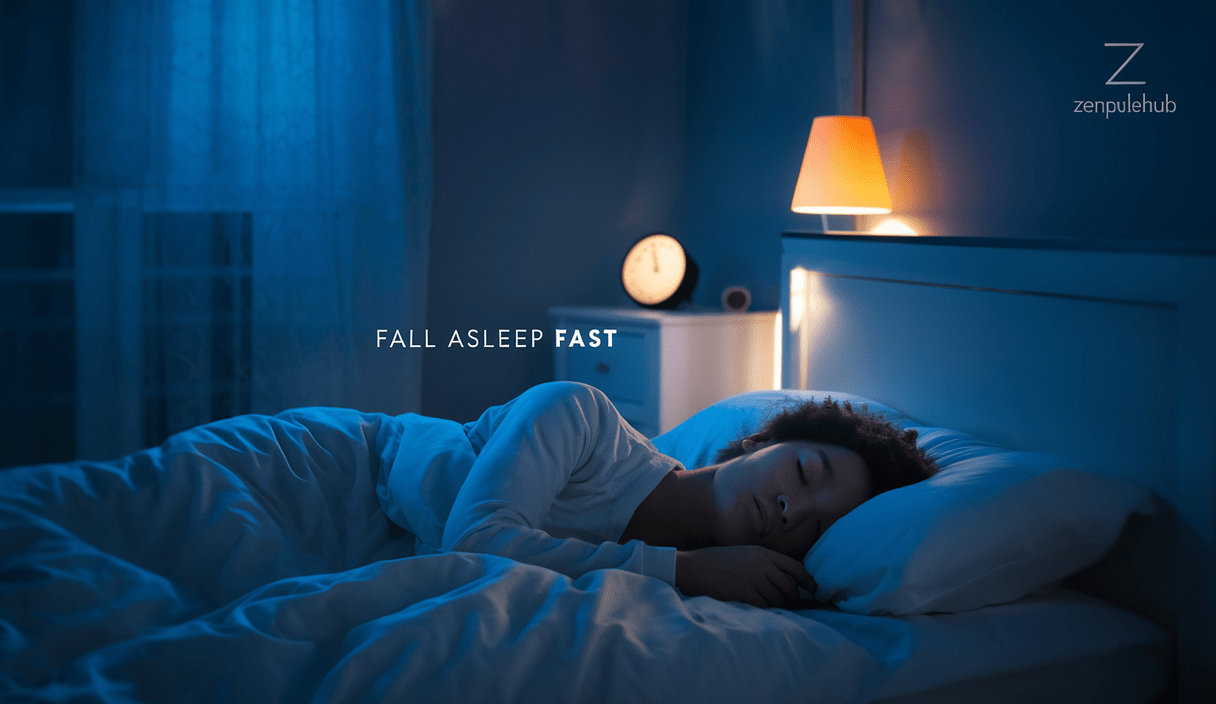

How to Fall Asleep Fast with Insomnia
If you struggle with insomnia, learning how to fall asleep fast with insomnia can change your days — not just your nights. This guide offers practical, research-backed steps and calming routines to help you drift off more quickly and wake feeling refreshed. Read on for techniques, short-term tricks, and long-term habits that work together to improve sleep.

How to Fall Asleep Fast with Insomnia: Quick Strategies
When you need to fall asleep quickly, use a mix of immediate relaxation techniques and small environment tweaks. These tips help quiet racing thoughts and reduce physical tension so sleep arrives sooner. Below are the most effective, easy-to-apply methods.
Immediate techniques to calm your nervous system
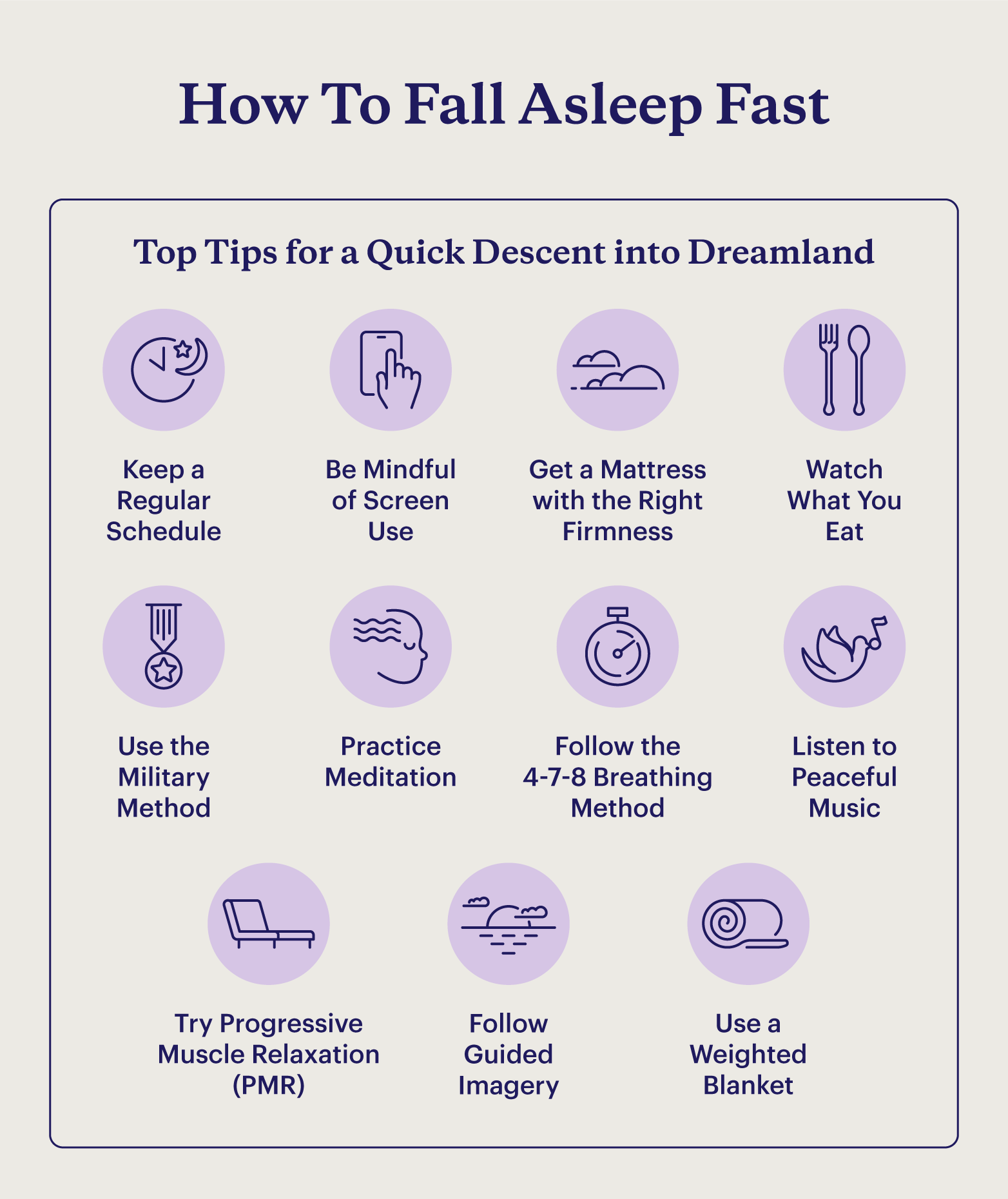
- 4-7-8 breathing: Inhale quietly for 4 seconds, hold for 7, exhale for 8. Repeat 4–6 times to slow your heart rate.
- Progressive muscle relaxation: Tense each muscle group for 5 seconds then release, starting from your feet and moving up.
- Guided imagery: Picture a calm scene — a safe beach, warm cabin, or quiet forest. Focus on sensory details: sound, smell, temperature.
- Box breathing: Inhale 4, hold 4, exhale 4, hold 4. Use this simple rhythm if 4-7-8 feels intense.
Short rituals that work within 10–20 minutes
These small rituals reset your mind for sleep fast:
- Turn off bright screens at least 30 minutes before bed. Use a warm lamp instead.
- Place a small warm towel over your forehead or hands; warmth helps the nervous system relax.
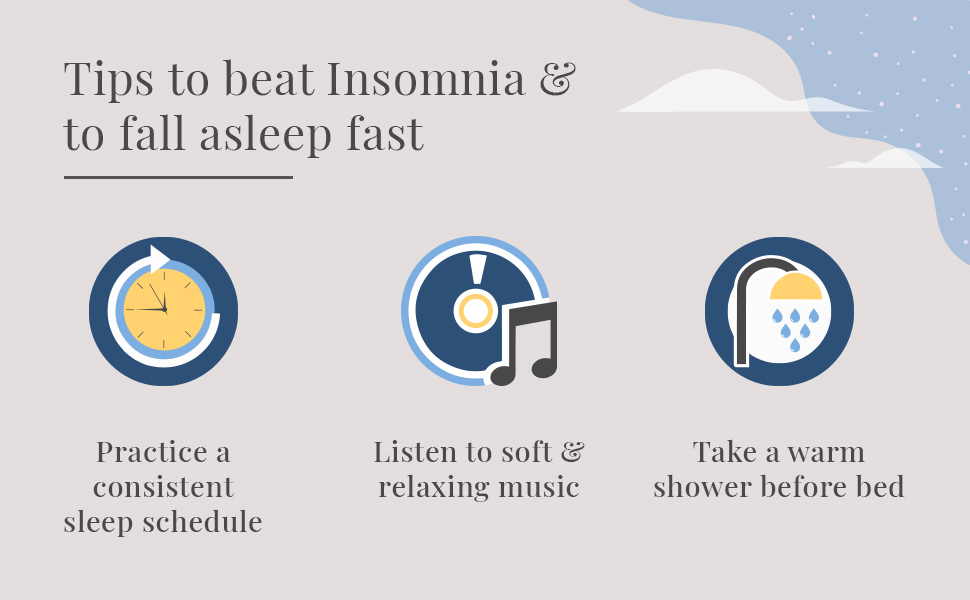
- Listen to a 10-minute guided sleep meditation or soft music (low volume).
Sleep hygiene: the foundation for falling asleep faster
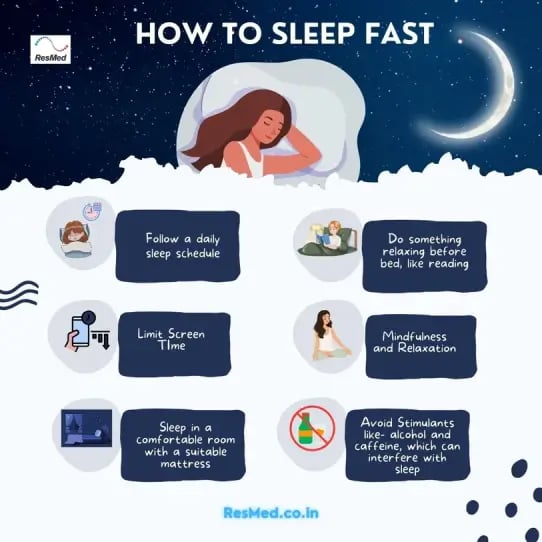
Good sleep hygiene is the set of habits and environment tweaks that make falling asleep natural. If you want to know how to fall asleep fast with insomnia consistently, improve these basics first.
Daily habits to reinforce sleepiness at night
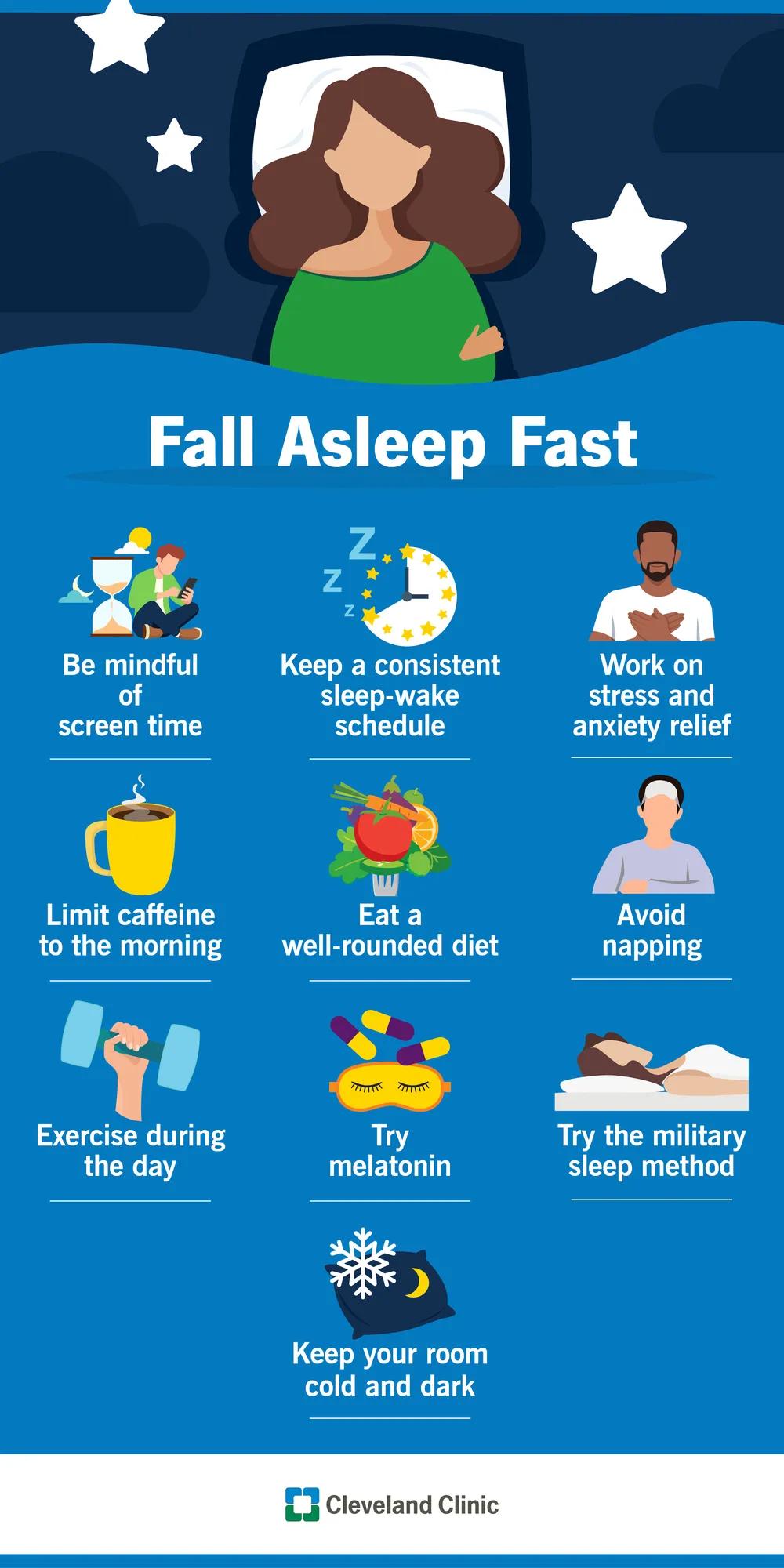
- Consistent schedule: Go to bed and wake up at the same time every day, even on weekends.
- Light exposure: Get bright natural light in the morning and dim lights in the evening. This supports your circadian rhythm.
- Limit caffeine and nicotine: Avoid after mid-afternoon; both are stimulants that delay sleep.
- Smart napping: Keep naps under 20 minutes and earlier in the day to avoid bedtime interference.
Bedroom setup for faster sleep
- Cool, dark, and quiet: Aim for about 65°F (18°C) and use blackout curtains or a sleep mask.
- Comfortable bedding: A supportive mattress and breathable sheets are worth the investment.
- Remove distractions: Remove TVs and switch your phone to Do Not Disturb.
Foods, drinks, and supplements that help (and those to avoid)
Your evening choices matter. Use food and drink to support sleep, not fight it.
- Helpful: A small snack with carbs + protein (e.g., whole-grain toast with peanut butter), herbal teas (chamomile, valerian), and tart cherry juice may help because of melatonin and calming compounds.
- Avoid: Heavy meals close to bedtime, spicy foods, alcohol (disrupts REM sleep), and sugary snacks late at night.
- Supplements: Melatonin can help reset sleep timing for some people. Magnesium or L-theanine may help relaxation — check with your healthcare provider first.
Behavioral strategies for chronic insomnia
If you experience long-term sleep problems, behavioral techniques are often the most effective. When learning how to fall asleep fast with insomnia, these strategies help change the brain’s association between bed and wakefulness.
Stimulus control
Use your bed only for sleep and sex. If you can’t fall asleep within 20 minutes, get up and do a calm activity until you feel sleepy. This trains your brain to link bed with sleep, not frustration.
Sleep restriction therapy
Limit time in bed to your average sleep duration, then gradually increase time as sleep efficiency improves. This is best done with guidance from a sleep specialist or therapist.
Cognitive techniques
Address the anxious thoughts that keep you awake: write a brief “worry list” earlier in the evening, then set a firm mental boundary at bedtime. Techniques from cognitive behavioral therapy for insomnia (CBT-I) are highly effective — consider a therapist or guided online program.
When to use short tricks vs. long-term solutions
Short tricks — breathing, imagery, warm shower — can help you sleep tonight. Long-term solutions — consistent sleep schedule, CBT-I, and medical evaluation — fix the underlying pattern. Blend both: use quick strategies now while you rebuild long-term sleep habits.
Practical 20-minute bedtime routine (sample)
Try this compact routine when you need to fall asleep fast:
- Turn off screens and set a dim lamp 20 minutes before bed.
- Wash your face and brush your teeth — simple hygiene signals the brain it’s time to wind down.
- Do 4-7-8 breathing for 3–5 minutes.
- Lie in bed and perform progressive muscle relaxation, 10 minutes.
- If your mind races, switch to guided imagery or a short sleep meditation (5–10 minutes).
Technology that helps (if used correctly)
Use apps for guided sleep meditations or low-volume white noise. If you use a sleep tracker, avoid obsessing over nightly numbers — they can create more anxiety. For evidence-based guidance on routines, check resources like the NHS guide on how to fall asleep faster and sleep better, which emphasizes sleep routine and relaxation.
What research and experts recommend
Recent overviews highlight that relaxation methods, slow breathing, and improving sleep hygiene are often more useful than quick fixes alone. For a deep dive into techniques, see the Healthline summary and the Sleep Foundation review which covers step-by-step relaxation methods and sleep hygiene tips.
Tips from communities and guides
Many people find peer-shared methods helpful. For example, community threads like the Reddit post outline practical steps: turn down tech, take a warm shower, practice imagery, and keep routines short and consistent. Authoritative guides like HelpGuide note that mindfulness and sleep hygiene can be very effective for insomnia when practiced regularly.
When to talk to a professional
If sleep problems persist despite consistently applying these strategies, seek help. See a primary care provider, a sleep specialist, or a therapist trained in CBT-I. You should get medical help if you experience:
- Consistent inability to sleep that affects daytime functioning.
- Loud snoring, gasping at night, or pauses in breathing (possible sleep apnea).
- Severe daytime sleepiness or falling asleep while driving.
Practical troubleshooting: common obstacles
Racing thoughts
Use a 10-minute worry journal earlier in the evening. Put concerns on paper with a next-step action to reduce rumination at bedtime.
Body feels awake
Try light stretching or a warm shower about an hour before bed. A drop in body temperature after warmth can signal sleepiness.
Sleep environment still noisy
Use white noise machines, fans, or earplugs. Even small sound-masking devices can improve sleep continuity.
Final practical checklist before bed
- Dim lights 30 minutes before bed.
- Put phone away and use Do Not Disturb.
- Practice 4-7-8 breathing or progressive muscle relaxation.
- Make sure the room is cool, dark, and uncluttered.
- If you can’t sleep in 20 minutes, get up and do a calm activity until you feel sleepy.
Video: Quick breathing and relaxation techniques to fall asleep faster
Summary: a balanced plan to fall asleep faster
To recap: combine immediate relaxation (breathing, progressive muscle relaxation), consistent sleep hygiene, and behavioral strategies like stimulus control. When you combine these methods, you can learn how to fall asleep fast with insomnia more often. Use quick tricks tonight and build consistent habits for lasting change.
Frequently Asked Questions
Can I use breathing techniques every night?
Yes. Breathing techniques like 4-7-8 and box breathing are safe for nightly use and can reduce arousal, making it easier to fall asleep. Use them as part of your wind-down routine to build a consistent signal to the brain that it’s time to sleep.
How long before bed should I stop using screens?
Ideally turn off bright screens at least 30–60 minutes before bedtime. If that’s difficult, use warm lighting, enable blue-light filters, and lower the screen brightness to reduce circadian disruption.
Does melatonin work for insomnia?
Melatonin can help with sleep timing and short-term sleep onset problems for some people, but it’s not a cure for chronic insomnia. Consult your healthcare provider about dosing and safety, especially if you take other medications.
When should I see a doctor or sleep specialist?
See a professional if sleep problems last several weeks, cause daytime impairment, or include symptoms like loud snoring, gasping, or falling asleep unexpectedly. A specialist can evaluate for sleep disorders and recommend treatments such as CBT-I.
If you’re looking for more trustworthy guidance, the NHS guide, Healthline, and the Sleep Foundation provide reliable, evidence-based tips and deeper explanations. For community-sourced strategies, see the Reddit discussion, and for practical mental wellness tactics check HelpGuide.
Final note: If you practice these steps regularly and combine quick relaxation with better sleep habits, you’ll see progress. Learning how to fall asleep fast with insomnia takes consistency, but the payoff is better energy, mood, and focus.
Ready to sleep better? Explore more guides, routines, and deep-dive articles at zenpulsehub.com and start building a bedtime plan that works for you.






