Improve Sleep Hygiene: Simple Habits for Better Sleep
Improve sleep hygiene by building small, consistent habits that help your body fall asleep faster and stay asleep longer. Good sleep hygiene is about routines, your bedroom setup, and daily choices — all of which add up to better rest and more energy the next day.
:max_bytes(150000):strip_icc()/what-is-sleep-hygiene-5085887-FINAL-831b8421e75249f0952fbf4efb0adda7.png)
How to improve sleep hygiene: a simple plan
Improving your sleep hygiene doesn’t require a complete life overhaul. Start with a few clear steps: set a consistent sleep schedule, create a calming pre-bed routine, and make your bedroom a sleep-friendly sanctuary. Over time these changes become habits that reliably improve sleep quality.
Why sleep hygiene matters
Good sleep hygiene supports mental focus, mood, and physical recovery. Poor habits — irregular schedules, screens late at night, or a noisy bedroom — can reduce deep sleep and leave you groggy. Consistent, healthy sleep habits make it easier to fall asleep and wake up refreshed.
Daily habits that boost sleep hygiene
Daily choices set the stage for restful nights. Try these practical habits and pick a few to start now.
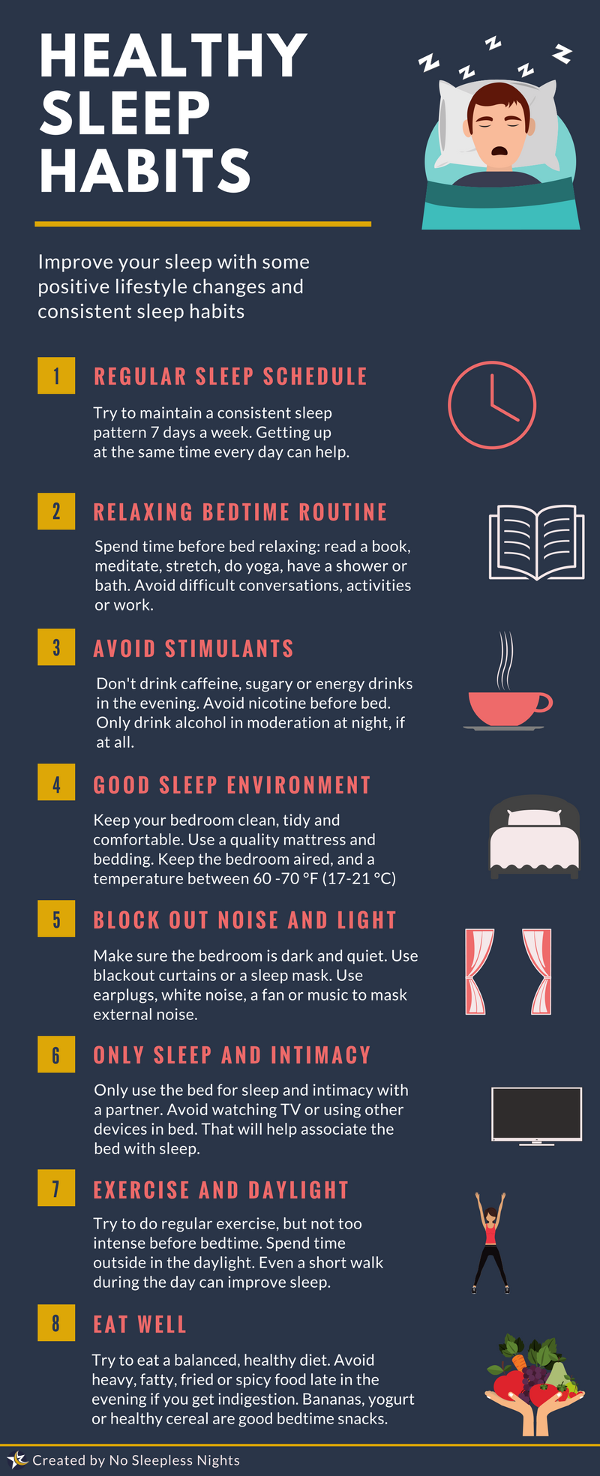
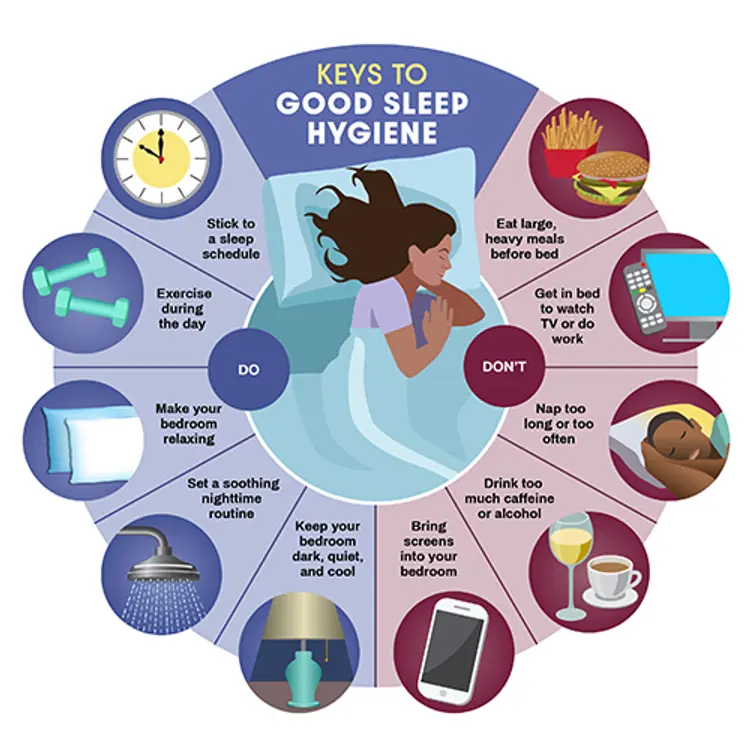
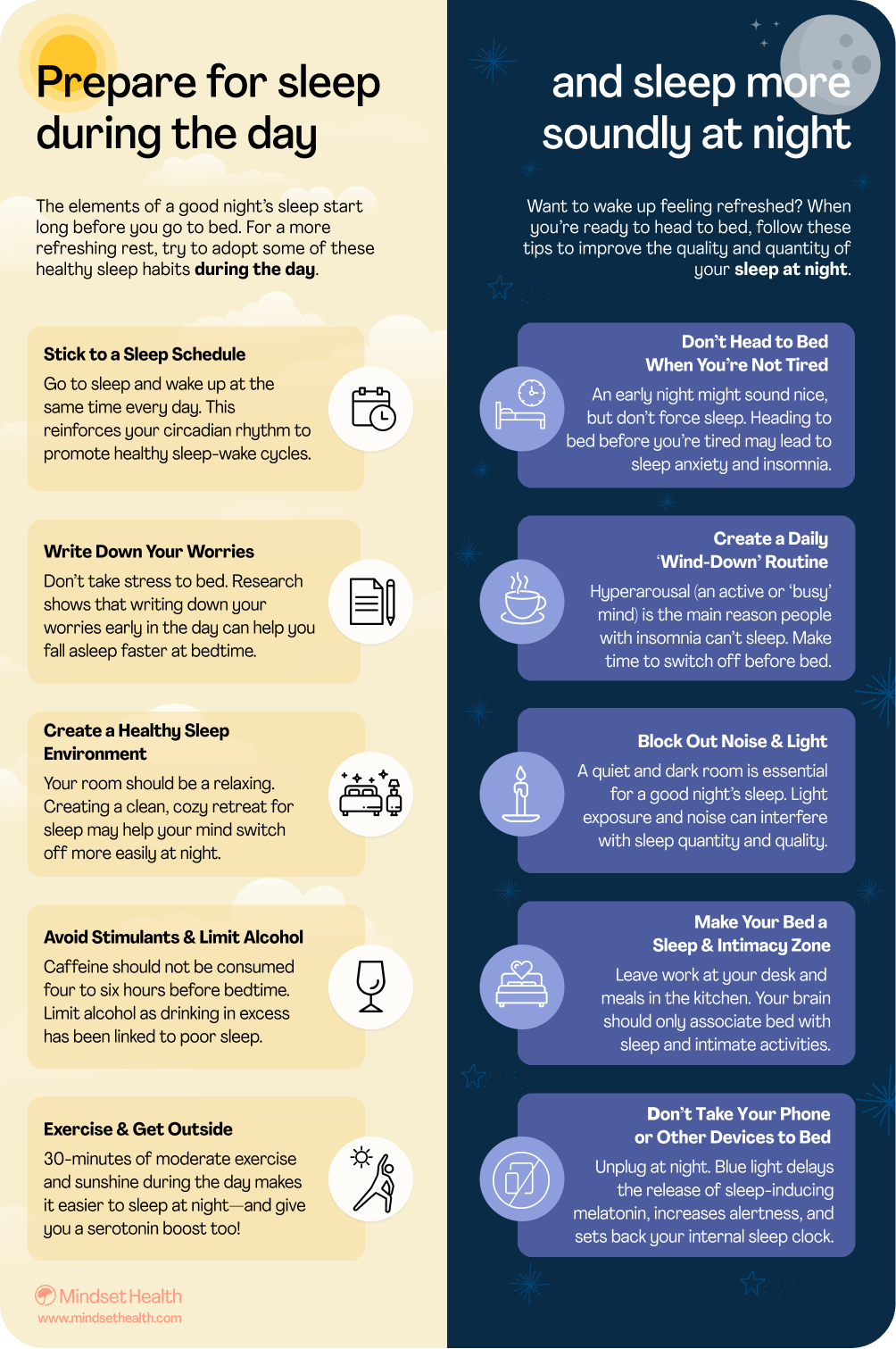
- Keep a consistent sleep schedule: Go to bed and wake up at the same time every day, even on weekends. A steady rhythm trains your circadian clock.
- Get natural light early: Spend 20–30 minutes outside in the morning. Morning light helps set your internal clock for sleep at night.
- Move daily: Regular exercise improves sleep quality. Aim to finish intense workouts at least a few hours before bedtime.
- Limit caffeine and heavy meals later in the day: Caffeine can stay in your system for many hours; skip it in the late afternoon and evening.
- Watch evening alcohol use: Alcohol may make falling asleep easier but fragments sleep later in the night.
Evening routine: relax and prepare
The hour before bed matters. A calming routine sends signals to your brain that it’s time to wind down.
Try a 30–60 minute wind-down ritual
- Lower lights: Dim lamps or use warm light to cue melatonin production.
- Put devices away: Limit screens or use blue-light filters. Blue light can interfere with sleep hormones.
- Do a calming activity: Read, stretch, journal, or practice deep breathing or gentle meditation.
- Keep a “worry pad” by your bed: Jot down lingering thoughts so your mind can let go for the night.
Optimize your sleep environment
Your bedroom should be a comfortable, quiet, and dark place dedicated to sleep — not a home office or a screen center.
- Temperature: Keep it cool — around 60–67°F (15–19°C) is ideal for many people.
- Darkness: Use blackout curtains or a sleep mask to reduce light exposure.
- Noise control: Try earplugs, a white-noise machine, or a fan to mask disruptive sounds.
- Comfort: Replace worn mattresses and pillows; they matter for sleep quality. The Harvard Health resource recommends creating a sleep sanctuary and replacing old bedding when needed (Harvard Health).
How to improve sleep hygiene when stress or a busy schedule gets in the way
Life is busy. When stress or irregular hours disrupt sleep, focus on a few high-impact changes first.
Prioritize consistency and short sleep cues
- Anchor your wake time: If you must vary your bedtime, keep your wake-up time steady — it helps maintain your rhythm.
- Use short, relaxing cues: A consistent pre-sleep ritual — like 10 minutes of stretching or reading — can be powerful even when time is limited.
- Limit napping: Short early-afternoon naps (20–30 minutes) can help, but late or long naps may disrupt nighttime sleep.
Technology, screens, and light
Electronic devices emit blue light that suppresses melatonin. To protect your sleep hygiene, reduce screen time before bed and adjust device settings.
- Use night mode or blue-light filtering apps in the evening.
- Aim to power down screens at least 30–60 minutes before bed.
- If you read on a device, use warm lighting and a larger font to reduce eye strain.
:max_bytes(150000):strip_icc()/how-to-get-better-sleep-5094084-regular-FINAL-2c371001cada4ad391f6de53fc6053c9.png)
Food, drink, and bedtime
What and when you eat affects sleep. Use these simple rules to support your sleep hygiene.
- Avoid heavy, spicy meals within two to three hours of bed.
- Limit caffeine after early afternoon; remember caffeine affects people differently.
- Consider a light snack if hunger wakes you — something with carbs and protein, like a small banana with peanut butter.
When to seek professional help
Good sleep hygiene helps most people, but persistent sleep problems may need a professional approach.
Seek help if you:
- Regularly struggle to fall asleep or stay asleep despite good habits.
- Wake unrefreshed after a full night’s sleep.
- Experience loud snoring, gasping, or pauses in breathing (possible signs of sleep apnea).
Trusted resources like the Sleep Foundation provide detailed guidance on routine and environment, while the CDC highlights key behaviors such as stable sleep schedules and a cool, quiet bedroom. The NHS also offers practical tips on sleep routines and relaxation (NHS).
Quick checklist: nightly and daily wins for sleep hygiene
- Set a regular bedtime and wake time.
- Create a 30–60 minute calming routine before bed.
- Keep your bedroom cool, dark, and quiet.
- Limit screens and caffeine in the evening.
- Get daily natural light and regular movement.
Watch: quick tips to improve sleep hygiene
Troubleshooting: common roadblocks and fixes
I can’t fall asleep even when I’m tired
Get out of bed for 10–20 minutes and do a quiet, non-stimulating activity. Return to bed when you feel sleepy. Avoid watching the clock — it increases stress.
My schedule changes often
If shifts are unavoidable, keep your wake-up time as consistent as possible and use light exposure to help shift your internal clock.
Resources and next steps
For evidence-based guidance, check these trusted resources:
- Sleep Foundation — practical sleep hygiene recommendations and routines.
- Harvard Health — tips on creating a sleep sanctuary and replacing old mattresses.
- CDC on sleep — clear guidance on bedtimes, quiet bedrooms, and healthy habits.
- NHS — practical relaxation and routine tips.
- Healthline — easy-to-follow habit suggestions for improved sleep.
Tip: Pick one change this week — maybe a fixed wake time or a 30-minute device-free wind-down — and stick with it for two weeks. Small, consistent changes are the heart of better sleep hygiene.
FAQs
How long until better sleep shows up after improving sleep hygiene?
Many people notice improvements within a few days to two weeks. The full benefit often takes consistent practice for several weeks as your body adjusts to a new rhythm.
Should I avoid naps to improve sleep hygiene?
Short naps (20–30 minutes) early in the afternoon can be helpful. Avoid long or late naps, which may make it harder to fall asleep at night.
Is blue-light blocking enough to prevent sleep problems?
Blue-light filters help, but they’re not a complete solution. Combine filters with reduced screen time, a calming routine, and a consistent schedule for best results.
When should I see a sleep specialist?
If you have persistent trouble falling or staying asleep despite good habits, or if you have symptoms like loud snoring and daytime sleepiness, consult a healthcare provider or sleep specialist.
Ready to try a sleep experiment? Start with one change tonight — set a consistent wake-up time or dim the lights 60 minutes before bed — and track how you feel each morning. For more guides, tips, and step-by-step plans, explore more at zenpulsehub.com.