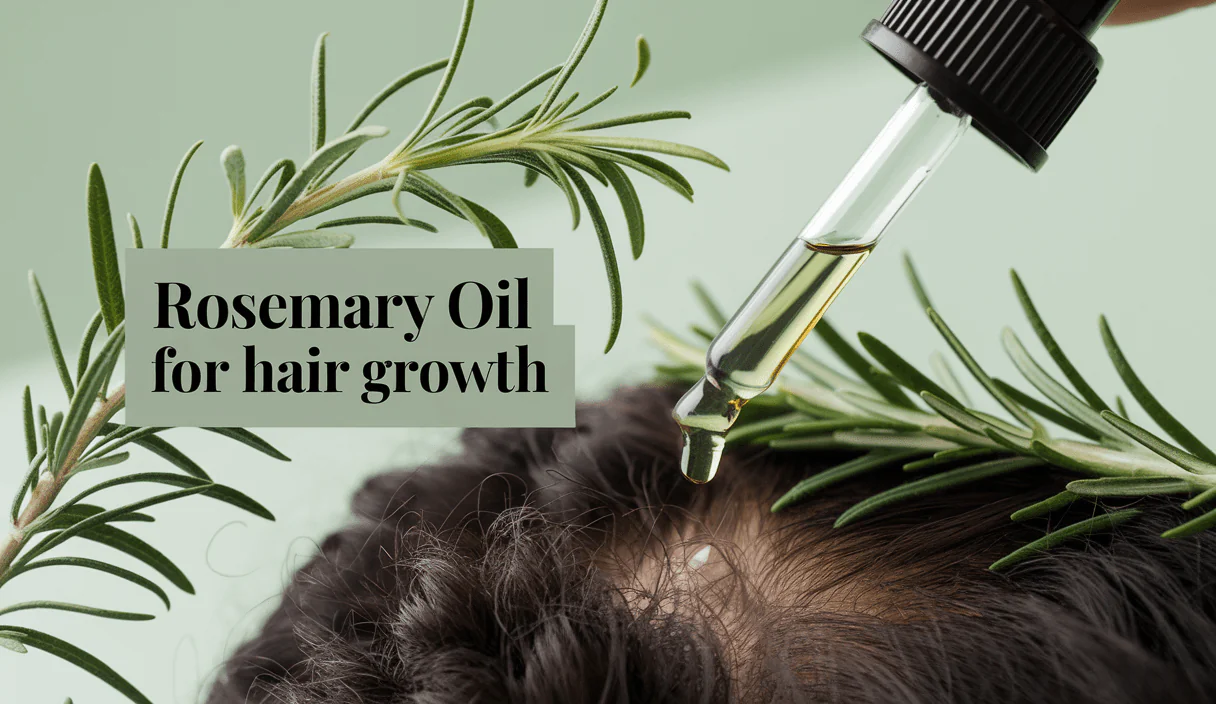

Rosemary essential oil for hair growth: Thicker Hair
Rosemary essential oil for hair growth has become a popular natural remedy for people looking to boost thickness and reduce hair loss. In this guide you’ll learn the science, safe ways to use rosemary oil, proven tips, and easy DIY recipes you can try at home.

Rosemary essential oil for hair growth: How it works
Rosemary essential oil is thought to support hair growth through several mechanisms: it may improve scalp circulation, reduce inflammation, and help balance scalp oils. These effects can create a healthier environment for hair follicles to grow stronger, thicker strands.
What the research says
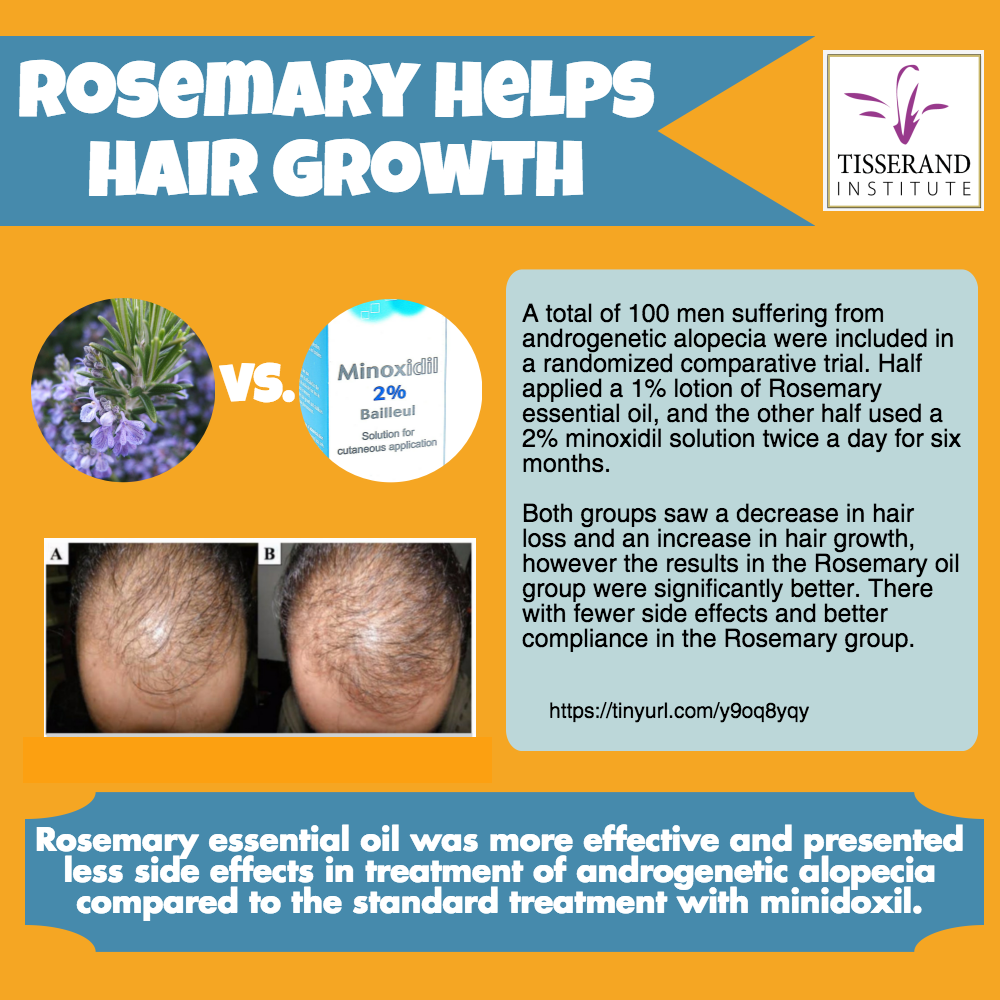
Recent studies have shown promising results. A 2022 review and clinical reports noted that rosemary oil can help improve hair density and may perform similarly to conventional treatments in some cases. For a plain-language summary of that research, Medical News Today covers the 2022 findings and compares rosemary oil to Minoxidil in effectiveness: Medical News Today: rosemary oil and hair growth.
Another clinical study listed on PubMed examined essential oils and hair growth, and results support further investigation into volatile oils for hair health: PubMed study on essential oils and hair growth.
Benefits of rosemary essential oil for hair growth
Many people reach for rosemary oil because it’s natural and easy to use. The key benefits include:
- Improved scalp circulation — massaging diluted rosemary oil can stimulate blood flow to hair follicles.
- Reduced scalp inflammation — rosemary has anti-inflammatory properties that may calm irritated skin.
- Stronger hair — regular use can help reduce breakage and make hair appear fuller.
- Natural alternative — some studies suggest it may be comparable to minoxidil for some users (see Medical News Today link).
Who might benefit most?
Rosemary essential oil for hair growth may help people with early-stage hair thinning, brittle hair, or those seeking complementary, non-prescription options. If you have advanced hair loss, consult a dermatologist for a personalized plan.
How to use rosemary essential oil safely
Pure essential oils are concentrated. Always dilute rosemary essential oil with a carrier oil and do a patch test first. A clear, common method is to mix a few drops of rosemary oil into a carrier oil like jojoba or coconut oil, then massage into the scalp.
Simple dilution guidelines
- For daily scalp massage: mix 2–4 drops of rosemary essential oil with 1 teaspoon of carrier oil.
- For a weekly deep treatment: mix 6–10 drops in 1 ounce (30 ml) of carrier oil and leave for 30–60 minutes before washing.
- For a shampoo boost: add 3–5 drops of rosemary oil to a dollop of shampoo each time you wash.
Healthline has a straightforward how-to that recommends mixing about five drops of rosemary essential oil with a teaspoon of carrier oil for scalp massage: Healthline: how to use rosemary oil for hair.

DIY rosemary oil treatments
Below are easy recipes for different needs. Always do a 24-hour patch test on your inner forearm to check for sensitivity.
Daily scalp massage (quick)
- Mix 2–4 drops rosemary essential oil with 1 teaspoon of jojoba oil.
- Massage gently into scalp for 3–5 minutes. Focus on thinning areas.
- Leave for at least 30 minutes, or overnight for an intensive boost, then shampoo out.
Overnight deep treatment
- Combine 10 drops rosemary essential oil with 1 ounce (30 ml) coconut oil.
- Warm slightly, massage into scalp and hair lengths.
- Cover with a shower cap and leave overnight. Wash out in the morning.
Rosemary-infused rinse
- Steep 2 tablespoons dried rosemary (or a few drops of rosemary essential oil) in 2 cups hot water; cool.
- Use as a final rinse after shampooing to refresh and tone the scalp.
Choosing a carrier oil
Carrier oils dilute essential oils and add their own benefits. Popular options:
- Jojoba oil — closely mimics scalp sebum and is lightweight.
- Coconut oil — deeply moisturizing and helps reduce protein loss.
- Argan oil — rich in vitamin E and great for dry or frizzy hair.
- Sweet almond oil — nourishing and gentle for sensitive skin.
Products and where to buy
If you prefer ready-made blends or single-ingredient oils, there are many options available. Read labels to ensure the product is 100% pure rosemary essential oil without additives.
- Pure rosemary essential oil on Amazon: Amazon product – rosemary multipurpose (description notes it promotes hair growth when massaged into the scalp).
- Another top-rated rosemary oil for hair: Amazon product – rosemary oil for hair growth.


Safety, side effects, and precautions
Rosemary essential oil is generally well tolerated when diluted, but follow these precautions:
- Patch test first — apply a small diluted amount to the inner forearm and wait 24 hours for reaction.
- Avoid contact with eyes — essential oils can irritate sensitive tissues.
- Not for infants — avoid essential oils on young children unless supervised by a pediatrician.
- Medical conditions — if you are pregnant, breastfeeding, or have epilepsy or high blood pressure, consult your doctor before using rosemary oil.
When to stop
If you experience scalp redness, burning, or an allergic reaction, discontinue use immediately and rinse the area with gentle soap and water.
How long until you see results?
Hair growth takes time. Many people report noticing improved texture and less breakage within 6–12 weeks. For measurable density changes, you may need to use rosemary oil consistently for 4–6 months. Clinical studies suggest patience and consistent application yield the best results.
Comparing rosemary oil to minoxidil
Some research indicates rosemary essential oil may be similar in effectiveness to minoxidil for certain users. Medical News Today summarizes 2022 findings that suggest comparable outcomes in some trials. Discuss options with a dermatologist to decide what fits your goals and medical profile: Medical News Today article.
Tips for best results
- Be consistent: use your chosen routine 2–4 times per week for deeper treatments, or daily for short massage sessions.
- Combine with good hair care: gentle shampoos, minimizing heat styling, and a balanced diet help hair growth.
- Track progress: take monthly photos to compare changes over time.
- Consult a pro: if hair loss is sudden or severe, see a dermatologist to rule out underlying causes.
Summary: Is rosemary essential oil right for you?
Rosemary essential oil for hair growth is a low-risk, natural option to support healthier hair when used correctly. It isn’t a guaranteed cure for every type of hair loss, but many people see improvements in thickness and scalp health with consistent, diluted use.
For a helpful how-to reference, Healthline offers practical dilution and massage instructions that align well with the DIY methods described above: Healthline guide.
Further reading and sources
- Medical News Today: research summary comparing rosemary oil to minoxidil — read more.
- PubMed clinical research on essential oils and hair growth — view study.
- Product options and user notes on Amazon: product link and another product.
Final note: If you’re exploring natural ways to support hair, rosemary essential oil for hair growth is a great, evidence-backed tool to add to your routine.
Ready to try it? Start with a gentle dilution, track results, and explore more hair and wellness guides on zenpulsehub.com.
Frequently Asked Questions
Can rosemary essential oil stop hair loss?
Rosemary essential oil can help reduce hair thinning and improve scalp health, which may slow hair loss for some people. It works best as part of a consistent routine and when used with proper dilution. If hair loss is sudden or severe, consult a dermatologist.
How often should I use rosemary essential oil on my scalp?
For scalp massage, 2–4 times a week is a good start. Short daily massages with a low dilution (2–4 drops in a teaspoon of carrier oil) are safe for many people. For deeper conditioning, apply once weekly and leave overnight.
Is rosemary oil safe for colored or treated hair?
Yes, when diluted rosemary oil is generally safe for colored or chemically treated hair. It can help strengthen and add shine. Avoid applying undiluted essential oil directly to hair or scalp to reduce irritation risk.
How soon will I see results using rosemary oil?
Some people notice improved hair texture and less breakage in 6–12 weeks. For visible density changes, expect 4–6 months of consistent use. Results vary by individual and the underlying cause of hair loss.