
Sleep Hygiene for Teens: Practical Tips
Sleep hygiene for teens is one of the simplest yet most powerful ways to boost mood, memory, and school performance. Many teens fall short of the recommended 8–10 hours per night, and small daily habits can make a big difference. This guide breaks down why good sleep matters and gives clear, practical steps both teens and caregivers can use tonight.
Sleep Hygiene for Teens: Why It Matters
Adolescence brings big changes to the brain and body. Teens need about 8–10 hours of sleep per night to support growth, learning, and emotional regulation. When sleep is short or irregular, attention, mood, and immune function can suffer. Good sleep hygiene helps teens get more restorative sleep and sets habits that last into adulthood.
How common is insufficient sleep?
It’s surprisingly common. Research and education resources report many teens get 7 hours or less on average. For a clear handout on expectations and tips, see this clinician guide from CHOC which explains that teens typically need about 8–10 hours (Sleep Hygiene for Teens): Sleep Hygiene for Teens (CHOC PDF).
How Teen Sleep Works
Teen sleep timing shifts naturally later. This is biological: melatonin (the sleep hormone) is released later in the evening during adolescence. Combine that with early school starts, evening screen use, and social life, and it’s easy to fall into a cycle of sleep debt.
Key facts at a glance
- Recommended hours: 8–10 hours per night for ages 13–18 (see Sleep Foundation guidance on teen sleep needs: Sleep Foundation — Teens & Sleep).
- Biology: Teen circadian rhythms shift later; bedtime naturally moves later.
- Consequences: Short sleep affects mood, learning, impulse control, and physical health.

Practical Sleep Hygiene Tips Teens Can Use Tonight
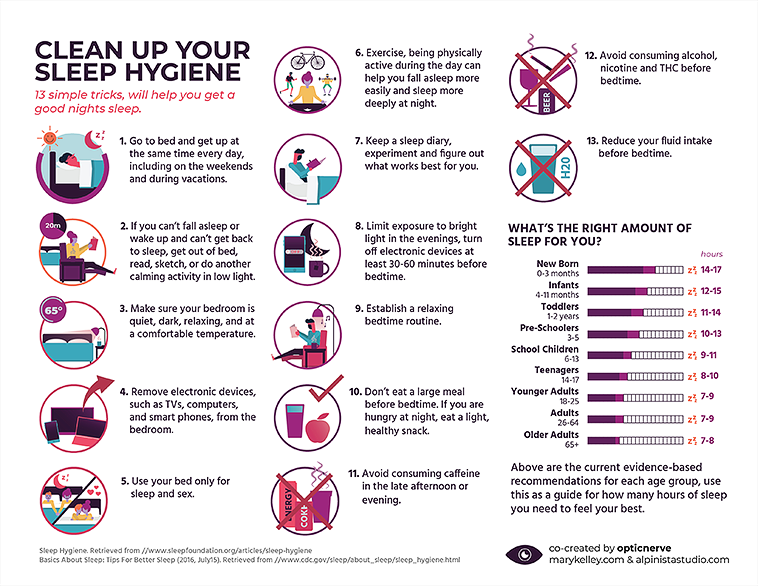
Good sleep hygiene for teens is mostly about consistent routines and small environmental changes. These habits help the body produce sleep-friendly hormones at the right time and help teens fall asleep faster and sleep more deeply.
Daily routine: build a sleep-friendly day
- Set a consistent wake-up time — even on weekends. This anchors the circadian rhythm and makes falling asleep easier at night.
- Get daylight early. 10–20 minutes outside after waking helps reset the internal clock.
- Move daily. Regular exercise improves sleep quality, but avoid intense workouts within 1–2 hours of bedtime.
- Limit caffeine in the afternoon and evening. Caffeine can stay in the system for many hours.
Evening routine: wind down with purpose
Wind-down time signals the brain that sleep is coming. Keep it calm and intentional.
- Start relaxing earlier. Dim lights and lower stimulation an hour or two before planned bedtime. The Sleep Health Foundation also recommends stopping technology earlier and starting to relax sooner to help your sleep be more regular: Sleep Health Foundation — Teenage Sleep.
- Use a consistent pre-sleep routine. Reading, light stretching, or a short mindfulness practice can work well.
- Keep screens out of the bedroom. Blue light and social notifications delay melatonin and keep the brain alert.
- Set a ‘tech curfew’. Try turning off screens at least 60 minutes before lights out; for many teens, earlier is better.
Bedroom environment: make sleep easier
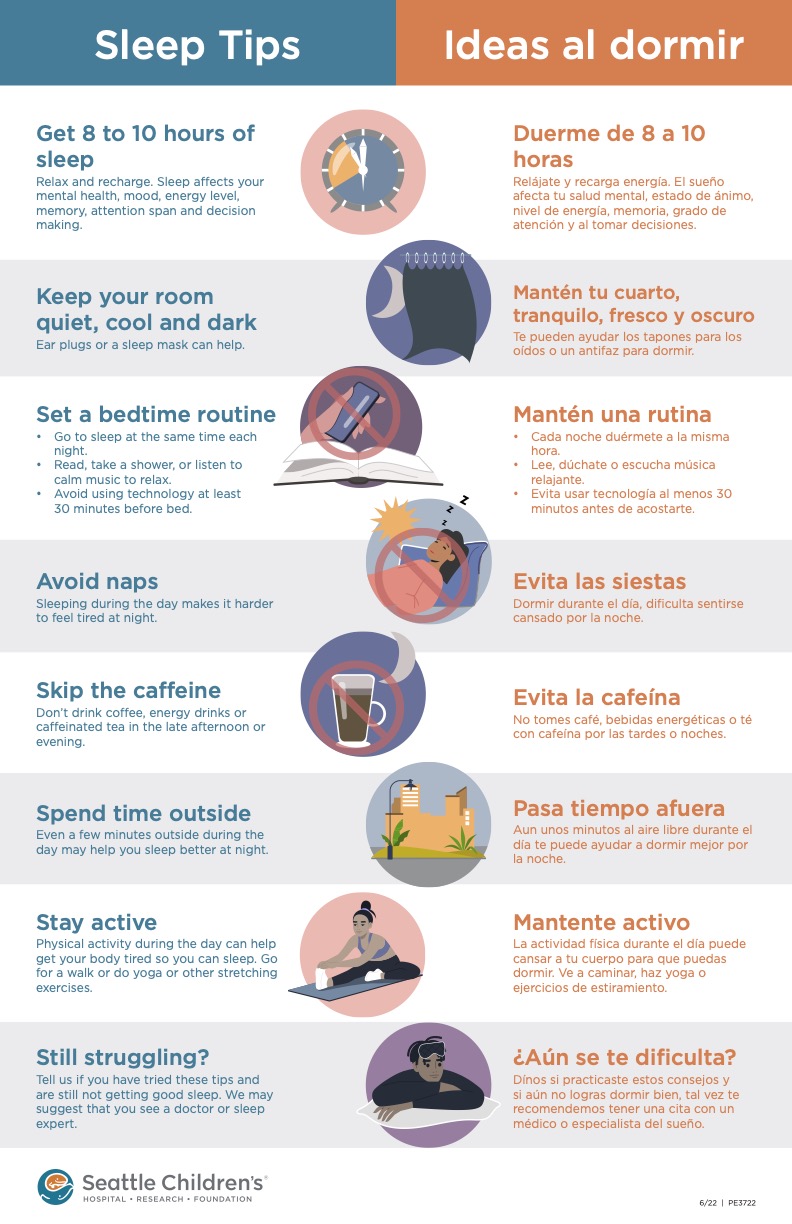
- Cool, dark, and quiet. Aim for a slightly cool room, blackout curtains, and minimal noise. Earplugs or white noise can help.
- Reserve the bed for sleep. Avoid doing homework or scrolling in bed to strengthen the bed-sleep association.
- Comfort matters. A good pillow and mattress support better rest.
Smart use of naps and sleep debt
A short nap (20–30 minutes) can boost alertness without disrupting nighttime sleep. Avoid long late-afternoon naps, which can make falling asleep at night harder. If a teen is consistently short on sleep, prioritize longer nighttime sleep and adjust schedules gradually (15–30 minutes earlier each night).
Tools and strategies that help
Practical tools make routine changes easier.
- Alarm + bedtime reminders: Set gentle reminders to start the wind-down routine.
- Blue-light filters: Use device settings or apps to reduce blue light in the evening.
- Sleep logs: Track bedtime, wake time, and sleep quality for 1–2 weeks to spot patterns.
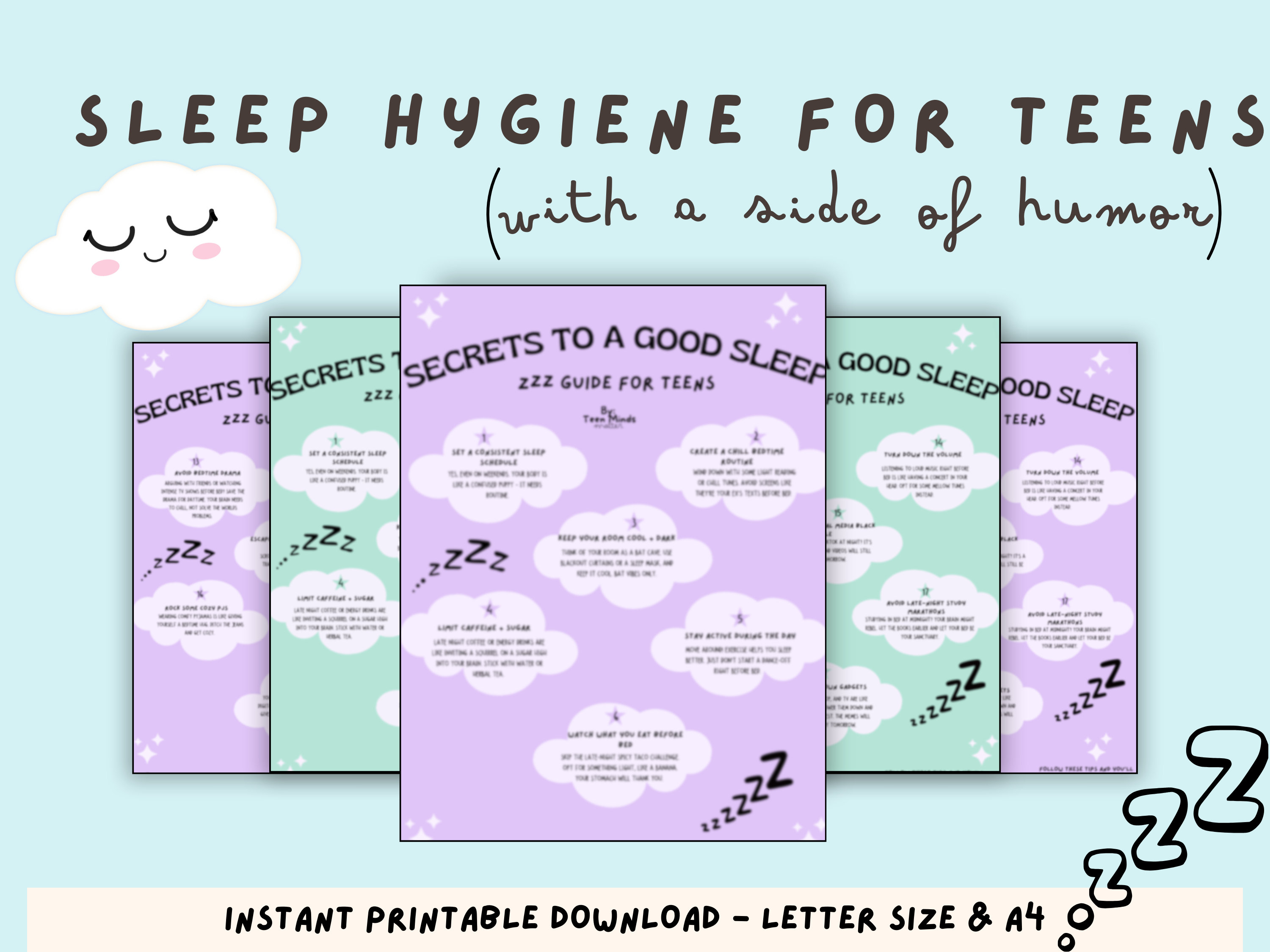
Watch: quick guide to better teen sleep
Want a short, friendly primer? Watch this video for practical tips and science-backed guidance.
Evidence-based resources and where to learn more
Reliable resources help when you want deeper guidance or printable handouts:
- CHOC Sleep Hygiene Handout — clear tips and realistic targets: “Teens typically need about 8-10 hours of sleep per night, but it is common for the average teen to get 7 hours or less per night.”
- Sleep Foundation — Teens & Sleep — how many hours teens need and why sleep supports learning and health.
- Sleep Health Foundation — Teenage Sleep — practical steps like stopping technology earlier and dimming lights to help sleep regularity.
- University of Washington — Sleep Tips for Teens (PDF) — research-based tips including aiming for ~9.5 hours when possible.
- Teen Sleep Hub — a one-stop resource for teen-oriented sleep guidance and tools.

When to seek help
Most sleep problems respond to improved sleep hygiene. However, see a healthcare provider if a teen:
- Is struggling with daytime sleepiness despite good habits
- Has loud snoring, gasping, or pauses in breathing (possible sleep apnea)
- Shows major mood changes, early-morning awakening, or sudden changes in sleep patterns
- Routinely falls asleep during class or driving
These signs may need medical assessment, behavioral therapy, or adjustments to medication.
Tips for parents and schools
Parents and educators can support teen sleep by:
- Setting consistent schedules: Encourage the same wake time each day and plan homework and activities around realistic bedtimes.
- Modeling healthy habits: Family routines around screen use and bedtime help teens adopt the same practices.
- Advocating for later school start times: Many districts and experts agree later start times better match adolescent biology.
Summary: small steps, big returns
Improving sleep hygiene for teens is rarely about drastic overnight changes. Instead, choose a few sustainable adjustments — consistent wake time, a calming pre-sleep routine, and a tech curfew — and keep at them. Over a few weeks, these habits add up to sharper focus, better mood, and stronger health.
Start tonight: pick one change (like a 60-minute tech curfew) and try it for a week. Track results and add another change the following week.
For more guides and practical wellness tips, explore other posts at zenpulsehub.com.
Frequently Asked Questions
How many hours of sleep does a teen really need?
Teens aged 13–18 typically need 8–10 hours per night; many experts suggest aiming toward the upper end when possible. For printable handouts and specifics, see the CHOC sleep hygiene handout linked above.
Will a short nap ruin night sleep?
Short naps (20–30 minutes) can boost alertness without affecting nighttime sleep. Avoid long or late-afternoon naps, which may make it harder to fall asleep at night.
Can screens before bed be OK if brightness is low?
Lower brightness and blue-light filters help, but interactive content and social notifications still stimulate the brain. A full tech curfew 60+ minutes before bed is best for consistent results.
What if good sleep hygiene doesn’t help?
If sleep problems persist despite consistent sleep hygiene practices, talk with a healthcare provider. Persistent daytime sleepiness, loud snoring, or sudden changes in sleep or mood may need medical evaluation.
Ready to improve sleep tonight? Try one small change and revisit your progress in a week. For more practical guides, visit zenpulsehub.com.