


Sleep Paralysis from Stress: Causes & Relief
Sleep paralysis from stress can be terrifying: you wake up trapped in your body, unable to move or speak, sometimes sensing a presence in the room. Many people experience these episodes during periods of high stress or poor sleep. This guide explains why stress can trigger sleep paralysis, how to reduce episodes, and practical steps to get better sleep and calm your nervous system.

What is sleep paralysis?
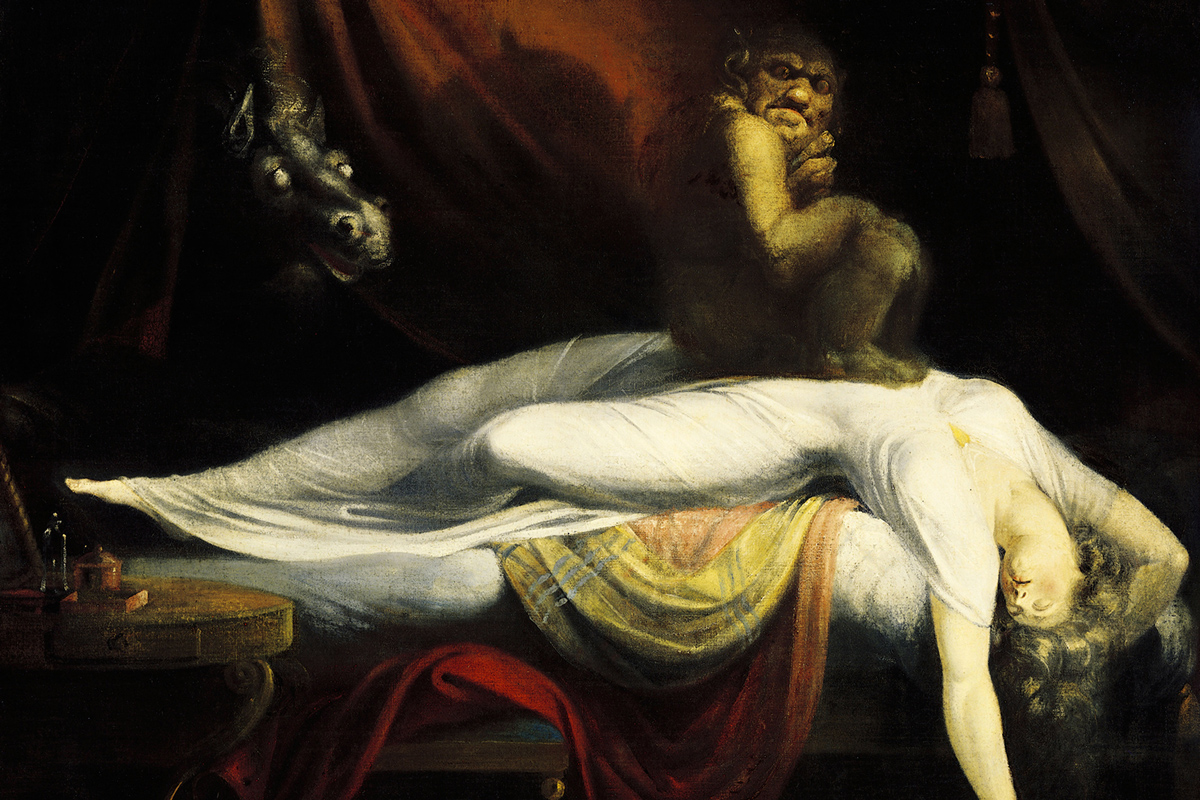
Sleep paralysis is a temporary inability to move or speak when falling asleep or waking up. Episodes usually last seconds to a few minutes and may include vivid hallucinations, a heavy pressure on the chest, or intense fear. While the experience feels extreme, it is not dangerous physically.
Why sleep paralysis from stress happens
Stress affects your sleep architecture and arousal systems. During normal REM sleep, the body experiences muscle atonia — a natural paralysis that prevents you from acting out dreams. Stress, anxiety, and sleep disruption can cause REM and wake states to overlap, which results in sleep paralysis from stress. Research shows that anxiety disorders, PTSD, and chronic stress increase the risk of these episodes. For more on risk factors, see this review on PubMed Central: Jun 25, 2022 – stress and sleep disorder risk.
How stress interferes with REM sleep
When you’re stressed, your body produces more cortisol and adrenaline. These hormones can:
- Disrupt the timing of sleep cycles.
- Make waking less smooth — increasing the chance REM atonia overlaps with consciousness.
- Increase nighttime awakenings and light sleep, which raises the likelihood of an episode.
Common triggers and risk factors
Episodes can happen to anyone, but some factors make them more likely. Key triggers include:
- High stress or anxiety — including panic disorders and prolonged worry.
- Poor sleep habits — short sleep, irregular schedules, or shift work.
- Sleep disorders — insomnia, narcolepsy, or sleep apnea.
- Trauma and PTSD — traumatic memories and hyperarousal affect sleep stability.
- Substance use — alcohol or stimulants that fragment sleep.
Health services note you’re more likely to have an episode during periods of high stress or when you’re not sleeping well: see Cleveland Clinic’s overview for practical context: Sleep Paralysis: What It Is, Causes, Symptoms & Treatment.
Night routines and shift work
Irregular sleep — like late nights, naps at odd times, or shift work — increases overlap between REM and waking states. The PubMed Central review above also highlights shift work and disrupted sleep as risk contributors.
Signs and symptoms
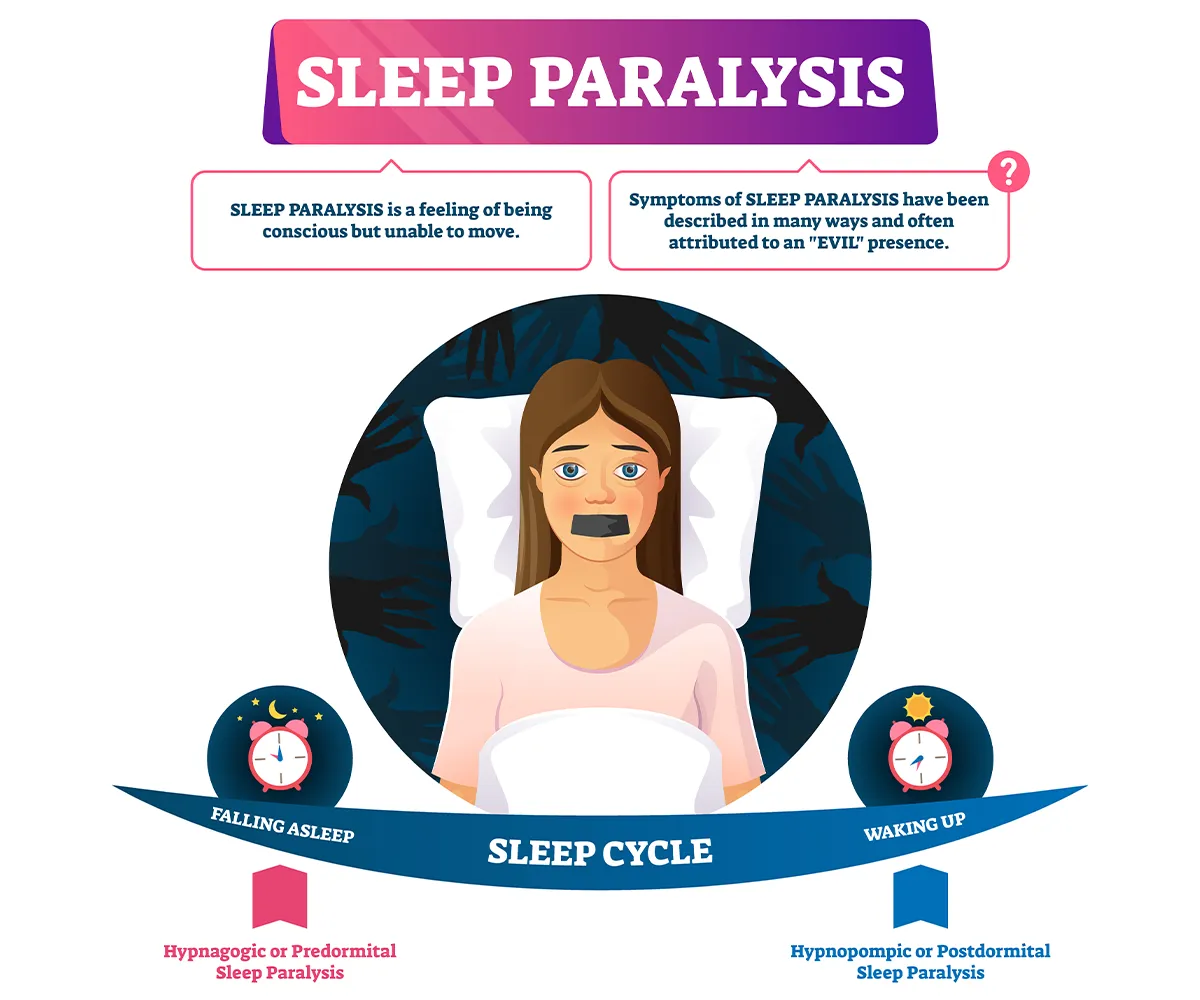
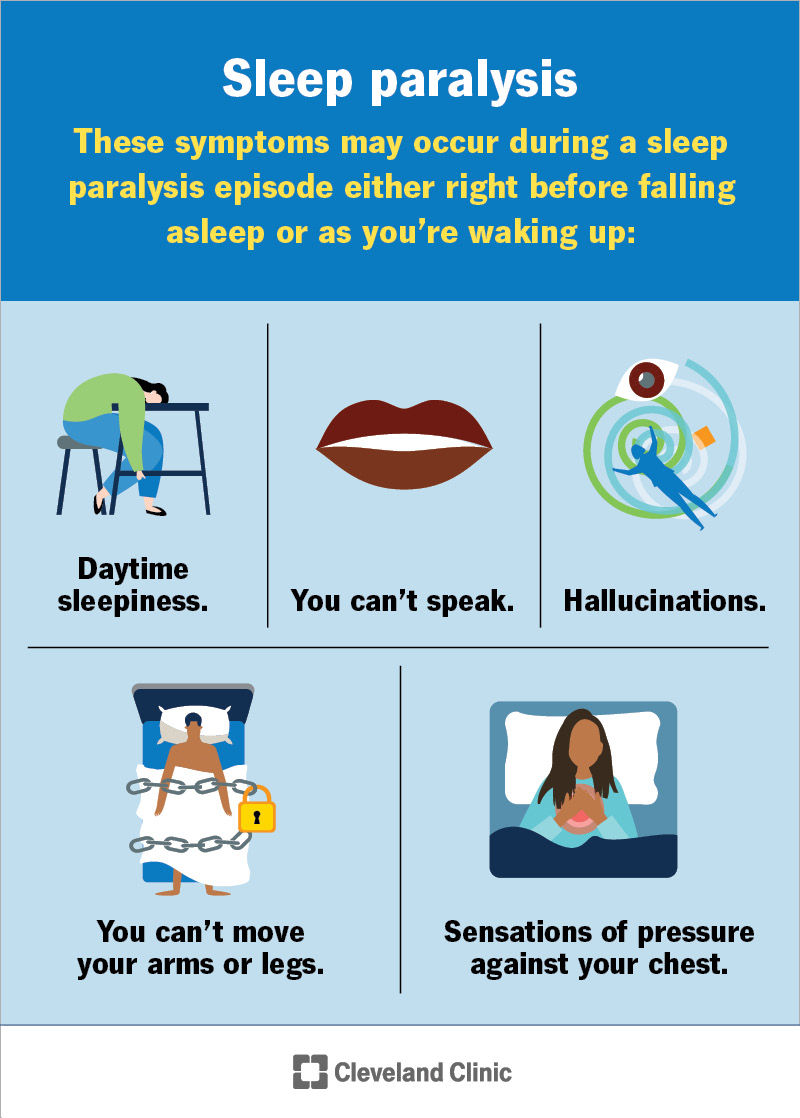
Sleep paralysis episodes often include a mix of motor and sensory features. Look out for:
- Inability to move or speak while falling asleep or waking.
- Sensation of pressure on the chest or difficulty breathing.
- Vivid, dream-like hallucinations (visual, auditory, or tactile).
- Intense fear or a sense of presence in the room.
If hallucinations are frequent or distressing, mental health conditions like anxiety or PTSD can make them worse. GoodHealthPsych explains how anxiety may increase hallucinations and amplify fear during episodes: Can anxiety cause sleep paralysis?.
Practical steps to reduce episodes
Reducing stress and stabilizing sleep is the most effective way to lower the chance of sleep paralysis. Try these strategies:
- Regular sleep schedule: Set consistent bed and wake times, even on weekends.
- Improve sleep hygiene: Keep the bedroom cool, dark, and quiet; avoid screens 1 hour before bed.
- Manage stress daily: Short mindfulness practices, breathing exercises, or progressive muscle relaxation can calm the nervous system.
- Avoid alcohol and stimulants: These fragment sleep and can increase episodes.
- Limit naps: If you nap, keep it short (20–30 minutes) and early in the day.
- Seek therapy: Cognitive-behavioral therapy (CBT) or trauma-focused therapy helps when anxiety or PTSD is present.
HelpGuide provides a friendly step-by-step overview of these lifestyle strategies and supports recovery: Sleep paralysis causes, symptoms, and treatment.
Nightly routine checklist
Use this short checklist to design a calmer bedtime routine:
- Wind down 60 minutes before bed (read, gentle stretches, warm shower).
- Practice 5–10 minutes of breathing or a short guided meditation.
- Keep devices on Do Not Disturb and place screens away from the bed.
- Use a consistent sleep and wake time; if work shifts change, allow transition days.
Treatment options when lifestyle changes aren’t enough
If episodes remain frequent or severely distressing, talk to a clinician. A GP or sleep specialist can:
- Assess for underlying conditions like narcolepsy or sleep apnea.
- Recommend psychotherapy for anxiety or PTSD.
- Consider medication in some cases to regulate REM sleep.
The NHS notes that if lifestyle changes and basic treatments don’t help, you might be referred to a doctor who specializes in sleep conditions: NHS: Sleep paralysis.

What to do during an episode
Episodes feel frightening, but you can use simple steps to ride them out and reduce fear:
- Focus on relaxing your breathing — slow, steady inhales and exhales.
- Try to move small muscles first (fingers, toes) — this can break the atonia.
- Remind yourself it’s temporary and not physically harmful.
- Use a pre-planned calming phrase (e.g., “This will pass”) to lower panic.
Knowing what to expect reduces fear during the next episode.
When stress and trauma are involved
If episodes began or increased after trauma, address both sleep and the trauma. Evidence links PTSD and chronic stress with higher rates of sleep paralysis. The PubMed Central review above highlights that people with anxiety disorders, PTSD, or chronic stress are at higher risk. Seeking trauma-focused therapy can reduce both nightmares and sleep paralysis episodes.
Therapy options
Consider these evidence-based therapies:
- CBT for insomnia (CBT-I) — targets sleep habits and beliefs that keep poor sleep going.
- Trauma-focused therapies — eye movement desensitization and reprocessing (EMDR) or prolonged exposure for PTSD.
- Anxiety management — cognitive techniques to reduce worry and rumination at night.
How common is sleep paralysis?
Sleep paralysis is fairly common. Many people report at least one episode in their lifetime, and episodes are more frequent during stressful life periods, shift work, or when sleep is irregular. If episodes are frequent or have a major impact on daytime function, consult a clinician.
When to see a doctor
See your doctor if you:
- Have repeated episodes that interfere with sleep or daily life.
- Experience severe daytime sleepiness or other sleep disorder symptoms.
- Have trauma-related symptoms or worsening anxiety.
A clinician can screen for underlying sleep disorders and recommend targeted treatment. For trusted clinical information about diagnosing and managing sleep paralysis, check Cleveland Clinic’s resources above and the NHS guidance linked earlier.
Real-life tips to reduce stress tonight
Try these low-effort strategies tonight to lower stress before bed:
- Write a short brain dump — 5–10 minutes listing tomorrow tasks to reduce rumination.
- Do 2–3 minutes of box breathing (inhale 4, hold 4, exhale 4, hold 4).
- Turn off bright screens 60 minutes before bed and dim lights.
- Set a gentle wind-down alarm 30 minutes before bed as a reminder to relax.
Embedded video: Understanding sleep paralysis
Watch this short explainer for a visual overview.
Summary: key takeaways
- Sleep paralysis from stress often arises when REM sleep and wakefulness overlap due to stress, poor sleep, or trauma.
- Improve sleep habits, reduce nightly stress, and seek therapy when anxiety or PTSD is involved.
- Episodes are frightening but rarely physically harmful — breathing techniques and small muscle movements help during an episode.
Final note: If stress or trauma plays a major role, professional help can make a big difference. For research-backed guidance, read the PubMed Central review: Stress, sleep, and risk factors (PMC), and explore the NHS and Cleveland Clinic pages listed above for practical next steps: NHS: Sleep Paralysis and Cleveland Clinic.
You’re not alone. With small changes and the right support, many people reduce or stop episodes. Explore more guides at zenpulsehub.com for sleep tools and stress relief tips.
Frequently Asked Questions
What exactly causes sleep paralysis?
Sleep paralysis happens when the REM sleep paralysis (atonia) persists briefly as you regain consciousness. Stress, irregular sleep, and certain mental health conditions increase this overlap and raise the chance of an episode.
Can anxiety or PTSD cause sleep paralysis?
Yes. Anxiety and PTSD increase nighttime arousal and fragmented sleep, which raises the likelihood of episodes. Studies and clinical reviews note higher rates of sleep paralysis in people with these conditions (PMC review).
How can I stop an episode while it’s happening?
Stay calm, focus on slow breathing, and try to move a small body part like a finger or toe. Remind yourself the episode will pass and that you’re safe.
When should I see a doctor?
See a clinician if episodes are frequent, cause severe fear or daytime sleepiness, or if you suspect an underlying sleep disorder. Your GP can refer you to a sleep specialist if needed (see NHS guidance).






