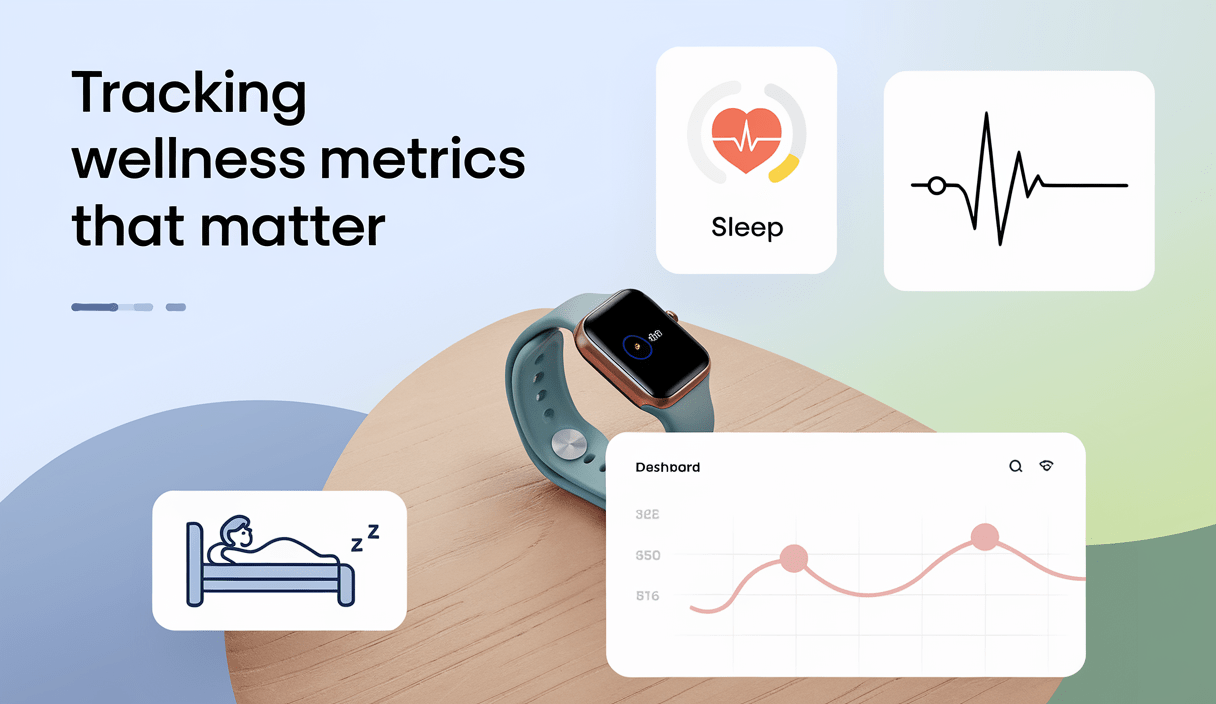

Tracking Wellness Metrics That Matter
Tracking Wellness Metrics That Matter helps you cut through noise and focus on measures that actually improve health and wellbeing. Whether you want better sleep, less stress, or a clearer ROI on workplace programs, this guide breaks down what to track, why it matters, and how to measure progress without getting overwhelmed.
Tracking Wellness Metrics That Matter: Where to Start
Start with a simple question: What outcome do you want? From there, pick 3–5 metrics that reflect progress. Too many numbers create decision paralysis. Keep it short, consistent, and actionable.
Why metrics matter (and which ones really do)
Metrics turn feelings into data. They show trends and reveal what’s working. But not every metric is meaningful. Focus on measures that link directly to your goals — more energy, fewer sick days, lower stress, improved fitness, or demonstrable ROI on wellbeing programs.
Core categories to track
- Physical: steps, active minutes, resting heart rate, sleep duration and quality.
- Mental: stress scores, mood ratings, mindfulness minutes.
- Behavioral: program participation, food logging consistency, therapy or coaching attendance.
- Organizational: absenteeism, retention, productivity, program ROI.
Key physical metrics and how to interpret them
Physical metrics are easy to measure and often give quick wins. Use them as leading indicators — they tell you whether lifestyle changes are moving you toward your goals.
Steps and active minutes
Steps are simple and motivating. Aim for gradual increases. Active minutes capture intentional exercise beyond daily movement. Both show whether you’re creating consistent activity habits.
Heart rate and resting heart rate (RHR)
RHR is a strong long-term indicator of cardiovascular health. A declining RHR over weeks or months often means improved fitness or better recovery.
Sleep (duration + quality)
Good sleep fuels everything else. Track both hours and how often you wake up. If sleep quality improves, expect better energy, mood, and cognitive performance.
Mental and behavioral metrics that matter
Mental wellbeing can be tracked with simple daily check-ins. These are quick and surprisingly powerful for seeing trends.
Daily mood check-ins
Rate your mood each day on a 1–5 scale. Over time, you can see patterns tied to sleep, workload, or diet.
Perceived stress and recovery
Short surveys or pulse checks (e.g., a 30-second breathing test) show stress and recovery. Combine with heart-rate variability (HRV) if you have that capability.
Program participation and behavior change
For organizations, tracking participation in wellness programs shows engagement. For individuals, tracking consistency (workouts per week, days of mindful practice) is a reliable predictor of long-term success.
Workplace wellness: metrics HR leaders should watch
When wellness moves into the workplace, tie metrics to business outcomes. Metrics that matter in organizations include absenteeism, retention, and program utilization.
For ideas on talent and performance metrics that shift culture and impact outcomes, see this McKinsey guide on talent and metrics. It highlights actions that transform a team’s performance and culture — useful when connecting wellness to business goals.
Measure participation and outcomes
Track who participates, how often, and what outcomes they report. Tools that monitor program participation can help you calculate engagement and estimate ROI.
For a practical look at calculating ROI and understanding what metrics truly matter for wellness programs, consider this guide on ROI for wellness programs, which explains ROI and VOI approaches and offers measurement tips.
How to choose the right metrics
Follow this simple checklist when choosing metrics:
- Link the metric to a clear outcome.
- Make it measurable and repeatable.
- Keep the number of tracked metrics small.
- Use both leading (behavior) and lagging (outcome) indicators.
Examples of paired metrics
- Behavior: workouts per week — Outcome: resting heart rate
- Behavior: sleep consistency — Outcome: daytime energy and mood
- Behavior: program participation — Outcome: absenteeism rates and productivity

Tools and tech: pick what fits your goals
Wearables, apps, and platforms can help, but choose tech that answers your specific questions. A fitness tracker is great for steps and heart rate; a sleep-tracking app helps with sleep efficiency; HR platforms capture workplace participation.
If you want a guide on which fitness-tracker metrics to prioritize, this episode from Houston Methodist walks through the most useful tracker metrics and when they matter: Which fitness tracker metrics matter most?
Common tools
- Wearables: Apple Watch, Fitbit, Garmin — for steps, HR, sleep.
- Apps: sleep trackers, mood journals, nutrition logs.
- Workplace platforms: HR dashboards and wellbeing portals to track participation and outcomes.
Designing a simple wellness dashboard
Dashboards turn data into decisions. Keep yours clean: 4–6 tiles that show your most important metrics at a glance.
Suggested tiles for an individual:
- Average sleep (7-day)
- Weekly active minutes
- Resting heart rate trend
- Stress rating (weekly average)
Suggested tiles for an organization:
- Program participation rate
- Absenteeism trend
- Employee wellbeing score (survey)
- Estimated ROI/VOI for wellness initiatives (learn more from the HR metrics primer and the employee wellbeing metrics guide)
Embed: Watch a quick explainer
Short videos can clarify measurement choices. Watch this quick walkthrough for practical tips:
Measuring impact and ROI
Showing value often means connecting wellbeing to business outcomes. Track both hard numbers (absenteeism, turnover) and softer gains (engagement, job satisfaction). The ROI guide is useful for calculating financial and non-financial returns and deciding which metrics truly matter.
The McKinsey piece linked earlier also helps organizations think about talent metrics that change behavior and performance over time.
Privacy and ethics: protect the person behind the metrics
Always get consent. Aggregate data where possible. Make clear how data will be used and who can access it. Respecting privacy builds trust and increases participation.
Common pitfalls and how to avoid them
- Too many metrics: Focus on a small, meaningful set.
- Vanity metrics: Steps can feel good but don’t always map to better health — pair with quality indicators.
- Ignoring context: Life events, workload, and seasonality affect metrics — interpret trends, not single days.
Putting it into practice: a 30-day plan
- Week 1: Choose 3 metrics and baseline them.
- Week 2: Pick one small habit to change (e.g., 20 min walk, 10-min bedtime routine).
- Week 3: Track progress, note barriers, adjust habit if needed.
- Week 4: Review trends and set next month’s target.
Final checklist: are you tracking the right things?
Before you commit, ask:
- Does this metric link to a clear outcome?
- Can I measure it consistently?
- Will tracking this prompt action?
Tracking Wellness Metrics That Matter is about turning goals into measurable steps. Keep it focused, protect privacy, and review regularly. Use simple tools and reliable dashboards to stay on track.
For more on measuring employee wellbeing and practical metrics to track, see the Workhuman guide to employee wellbeing metrics and the HR metrics overview from CultureMonkey.
Next step: pick three metrics this week and commit to one habit change. Small, consistent steps create big results.
What are the top three wellness metrics to track?
Start with sleep quality, weekly active minutes (or steps), and a daily mood or stress rating. These cover physical, behavioral, and mental wellbeing.
How often should I review my wellness data?
Look at trends weekly and review goals monthly. Daily checks are fine for mood or sleep, but avoid over-reacting to single-day changes.
Can workplace wellness programs show ROI?
Yes. Track participation, absenteeism, retention, and wellbeing survey scores. Guides like the ROI primer on wellness programs explain methods to estimate ROI and VOI.
Which tech is best for tracking wellbeing?
Use tools that answer your specific questions. Wearables are great for steps, heart rate, and sleep; apps are useful for mood and nutrition; HR platforms capture program metrics. Match tool features to your goals.
Ready for more? Explore practical guides and simple dashboards at zenpulsehub.com to keep your wellbeing goals on track.