
Tips for Falling Asleep Faster — Practical Guide
Tips for Falling Asleep Faster are simple, science-backed habits you can add to your routine tonight. If you struggle to drift off, this guide breaks down easy, friendly steps — from environment tweaks to breathing techniques — so you can fall asleep faster and wake up refreshed.
Why falling asleep faster matters
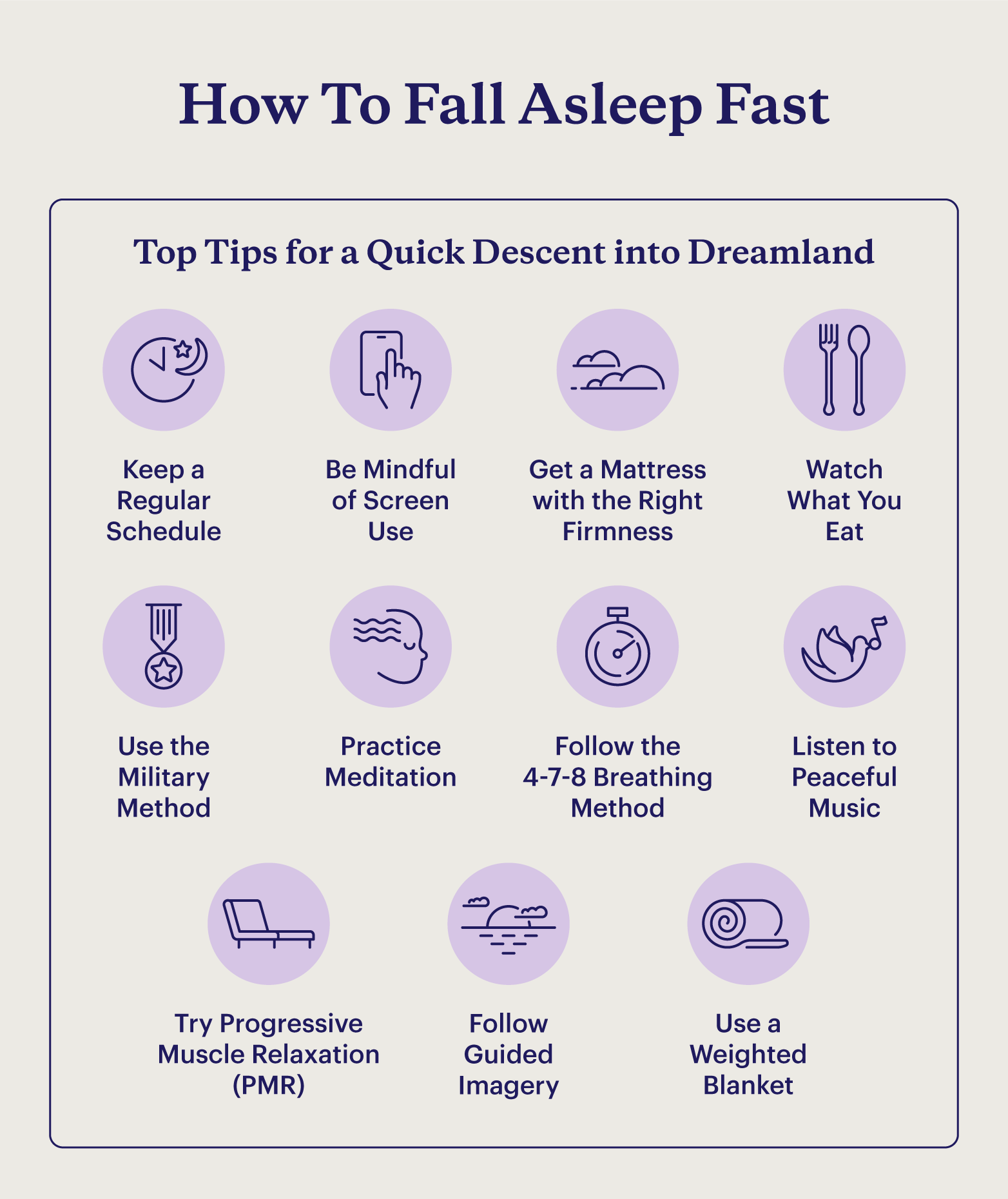
Sleep affects mood, focus, immunity, and long-term health. **Falling asleep faster** reduces late-night stress and improves sleep quality. Small changes can have a big impact — and you don’t need expensive gadgets to start.
Tips for Falling Asleep Faster: Quick Wins
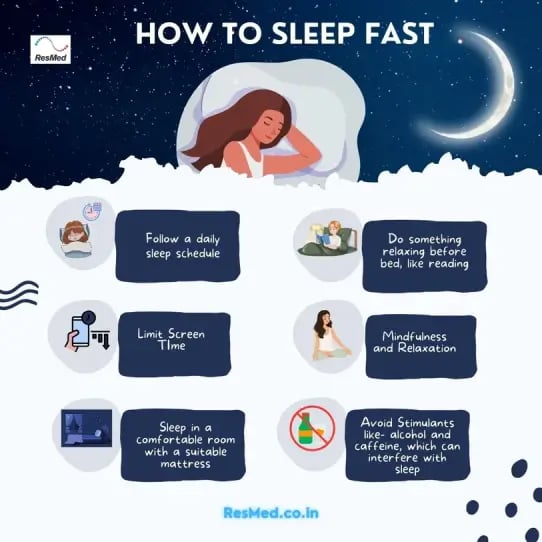
Below are practical, easy-to-apply tips you can try tonight. Use them singly or combine several for better results.
1. Create a consistent sleep routine
Go to bed and wake up at the same time every day, even on weekends. A steady schedule trains your internal clock and makes falling asleep easier.
2. Optimize your bedroom environment
- Keep the room cool: Around 60–68°F (15–20°C) is ideal for many people.
- Block light: Use blackout curtains or an eye mask.
- Reduce noise: Earplugs or a white-noise machine can help.
- Comfortable bedding: A good mattress and pillows that suit your sleep position make a difference.
3. Limit screens and bright light before bed
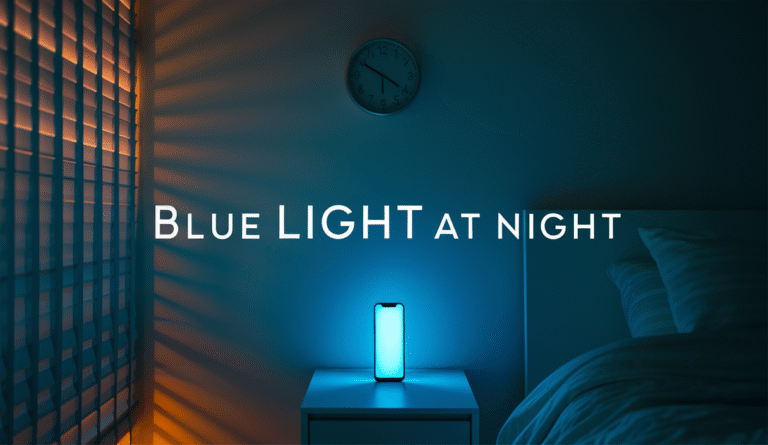
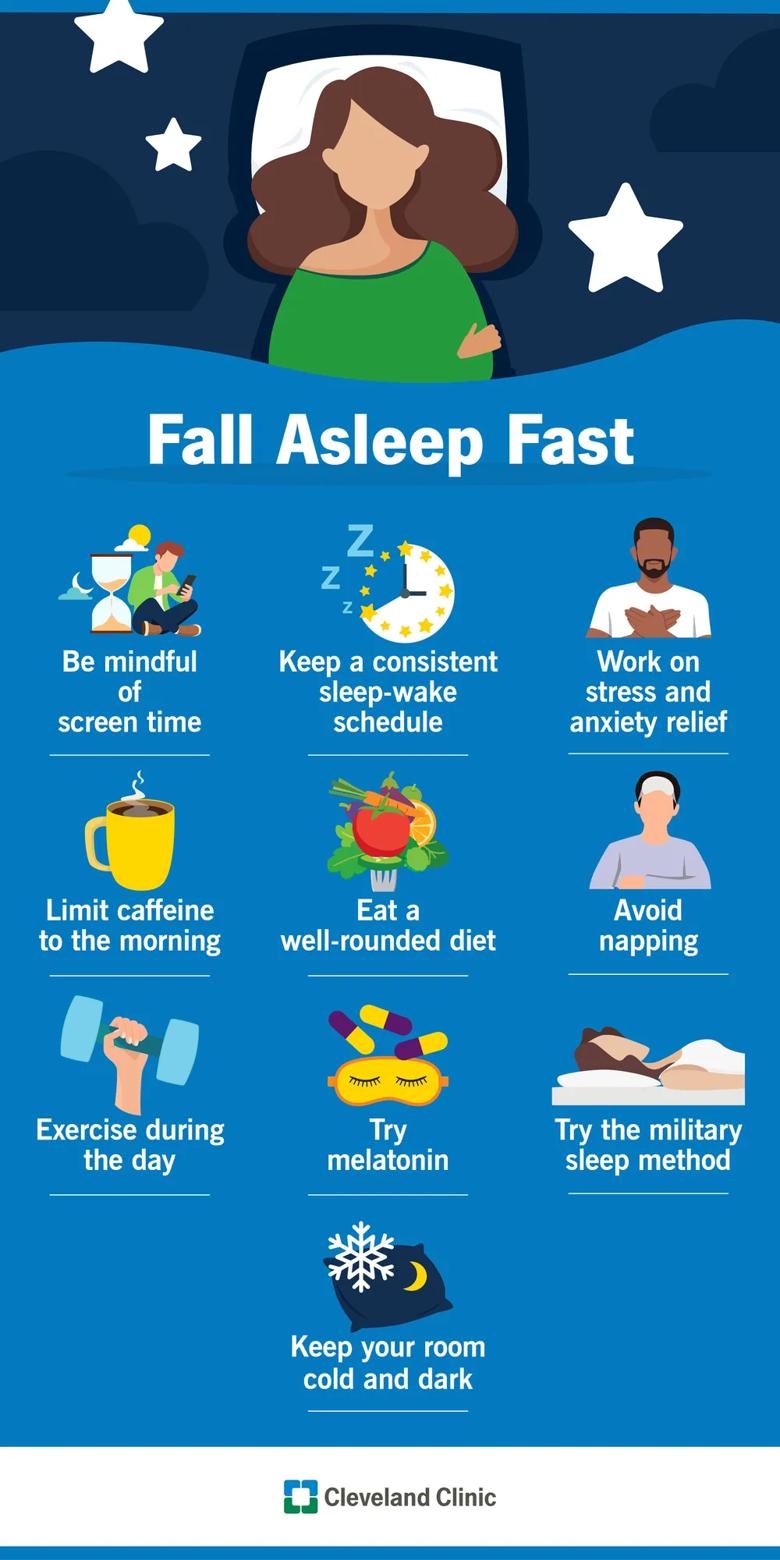
Blue light from phones and laptops reduces melatonin production. Aim to switch off screens 60–90 minutes before bed. If you must use devices, enable blue-light filters or wear blue-light-blocking glasses.
4. Watch what and when you eat and drink
Avoid large meals, caffeine, and nicotine in the hours before bed. Alcohol can make you drowsy initially but disrupts sleep later. A light, sleep-friendly snack (like banana with nut butter) can be okay if you’re hungry.
5. Use relaxation and breathing techniques
Simple breathing patterns and relaxation methods help your nervous system switch into sleep mode. Try the 4-7-8 breathing exercise or progressive muscle relaxation.
Evidence-based techniques to try tonight
Here are methods supported by sleep experts and health resources. Mix and match to find what works for you.
4-7-8 Breathing
Inhale for 4 seconds, hold for 7 seconds, exhale for 8 seconds. Repeat 4–6 times. This slows your heart rate and calms the mind.
Progressive muscle relaxation
Tense each muscle group for 5 seconds, then release. Move from toes to head. This reduces physical tension that keeps you awake.
Mindful visualization
Imagine a calm scene with sensory details — sounds, textures, smells. Focus on the details rather than your to-do list.
Limit clock-watching
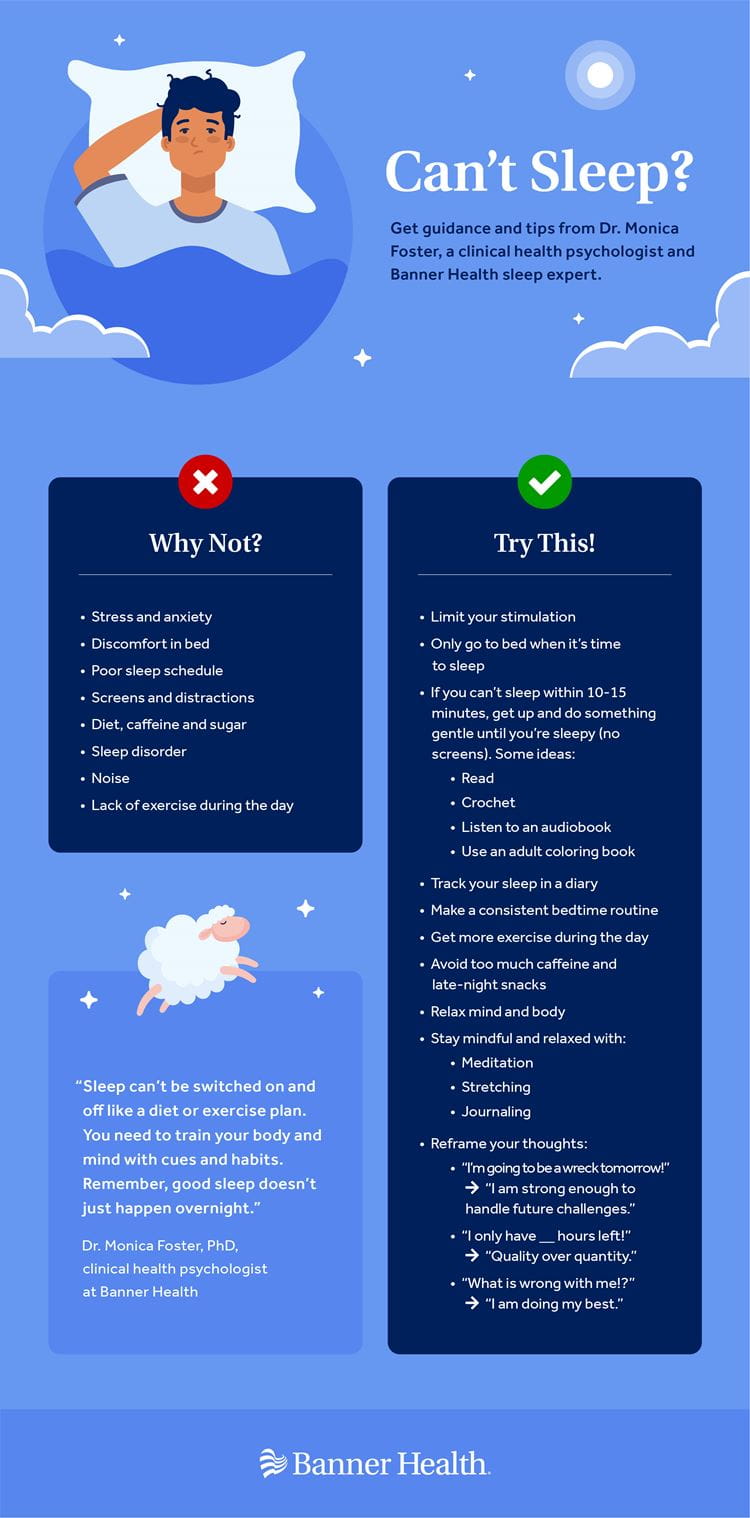
Constantly checking the time raises stress. Turn your clock away or hide devices that show the time.
Daily habits that support better sleep
Good daytime habits make it easier to fall asleep faster at night.
- Get natural light: Morning sunlight helps set your circadian rhythm.
- Exercise regularly: Aim for moderate exercise most days, but avoid vigorous workouts right before bed.
- Limit naps: If you nap, keep it under 20–30 minutes early in the day.
When to see a professional
If you try these tips for several weeks and still struggle to fall asleep or stay asleep, consider talking to a healthcare professional. Persistent insomnia can be a sign of an underlying condition that benefits from tailored treatment.

Practical 10-minute bedtime routine
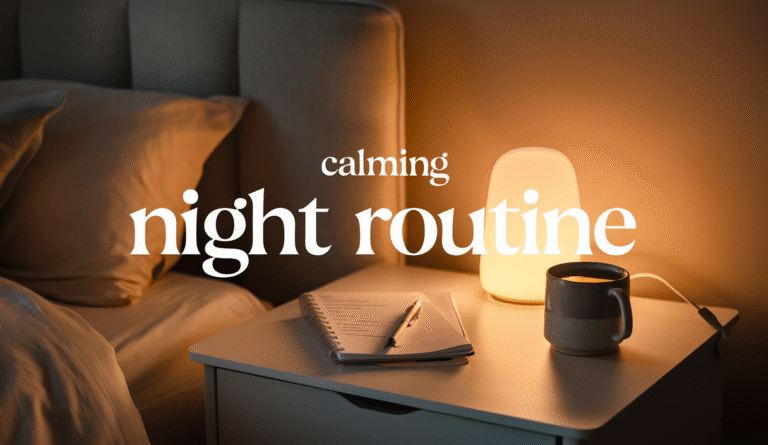
A predictable, short routine signals your brain that sleep is next. Try this 10-minute sequence:
- Dim lights and set your room temperature.
- Brush teeth and wash face.
- Do 2 rounds of 4-7-8 breathing.
- Stretch briefly or do progressive relaxation for 3 minutes.
- Visualize a calm scene for 2 minutes, then close your eyes and breathe slowly.
Quick hacks that actually help
- Try a warm shower before bed — the drop in body temperature afterward can help sleep onset.
- Wear breathable sleepwear and choose moisture-wicking sheets if you overheat.
- Use a small fan for white noise and cooling.
Helpful resources and further reading
For more ideas and in-depth guidance, check these trusted sources:
- Healthline: Ways to Fall Asleep — Practical tips like cooling your room and the 4-7-8 breathing method.
- NHS: How to fall asleep faster — Simple sleep hygiene and relaxation suggestions.
- Healthline: Fall asleep fast — Breathing and visualization methods to help you sleep.
- Sleep Foundation: How to fall asleep fast — Detailed sleep hygiene and lifestyle tips.
- HelpGuide: How to fall asleep fast — Step-by-step approaches including the 4-7-8 technique.
Watch and follow along: guided sleep video
Try a short guided exercise if your mind races at night. The video below is a calming walk-through to help you relax before sleep.
Common mistakes people make
Knowing what not to do helps more than extra tips sometimes.
- Fixating on how little sleep you’ll get — this creates anxiety and makes it harder to fall asleep.
- Using heavy stimulants late in the day, like multiple cups of coffee or sugary energy drinks.
- Relying on screens to wind down — the content can be stimulating even if you feel tired.
Summary checklist to fall asleep faster
Use this quick checklist tonight:
- Set a regular bedtime and wake time.
- Cool, dark, quiet bedroom.
- Switch off screens 60–90 minutes before bed.
- Try 4-7-8 breathing or progressive relaxation.
- Limit caffeine and heavy meals near bedtime.
Tips for Falling Asleep Faster are about consistency and small changes. Try one new habit this week and build from there — small wins add up quickly.
Frequently Asked Questions
How quickly can these tips help me fall asleep?
Some techniques, like breathing exercises and room cooling, can help within minutes. Others — like a consistent schedule — may take a few weeks to fully adjust your internal clock.
Is the 4-7-8 breathing method proven?
The 4-7-8 method is widely recommended by sleep experts and mental wellbeing resources for calming the nervous system. It’s simple and safe to try nightly.
Should I use sleep aids or supplements?
Over-the-counter sleep aids or supplements like melatonin can help short-term but aren’t a long-term fix. Talk to a healthcare provider before starting any supplement, especially if you take other medications.
When should I see a doctor about insomnia?
If poor sleep persists for several weeks, or if you experience daytime impairment (excessive sleepiness, trouble concentrating), consult a healthcare professional for evaluation and treatment.
Ready to try one simple change tonight? Start with a 10-minute routine and note the difference in a week. For more guides and practical wellness tips, explore the rest of our content at zenpulsehub.com. Sweet dreams!