

Outdoor Workouts for Stress Relief
Outdoor workouts for stress relief are one of the simplest, most effective ways to calm the mind and boost your mood. Spending time moving outside combines the physiological benefits of exercise with fresh air, daylight, and natural scenery — a triple win for stress reduction.
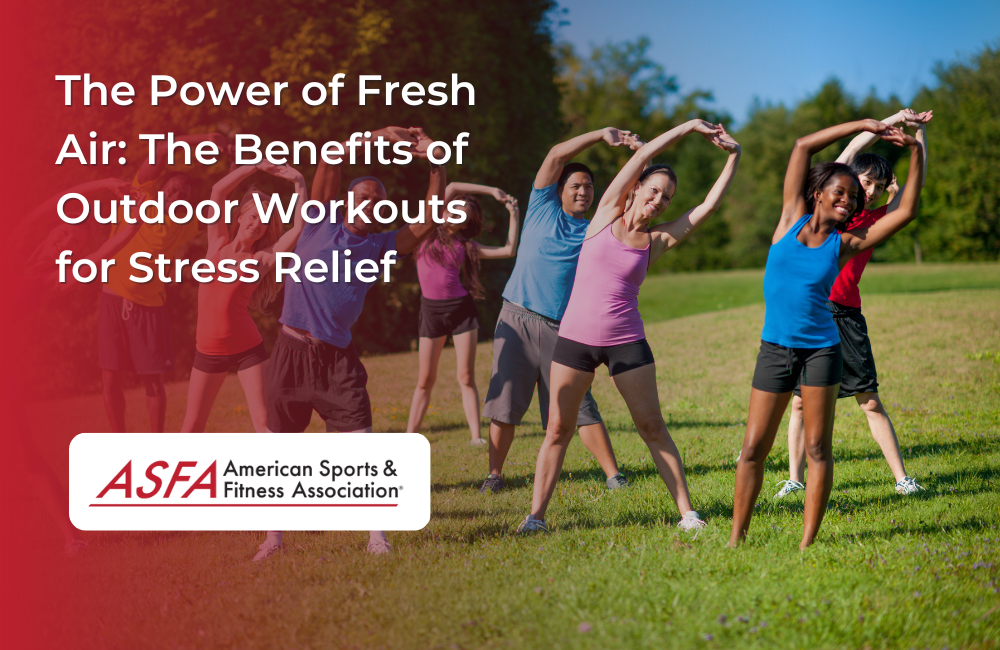
Why Outdoor Workouts for Stress Relief Work
When you combine physical activity with the outdoors, your body and brain respond differently than they do indoors. Exercise lowers stress hormones like cortisol while releasing endorphins. Being in nature adds extra benefits: reduced anxiety, improved mood, and clearer thinking. A recent review confirms that exercise reduces perceived stress and that this effect is reliable across studies — a helpful reference is available at the National Institutes of Health.
How nature adds to the effect
Simple exposure to green spaces or even urban parks can reduce feelings of anger and anxiety. If you’re curious why, UC Davis outlines three ways that getting outside helps health: reduced rumination, improved mood, and exposure to sunlight that supports sleep and circadian rhythm. Read more at their health blog: UC Davis: 3 ways nature helps.
Top Stress-Reducing Benefits of Outdoor Exercise
Here are the most reliable ways outdoor training helps your stress levels:
- Lower stress hormones: Exercise lowers cortisol and adrenaline.
- Boosted mood: Endorphins and natural light lift your mood.
- Better sleep: Time outdoors improves sleep quality, which reduces stress.
- Fresh perspective: Nature distracts from negative thoughts and rumination.
- Social connection: Outdoor classes and group runs add supportive social contact.
Evidence & Expert Notes
Multiple sources back the benefits of moving outside. Besides the NIH review cited above, health organizations and fitness blogs highlight similar findings. For example, Piedmont Health lists varied benefits of exercising outdoors, including stress relief and the positive effect of sunshine on mood — see 7 health benefits of outdoor exercise. The American Sport & Fitness Association has practical tips for outdoor workouts and relaxation strategies: Outdoor workouts for stress relief and relaxation and The benefits of outdoor workouts.
Best Types of Outdoor Workouts to Reduce Stress
Not all workouts are equal when your main goal is stress relief. Choose activities that let you breathe, move freely, and feel present:
- Walking or brisk walking: Low-impact and accessible. Even 20–30 minutes in a park helps.
- Jogging or trail running: Great for clearing the mind and releasing built-up tension.
- Outdoor yoga or stretching: Combines movement with mindful breathing.
- Bike rides: Gentle cardio that keeps you engaged with the environment.
- Outdoor HIIT or circuit training: Short bursts of effort can quickly reset mood and energy.
- Group classes or team sports: Social contact is a powerful stress buffer.
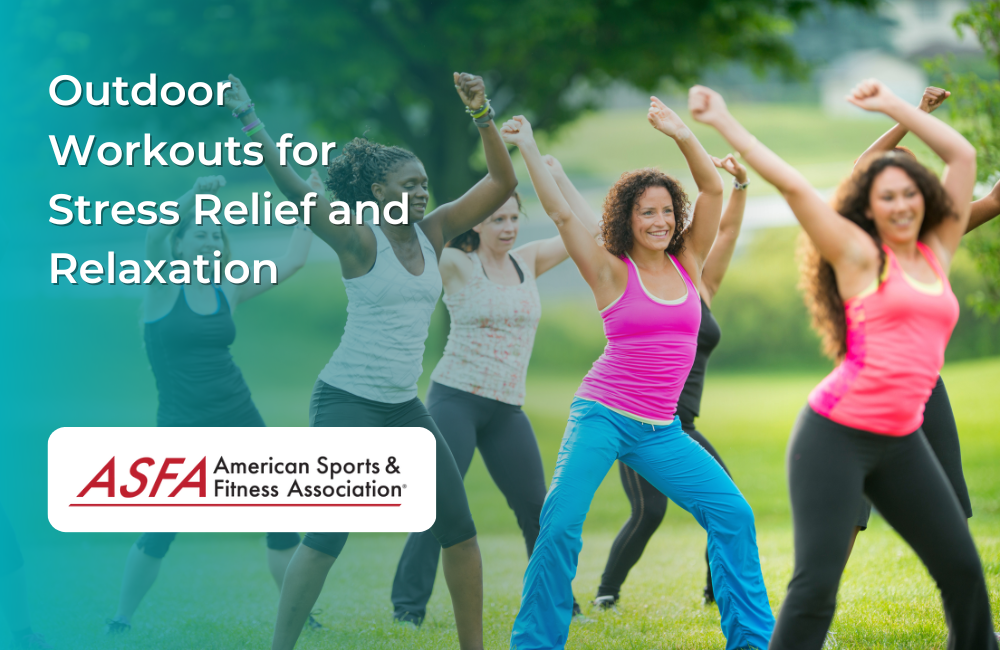
How to pick the right activity
Ask yourself: What feels doable and enjoyable? If you want mental clarity, walking or yoga may be best. If you need to burn off energy, try a run or HIIT session. Mixing activities keeps your routine fresh and helps you stick with it long term.
Sample Stress-Relief Workout Plans
Below are two simple plans to try. Both emphasize consistency, short sessions, and a mix of movement plus breathing.
10–20 Minute Quick Reset (daily)
- 2 minutes: Gentle warm-up walk and shoulder rolls.
- 5–10 minutes: Brisk walk, jog, or bike at a comfortable pace.
- 3–5 minutes: Standing or seated full-body stretch, focusing on deep belly breaths.
- 1–2 minutes: Cool-down walk and 3 long inhalations + exhalations.
30–45 Minute Routine (3–5x per week)
- 5–10 minutes: Warm-up walk or light jog.
- 15–20 minutes: Interval cardio (2 minutes moderate, 1 minute easy) or continuous steady cardio.
- 10 minutes: Yoga sequence or bodyweight circuit (squats, lunges, push-ups, plank).
- 5 minutes: Guided breathing and stretch.
Practical Tips for Getting Started Outside
Starting a new routine can feel hard. These simple tweaks make it easier.
- Start small: Aim for 10 minutes if that’s all you can manage.
- Schedule it: Put workouts in your calendar like meetings.
- Pick pleasant locations: Parks, waterfronts, or tree-lined streets help focus the mind.
- Bring a friend: Social commitment increases follow-through.
- Mix it up: Alternate walking, yoga, and short runs to avoid burnout.
If you’re looking for step-by-step outdoor routines and relaxation ideas, the American Sport & Fitness blog has several practical guides and workout examples that are especially helpful: Outdoor workouts for stress relief and relaxation.
Safety, Gear, and Seasonal Tips
Safety is key. Use common-sense precautions to keep your outdoor sessions stress-free.
- Weather-appropriate clothing: Dress in layers. In summer, wear sun protection and lightweight fabrics.
- Proper footwear: Choose shoes that match your activity (running shoes for runs, supportive shoes for walking).
- Hydration: Bring water, especially on hot days or for longer sessions.
- Plan routes: Avoid isolated areas if you’re alone; pick well-trafficked trails or parks.
- Warm-up & cool-down: Prevent injuries with dynamic warm-ups and gentle stretching afterward.

Combining Mindfulness with Movement
Pair movement with intentional breathing or a short mindfulness practice to deepen stress relief. Try this quick practice during your next outdoor session:
- Begin with a 2-minute slow walk, noticing your footfalls.
- For 5 minutes, match your breath to your pace: inhale for 3 steps, exhale for 3 steps.
- End with a standing stretch and 5 slow belly breaths, focusing on the air entering and leaving your body.
When Outdoor Workouts for Stress Relief Might Need Extra Care
Exercise is powerful, but sometimes stress is tied to clinical anxiety or depression. If regular outdoor workouts aren’t easing your symptoms, consider professional support. Also consult your doctor before starting intense routines if you have medical concerns.
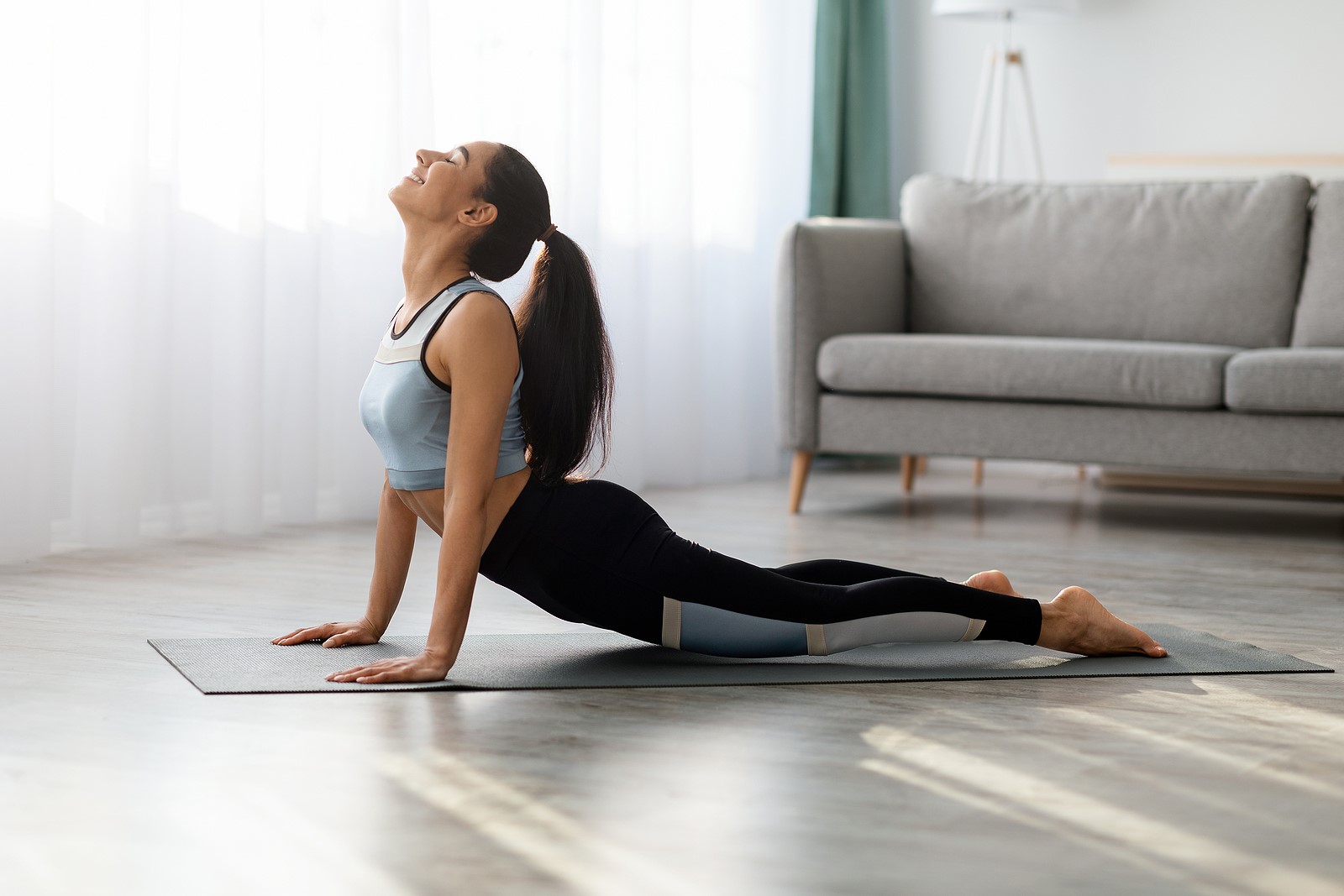
Short Video Guide
Not sure where to start? This short video shows a gentle outdoor routine you can do almost anywhere. Embed provided below:
Staying Consistent: Habits that Work
Consistency matters more than intensity. Use these habit tips to keep up with outdoor sessions:
- Set a trigger: Go right after work, or first thing in the morning.
- Reward yourself: Small rewards help cement a new habit — a favorite tea after a walk, for example.
- Track progress: Use a simple calendar or app to mark days you moved outside.
- Be flexible: If weather blocks a plan, do a short indoor session instead of skipping entirely.
Community Resources & Further Reading
If you want more research or practical advice, the following resources are helpful:
- National review on exercise and perceived stress: PMC article.
- UC Davis on how time outdoors helps mood and stress: UC Davis blog.
- Practical outdoor workout guides: ASFA outdoor workouts.
- Piedmont Health overview of the benefits of outdoor exercise: Piedmont article.
Wrapping Up
Outdoor workouts for stress relief are accessible, flexible, and backed by science. Whether you choose a 10-minute daily walk or a structured outdoor yoga practice, the combination of movement and nature is one of the most practical tools for calming the mind. Try one of the short plans above this week and see how you feel.
Ready to start? Step outside, move for 10 minutes, and notice one small difference in your mood. Then come back for more guides at zenpulsehub.com.
Frequently Asked Questions
How often should I do outdoor workouts for stress relief?
Aim for at least 3 times a week for 20–45 minutes. Even short daily 10–15 minute walks can make a meaningful difference.
Can short outdoor sessions really reduce stress?
Yes. Short, consistent sessions raise endorphins and lower cortisol. The combination of movement and natural settings is especially helpful for quick mood improvements.
What if I don’t have access to parks or green space?
Urban streets, rooftops, and even balconies can work. Focus on getting fresh air and daylight. Walking routes through tree-lined streets or near water are ideal but not required.
Are there any risks to outdoor exercise?
Generally safe if you use proper gear and follow common-sense safety: hydrate, dress for weather, choose safe routes, and consult a doctor for new intense regimens.
Sources: NIH review on exercise and stress, UC Davis health blog, Piedmont Health, and the American Sport & Fitness blogs linked above.